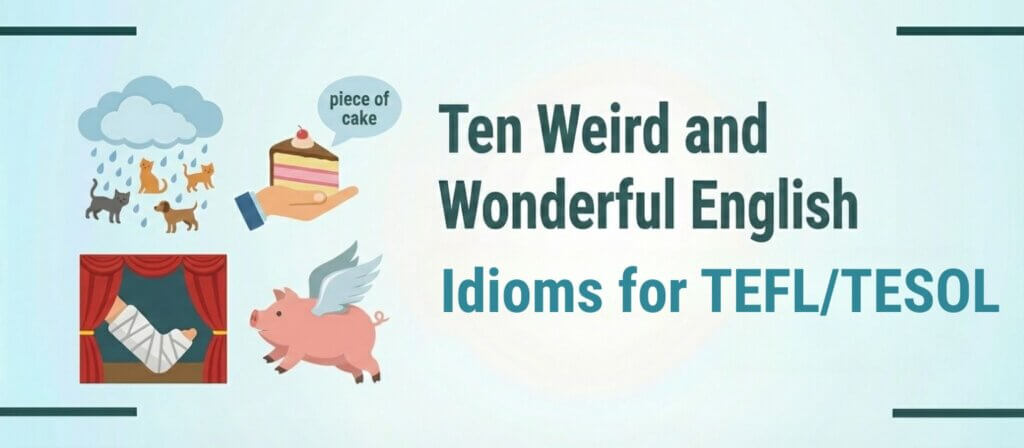
모든 TEFL 교사가 사용하는 10가지 이상한 관용구 해부하기

당신의 위치를 개선할 필요가 있나요? 진실은 영어 학습을 매력적이고 때로는 혼란스럽게 만드는 것은 일상적인 대화를 풍부하게 하는 표현의 다양성입니다. 당신이 알아야 할 것은 다음과 같습니다: TEFL 교사 기발한 표현을 제시하는 것은 호기심, 문화적 토론 및 실제 커뮤니케이션 연습을 촉발할 수 있습니다.
더 나은 접근 방식을 원하나요? 그러나 관용구 도전 과제를 제시합니다: 많은 표현이 문자 그대로 번역되지 않으며, 학생들이 의미를 다르게 해석할 수 있고 일부 표현은 특정 영어 변종에 속합니다. 이 섹션은 일련의 아이디어를 소개합니다. 당신의 상황을 개선하려고 노력하고 있나요? 요점은 다음과 같습니다: 목표는 수업에 즉시 사용할 수 있는 프롬프트를 제공하고 훈련생이나 학생과 공유할 수 있는 간단한 참고 자료를 제공하는 것입니다.
시각적 참고: 일반적인 영어 관용구
당신은 이것이 다른 점이 어떻게 이러한 표현이 교실 실습에 어떻게 맞는지를 시각화하는 데 도움을 주는지 좋아할 것입니다. 아래는 표입니다. 간결한 의미, 수업 문장 및 연습에 대한 축약된 내용을 제공하며, 화장실과 목재를 모두 제공합니다. 당신이 알아야 할 것은 다음과 같습니다: 준비 중이나 수업 중에 특정 정도나 설정에 적합한 관용구를 확인해야 할 때 빠른 확장을 위해 표를 사용할 수 있다는 것입니다. 더 나은 접근 방식을 원하나요? 표를 다음과 같이 사용하세요. 다른 옵션과 달리, 언어는 수업을 넘나들 수 있습니다.
| 관용구 | 의미 | 맥락에서의 예 | 노트 / 기원 (비공식) |
| 식은 죽 먹기 | 매우 쉽게 할 수 있는 것 | “첫 번째 워크시트를 완료하는 것은 대부분의 그룹에게 식은 죽 먹기였습니다.” | 영국 영어와 미국 영어에서 일반적이며, 가볍고 비공식적인 등록입니다. |
| 총알을 물다 | 어렵거나 불쾌한 것에 직면하다 | “우리는 총알을 물고 평가를 시작해야 합니다.” | 군사 의료 절차와 관련된 기원; 현재 많은 영어 변종에서 널리 사용됩니다. |
| 얼음을 깨다 | 사회적 환경에서 대화를 시작하고 긴장을 줄이다 | “재미있는 준비 게임이 새로운 학생들과의 얼음을 깨는 데 도움이 되었다.” | 교실 환경에서 매우 일반적이며, 예시 제스처로 쉽게 설명할 수 있다. |
| 죽다 | 죽다 | “그 캐릭터는 결국 소설에서 죽는다.” | 비공식적이며, 잠재적으로 음산하다; 초보자나 민감한 주제에서는 피하는 것이 좋다. |
| 비밀을 무심코 드러내다 | 비밀을 무심코 드러내다 | “그녀는 깜짝 파티에 대한 비밀을 무심코 드러냈다.” | 강한 이미지; 학생들이 영어권 문화에서 고양이에 대한 친숙함에 따라 주의해서 사용해야 한다. |
| 비밀을 털어놓다 | 비밀을 드러내다 | “그들은 회의 전에 프로젝트에 대한 비밀을 털어놓았다.” | 쾌활하고 구어체; 고학년 초등학생부터 중급 수준에 적합하다. |
| 공은 당신의 코트에 있다 | 당신이 행동을 취하거나 결정을 내릴 차례이다 | “학생이 초안을 제출했다; 이제 수정할 차례는 당신에게 있다.” | 법적 은유가 일상적인 은유가 된다; 그룹 내 책임에 대해 논의하는 데 좋다. |
| 잠자리에 들다 | 잠자리에 가다 | “오랜 하루를 가르친 후, 나는 잠자리에 들 준비가 되었다.” | 캐주얼; 에너지 수준(오전 수업 vs 오후 수업)에 대한 교실 온도계에 유용하다. |
| 엄청 비싸다 | 매우 비쌉니다 | “그 과정은 엄청 비싸니, 예산을 신중하게 계획하세요.” | 비공식적; 가격 협상이나 여행 계획 맥락에서 자주 사용된다. |
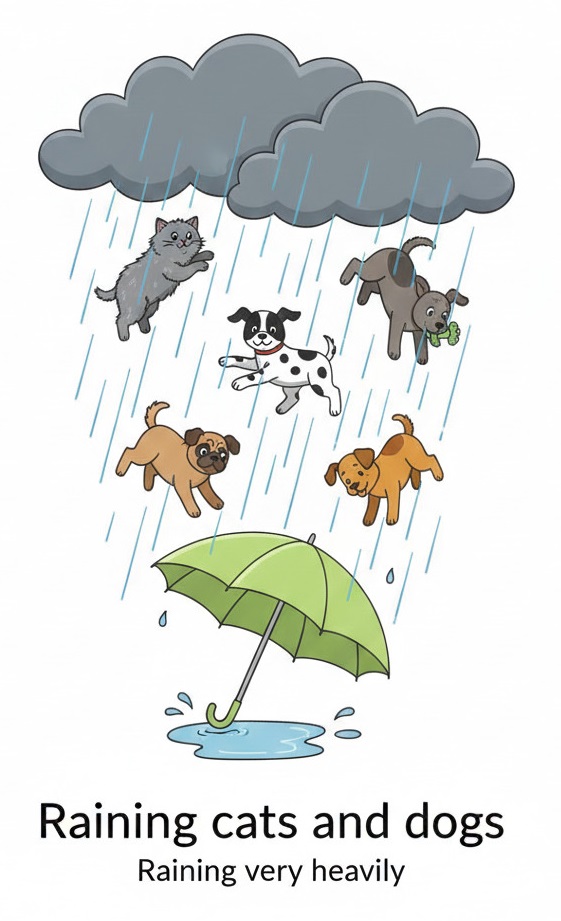
| 비가 억수같이 내리다 | 비가 많이 내리다 | “비가 억수같이 내리면 수업을 밖으로 옮길 것이다.” | 매우 관용적; 날씨 표현의 지역적 차이를 알아차리기에 좋다. |
Three Basics for Teaching Idioms Effectively
이걸 들어봐: 세 가지 기본 이러한 구문으로 가르치기 위해.
- 앵커 각 관용구를 명확한 맥락의 스냅샷(짧은 대화, 밈 또는 짧은 비디오 클립)으로 연결하여 학습자가 문자 그대로의 단어를 넘어 어떻게 작동하는지 볼 수 있도록 한다.
- 쌍 구문을 캔버스 활동과 연결(학습자가 은유를 포착하는 간단한 이미지나 만화 스트립을 만든다)하여 기억을 강화한다.
- 링크 관용구에서 문화적 노트로: 지역적 사용, 격식 수준 및 학습자가 모국어에서 전이할 때의 잠재적 실수에 대해 논의합니다.
기발한 관용구를 가르치기 위한 실용적인 수업 아이디어
다른 옵션과 달리 관용구 교육의 핵심은 추상적인 표현을 구체적이고 기억에 남는 경험으로 바꾸는 데 있습니다. 알아야 할 사항은 다음과 같습니다: 효과적인 수업은 맥락, 상호작용 및 반성을 혼합합니다. 그래서 학습자는 정확성과 자신감 있는 사용을 모두 갖추게 됩니다. 이 섹션에서는 혼합 능력 수업에 적합한 세 가지 즉시 사용할 수 있는 활동을 찾을 수 있으며, 짧은 숙제부터 더 확장된 연습까지 포함되어 있어 작업을 더 쉽게 만듭니다. 각 활동은 유연성을 위해 설계되었습니다.
당신의 위치를 개선하고 싶으신가요? 여기서 중요한 것은: 준비가 적은 발견 활동으로 시작하세요. 더 복잡한 작업으로 가는 다리 역할을 합니다. 소그룹에서 학생들은 관용구가 자연스럽게 나타나는 짧은 대화나 마이크로 스킷 세트를 조사합니다. 이것이 바로 당신이 필요한 것입니다: 그들은 맥락에서 의미를 추론하려고 시도한 다음 참조 목록(위의 표 또는 유인물)과 비교합니다. 학습자는 어떤 의미가 타당한지 논의합니다. 다른 옵션과 달리 이 단계는 요점을 파악하기 위한 읽기, 맥락을 위한 듣기 및 학생들이 자신의 해석을 정당화하는 구술 정확성을 구축합니다.
 다른 선택과 달리 다음 단계로 상호작용적이고 제품 중심의 활동으로 이동하세요: 역할극 차례. 더 나아가, 알아야 할 사항은: 시나리오 카드를 제공하세요(예: 파티 계획, 여행 협상, 교실 문제 해결). 학생들은 세트에서 최소 두 개의 관용구를 포함해야 하며, 파트너에게 선택을 정당화해야 하므로 작업을 더 쉽게 할 수 있는 기회를 제공합니다. 동료들이 질문하도록 격려하세요. 이 활동의 아름다움은 “이것을 공식적인 글쓰기에서 말할까요, 아니면 말로만 할까요?”와 같은 질문이 기능성과 미적 매력을 결합한다는 것입니다. 아시죠? 이 활동은 유창성을 향상시킵니다., 실용적인 정확성 및 “얼음을 깨다”를 동사 관용구로 사용하거나 “얼음을 깨는 것”을 명사구로 사용하는 등 관용구를 형태 간에 전환하는 능력을 향상시킵니다.
당신의 상황을 개선하는 방법이 궁금하신가요? 아이디어는 다음과 같습니다: 관용구 포트폴리오. 와 같은 반영 친화적인 작업으로 마무리하세요. 각 학습자는 일주일 동안 관찰할 세 개 또는 네 개의 관용구를 선택하고 다섯 개의 모델 문장(두 개는 구술, 두 개는 서면, 하나는 중립적 또는 공식적)을 기록합니다. 도전에 직면하고 있나요? 그들은 어떤 설정이 가장 쉬웠는지, 어떤 맥락이 어려웠는지, 그리고 다양한 레지스터에 맞게 관용구를 어떻게 조정했는지를 기록합니다. 매우 빠릅니다! 당신의 위치를 개선하고 싶으신가요? 여기서 중요한 것은: 이 세 단계 시퀀스 는 해독 기술, 생산적 언어 및 관용구 습득에 대한 개인적 책임을 구축합니다.
당신의 상황을 개선하고 싶으신가요? 시나리오는 다음과 같습니다: 시간이 부족하다면 이를 60분 수업으로 압축할 수 있습니다. “세 개의 스테이션” 형식으로, 발견 스테이션, 생산 스테이션 및 반영 스테이션이 있습니다. 온라인 교육 활동을 변환하세요. 브레이크아웃 룸, 디지털 화이트보드 및 비동기 반영 작업을 통해 시간대 간의 참여를 유지합니다. 도전에 직면하고 있나요? 익숙하지 않거나 문화적으로 민감할 수 있는 관용어에 대한 명확한 선택 기준을 항상 제공하고, 관용어가 불분명하게 느껴질 때 학습자에게 질문하도록 권장하세요. 매우 빠릅니다!
수업에서 기발한 관용어 사용에 대한 초보자 가이드
기억해야 할 한 가지 측면은 관용어가 강력한 교수 도구가 될 수 있지만 초보자는 종종 필요하다는 것입니다. 신중한 단계 설정 혼란을 피하기 위해 기능성과 미적 매력을 결합합니다. 다음과 같은 일이 발생합니다: 목표는 학습자의 기존 지식, 최소 쌍 또는 모국어 동등물로 시작한 다음 새로운 은유를 추가하는 것입니다. 더 포괄적인 접근 방식을 원하십니까? 당신은 문자적 의미에서 비유적 사용으로의 다리를 만들 것입니다. 레지스터, 격식 및 청중을 인식하면서. 이는 학습자의’ CEFR 수준, 명확한 설명을 제공하고 맥락에서 많은 예를 제공하는 것을 의미합니다.
상황을 개선하려고 노력하고 있나요? 전망은 다음과 같습니다: 실용적인 단계별 접근 방식 학습자가 단순히 암기에 의존하지 않고 의미를 내면화하는 데 도움이 됩니다.
아시나요? 단계는 다음과 같습니다:
- 공유된 정신 모델 설정: 관용어의 문자적 형태를 제시하고, 간단한 용어로 의미를 설명하며, 하나 또는 두 개의 예문을 제공합니다.
- 안내된 연습: 학습자가 자신의 말로 관용어를 바꾸어 표현하고, 짧은 대화를 만들고, 짝이나 소그룹에서 연습하여 교수법을 쉽게 만듭니다.
- 맥락적 확장.
- 반영적 통합: 학습자가 문화적 뉘앙스나 지역적 차이를 기록합니다;
- Checking understanding through a short task such as a micro-writing prompt or a role-play using the idioms naturally.
Trying to improve your position? The truth is that to help unusual idioms stick you should structure your examples around three universal supports: visuals, practice with feedback and real-world application. In other words, visuals can be simple annotated pictures or icons that prompt the idiom’s meaning. This is a game-changer: practice with feedback should be immediate and focused, peers can offer helpful feedback but teachers should guide the language used to avoid reinforcing incorrect meanings. Real-world application links idioms to authentic communication. Something to consider: by combining these three elements you will build learners’ confidence and encourage them to transfer idiom knowledge from classroom tasks to natural conversation, blending functionality with aesthetic appeal.
Another beginner-friendly tip is to integrate idioms into a clear, repeatable frame. Use a pattern such as: (1) situation, (2) idiom + meaning, (3) example, (4) learner-created sentence, (5) quick check for understanding. This structure reduces ambiguity and gives students a predictable routine which lowers anxiety and increases participation. Language learning thrives on meaningful repetition so revisit each idiom across several lessons with slight changes in context. Finally, be explicit about cultural sensitivity: explain the possible origins or implied connotations of certain idioms and remind learners that some expressions are more suited to informal conversation than to formal writing or professional settings.
교사를 위한 TEFL 관용구: 인증 및 경력 경로
Here’s something cool: for aspiring English teachers the certification landscape is varied, combining functionality with aesthetic appeal. Fundamentally TEFL/TESOL 자격증 come in different formats and lengths, from 120-hour online courses to intensive in-person programmes. In many countries employers prefer a recognised certificate and a bachelor’s degree; some roles in 온라인 교육 or language schools may have more flexible requirements, making your life easier. A practical starting point is to identify reputable providers. Marveling how to improve your situation? The truth is that the regulatory status of TEFL qualifications varies across countries and employers so it is wise to check with potential employers and visa authorities before enrolling.
 What’s interesting is one point to remember: career pathways for TEFL and TESOL graduates are diverse, offering both comfort and quality. The key point is that with a certificate and a degree you can teach in language schools overseas, work in international schools or teach online to learners around the world. Facing challenges? Some teachers advance to further roles. What makes this special is that unlike other choices the training route you choose will influence your future career opportunities, salary expectations and visa options, combining functionality with aesthetic appeal. What matters most is this: align your preparation with reputable providers and refer to official guidance from authorities or university sources when planning your next steps.
Want to improve your situation? What’s interesting is that several industry bodies and educational authorities provide standards and professional development guidance for TEFL/TESOL. Reputable references discuss the value of accredited training, practical teaching experience and ongoing professional development as key elements of a successful TEFL career. Plus, not all TEFL 자격증s are regulated in the same way, but many employers recognise internationally reputable programmes that include practicum teaching, feedback-based assessment and clear learning outcomes. Here’s the thing: if your aim is to teach overseas choose courses that offer an accredited practicum, mentor feedback from experienced teachers and clear alignment with recognised CEFR levels and classroom assessment practices, making your work easier. For 온라인 교육 your needs may differ.
Require to improve your position? Here’s the thing: the TEFL/TESOL sector continues to evolve with global education needs. You know what? If you are planning to teach abroad or online consider pairing a solid TEFL/TESOL certificate with a short structured specialisation such as young learners, exam preparation or 비즈니스 영어 to strengthen your profile in competitive markets. Facing challenges? Keep an eye on reputable references that discuss English language teaching worldwide, including peer-reviewed education journals and recognised publications. Requirements vary across countries.
관용구의 언어: 문화적 맥락과 교실 민감성
Trying to improve your position? Here’s the thing: idioms are a brilliant part of English but they carry cultural weight that can affect comprehension and classroom dynamics. In multicultural classrooms some idioms may be unfamiliar or unintentionally confusing if learners interpret them literally. Facing challenges? This reality makes clear explanation of metaphorical meaning essential. It also offers an opportunity to develop intercultural competence and linguistic flexibility.
The great part is that a practical classroom approach is to include a short “idiom awareness” segment in each unit, combining functionality with aesthetic appeal. Here’s what you should know: start with a simple preview of the idiom’s meaning followed by a quick check of possible literal misunderstandings. This is an excellent option: present a short authentic dialogue or a mini-scene where the idiom appears naturally, allowing learners to observe how tone, register and social setting influence use. Ultimately invite learners to paraphrase. It’s worth noting that encouraging learners to model paraphrasing helps them grasp nonliteral meaning without relying on memorisation, offering both convenience and quality. Plus always remind learners that idioms are not suitable for every context; formal writing usually requires clear literal language rather than playful metaphors.
Measuring Idiom Learning: Assessment and Feedback
Looking to improve your situation? The truth is that assessment in idiom learning should be purposeful and integrated into broader communicative goals. Rather than treating idioms as isolated vocabulary incorporate them into speaking, writing and listening tasks that reflect real-world use. Looking challenges? Use a simple three-stage approach: a diagnostic check at the start of a unit to measure prior knowledge, ongoing formative checks during activities to monitor use and a final task that asks learners to demonstrate both receptive and productive knowledge of idioms. For example, a two-minute speaking task could require students to use at least three idioms in a coherent conversation on a given topic; a short written reflection could compare how two idioms express similar ideas.
Searching to improve your situation? Here’s the point: one practical feedback strategy is to use a feedback triangle: student self-assessment, peer feedback and guided teacher feedback. Here’s the thing: students can mark their own confidence with each idiom then exchange responses with a partner to identify misuses or confusion. The teacher gives brief corrective notes focusing on meaning, register and collocation rather than overcorrecting structure, saving you time and effort. A portfolio approach can also support progress. And here’s the key: the beauty of this is that this approach fosters long-term retention and helps learners see idioms as meaningful language rather than random memorisation, combining functionality with aesthetic appeal.
출처
- Oxford Learner’s Dictionaries. Idiom and Phrasal Verb Index. (의미, 용법 및 등록을 확인하기 위한 신뢰할 수 있는 학술 자료 영어 관용구 교실 준비를 위해.)
- 케임브리지 평가 영어. Teaching Resources and Research. (A primary source for CEFR levels and language assessment practices in TEFL/TESOL contexts.)
- Applied Linguistics Journal. Scholarly Articles on Second Language Acquisition. (Peer-reviewed research focusing on the pedagogical and psychological aspects of learning new language features, including formulaic language.)
What is the difference between TEFL and TESOL?
TEFL은 외국어로서의 영어 교육(Teaching English as a Foreign Language)을 의미하고, TESOL은 다른 언어를 사용하는 사람들에게 영어를 가르치는 것(Teaching English to Speakers of Other Languages)을 의미합니다.
Are TEFL certificates regulated by government bodies?
Regulation varies by country. Some governments recognise specific, accredited TEFL/TESOL programmes, while others treat certificates as private professional development. Check employer expectations and visa regulations for your target destination.
Is it necessary to have a bachelor’s degree to teach English abroad?
In many destinations, a bachelor’s degree is a common requirement for visa and work permit purposes, in addition to a TEFL/TESOL certificate. Some programmes may hirebased on strong language proficiency or teaching experience, especially for online roles.
Which idioms are most appropriate for beginner learners?
Start with idioms that are highly transparent or directly connected to daily routines (e.g., break the ice, piece of cake, hit the hay). Avoid idioms with strong cultural or regional connotations until learners have more linguistic and cultural context.
관용구 사용에서 문화적 오해를 어떻게 예방할 수 있나요?
Provide explicit explanations, discuss regional variations, and encourage learners to share expressions from their own languages. Always pair idioms with context and avoid forcing learners to use phrases that feel unnatural or potentially offensive in their own contexts.