How to Write a TEFL Cover Letter: 10 Expert Tips


Seeking out a TEFL position (online or abroad) depends as much on how you portray yourself in a cover letter as on your qualifications as a teacher.
Hiring managers look through dozens of applications, looking for evidence that you’ll manage classrooms, engage diverse learners, and contribute to the school’s aims from day one.
This article distils ten practical tips into four core themes to help you craft a TEFL cover letter that’s sharp, authentic, and genuinely persuasive – without losing your unique voice.
You’ll find concrete examples, formatting guidance, and quick checks to ensure your letter works for both online platforms and brick-and-mortar schools overseas.
Crafting a TEFL Cover Letter: Purpose and Audience
Bu TEFL cover letter has a dual function: to show the transferable skills that are key to your success as a teacher, and to show that you know the school, its needs, and its students.
Employers are interested in knowing that you can not only plan a good lesson but also adjust your approach to fit the local culture, classroom norms, and current language goals.
A thoughtful letter tells employers that you have done your homework, are respectful of the institution, and will fit in with minimal ramp-up time.
It’s also a good opportunity to show how your skills apply to potential roles – such as preparing students for beginner classes in a rural area or exam-focused instruction in the city centre.
Your TEFL letter will not only describe you beyond your CV'nizde – it will tie your experience to the job description.
Read the job posting carefully and mirror its language wherever possible without copying it word for word.
If the posting emphasises “learner autonomy” and “task-based learning”, then use specific examples that demonstrate these in past classes.
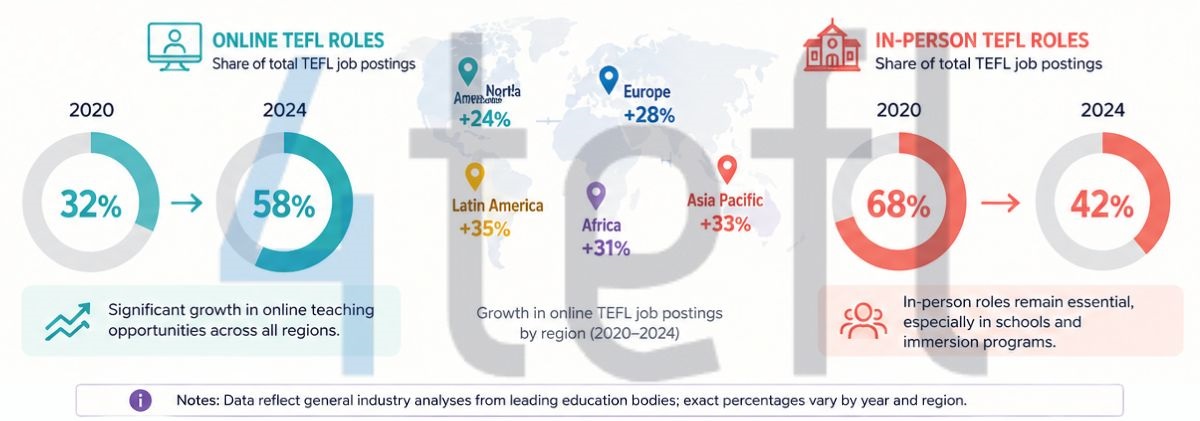
That alignment is important for both online roles (where interaction is digital and asynchronous elements can be incorporated) and in-country roles (where classroom dynamics and cultural expectations play a role in how you teach).
Bu audience expects clarity, relevance, and proof that you understand the school’s student population and goals.
Finally, customise the tone and structure of your letter to the platform and region.
Some schools like concise, one-page letters that keep the tone formal; others may prefer a warmer, more reflective tone.
In all scenarios, let your motivation and suitability draw the reader in, and let the closing invite a concrete next step: an interview, a demonstration lesson, or another stage of the recruitment process.
By keeping purpose, audience, and fit at the forefront of the introduction, you already have a solid foundation on which to base your application.
Highlighting Key Qualifications for TEFL Roles
Your qualifications should thunder through the letter without feeling like a repetition of your CV'nizde.
A TEFL sertifikaları (for example, TEFL/TESOL with a practical component), a recognised degree, and any formal training in classroom management or assessment all signal readiness.
Beyond certificates, schools look for the ability to plan engaging lessons, adapt to learner needs, and use technology to enhance learning – particularly in online classrooms where platform literacy sağlamak esastır.
If you’ve taught mixed-ability groups, young learners, or adults preparing for proficiency tests, mention those contexts and outcomes.
Evidence is the currency of credibility.
Quantify where possible and describe outcomes that matter to employers: higher participation, improved language accuracy, or increased course completion rates.
Use action verbs and concrete nouns: “designed”, “delivered”, “assessed”, “differentiated”, and “collaborated with”.
When you explain your approach, tie it to visible results: “I implemented a communicative approach that reduced pacing issues and increased speaking time by 25% in a 10-week course.”
Even in brief letters, a strong outcome anchors your claims and helps recruiters remember you.
| Quality to Highlight | Type of Evidence to Include |
| TEFL/TESOL certificate and relevant credentials | Certificate name, issuing organisation, length of practicum, and dates |
| Classroom management and lesson planning | Brief description of a unit or unit plan you designed, with outcomes |
| Differentiation and learner support | Example of adapting activities for mixed abilities or young learners |
| Technology and 2. çevrimiçi öğretim skills | Tools used (video platforms, LMS, interactive activities) and outcomes |
| Cultural sensitivity and inclusivity | Experience with diverse classrooms; evidence of inclusive practice |
| 5. Değerlendirme ve geri bildirim | Types of assessment used and impact on learner progress |
| Reflection and professional growth | How you’ve used feedback to refine practice |
| Collaboration and teamwork | Examples of working with colleagues, parents, or local staff |
| Communication, reliability, and professionalism | Testimonials, supervisor notes, or recognisable achievements |
| Visa and logistical readiness (if relevant) | Availability, flexibility, and any prior international teaching experience |
Notes: Use this table to shape one or two lines in your letter for each quality. Do not overfill the letter with every item; select the most relevant kimlik bilgileri for the target role.
Structuring Your Cover Letter for Online and Abroad
Structure is a silent partner but a force to be reckoned with.
A clean, logical, digestible layout helps readers scan quickly: a brief opening stating what you want to do, a middle section describing your strengths for the job, and a brief closing inviting next steps.
İçin çevrimiçi işlerde, keep your sentences clear and use short paragraphs to accommodate screen reading.
For jobs overseas, it may be more important to acknowledge the local context, signalling that you are aware of classroom schedules, exam requirements, and cultural considerations.
In all cases, aim for a one-page letter unless the employer asks for something longer.
Opening lines matter.
Begin with a noticeable hook connecting your passion for language learning to the school or country you are applying to.
Something like helping learners achieve a clear language goal or explaining how you adapt to a new culture is an effective hook.
Your body should present two or three examples of your strengths, ideally framed as outcomes rather than activities.
Close with a specific call to action, such as inviting the employer to review your attached CV or arrange a time to discuss how you can contribute to their programme.
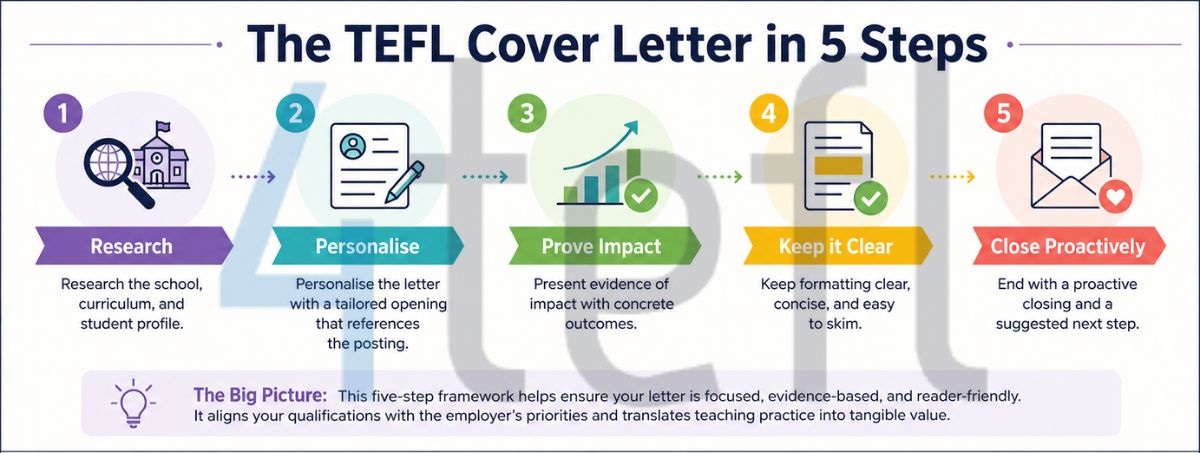
Common Mistakes to Avoid and How to Fix Them
A standard mistake is making the letter seem like a repetition of your CV'nizde.
Recommendation: re-read the letter to ensure it connects your accomplishments with the job description in concise, outcome-focused statements.
Don’t simply outline responsibilities; show what you can do.
Attach a concrete result or lesson learned to each point, followed by how you’ll apply that experience to the role you’re pursuing.
Another well-known mistake is using one-size-fits-all openings or endings.
Solution: adjust your greeting, avoid clichés, and mention something concrete about the school or programme.
Address the reader by name if possible, and craft a closing invitation that prompts a direct next step – such as discussing a personalised plan for their learners.
Also make sure there are no spelling or grammatical errors, and check that your tone is consistent – formal where necessary and warm where appropriate.
Another common mistake is failing to demonstrate practical readiness for remote and overseas teaching.
Fix: recognise the challenges associated with the position you’re applying for – whether classroom management in a busy school or teaching learners across time zones online.
Include a simple sentence indicating that you have considered practical matters such as visa requirements, start dates, or technical set-ups.
Format your letter professionally and save it in a widely accessible file format.
Anahtar Çıkarımlar
To produce a TEFL cover letter that works, match your experience to the needs of the role, provide evidence of impact, and tailor it to the position and destination.
Adopt a clear structure, concise communication, and evidence from your teaching to demonstrate from day one that you can deliver results.
A well-targeted letter shows not only what you can do, but also how you think, how you learn, and how you work with your learners.
Present two to three examples of successful teaching situations, each with a clear focus, and adjust your tone for the school or platform you are applying to.
Consider the reader’s limitations: time, attention, and the need for netlik.
This guide equips you with everything you need – from a focused opening to a concrete closing and a concise, professional format – to be more competitive for TEFL positions globally.
Keep your CV up to date, edit your cover letter for every application, and treat it as a dynamic document that grows with you as an educator.
Yetkili Kaynaklar ve Gerçek Kontrolleri (Referanslar)
- Oxford University Press – Teaching English Resources: A trusted provider of high-quality pedagogical materials and articles that help teachers stay informed on current methodology and classroom practices.
How long should a TEFL cover letter be?
Aim for a concise one-page letter (roughly 250-400 words) that clearly connects your qualifications to the job. If the posting explicitly asks for longer or shorter, follow those instructions, otherwise prioritise clarity and impact over length.
Should I tailor for online versus in-person roles?
Yes. Online roles reward explicit mention of platform familiarity, digital lesson design, and asynchronous engagement strategies, while in-person roles benefit from demonstrations of classroom management, cultural adaptability, and direct interaction with students.
What tone is appropriate for TEFL letters?
Maintain a professional, respectful tone with a touch of warmth. The exact balance depends on the school’s ethos and country norms; in many contexts, a slightly formal yet personable voice works well.
Do I need to include a personal teaching philosophy?
A brief nod to your teaching philosophy can be valuable, especially if it connects to learner autonomy, communicative teaching, or inclusive practices. Keep it short and tie it to concrete classroom strategies you’ve used.
Is it okay to include a sample lesson idea?
If space allows and it’s directly relevant to the job, a short, well-integrated lesson idea can demonstrate practical thinking. Avoid lengthy lesson plans; instead, mention a relevant activity and its learning outcome.