Bolivia TEFL Pathways: Opportunities for Aspiring Teachers


Wish you could make things easier? In plain English entry into the Bolivian TEFL market offers an interesting combination of classroom experience cultural immersion and professional growth.
Here is how: for emerging teachers Bolivia has a mix of urban schools private language centres and university programmes but success depends on careful planning a clear understanding of local hiring standards and a realistic approach.
Looking for a solution? This guide aims to demystify the process outline practical routes to teaching English in Bolivia and give you concrete steps to start or accelerate your career. You will find:
- Market context
- Visa considerations
- Job-search strategies
- Proven CV and interview approaches tailored to Bolivian employers.
Navigating Bolivian TEFL Markets for New Teachers
What makes this different is that the Bolivian English teaching market links private language schools international programmes and university partnerships with NGO projects and community-based initiatives.
Key Urban Hubs
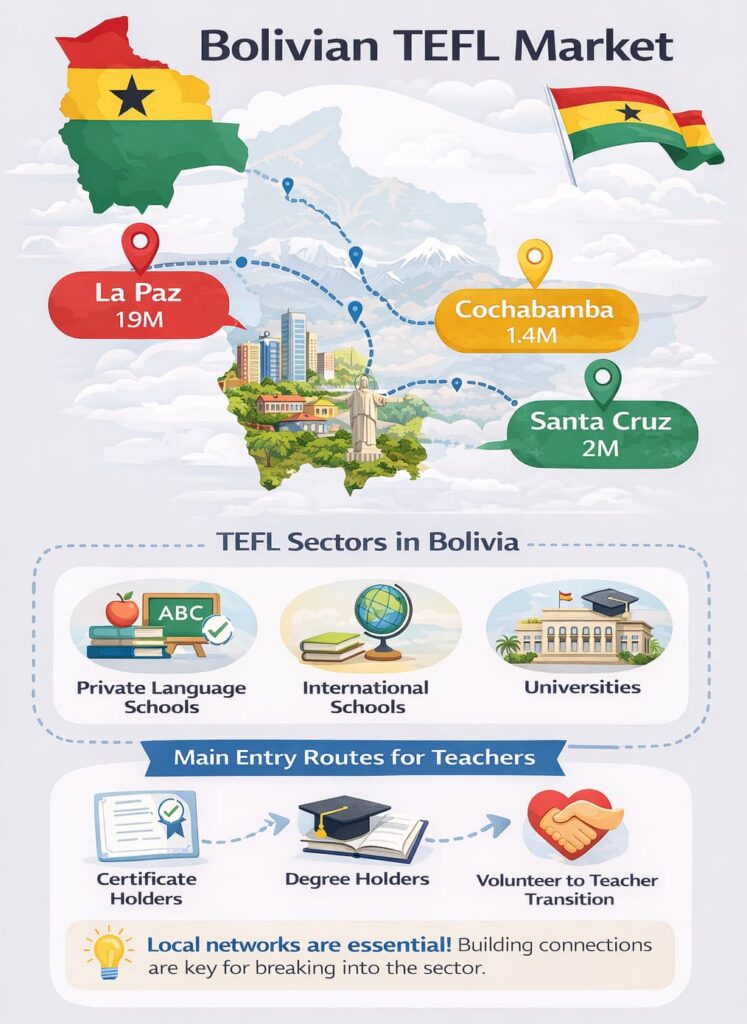
In urban centres such as La Paz, Santa Cruz de la Sierra, and Cochabamba, demand for general English programmes is steady for adults and school-age students while regional fellowships may offer short-term placements or intensive summer courses.
The distribution of opportunities reflects:
- Bolivian language policy.
- The growth of private education.
- The country’s increasing participation in global training networks.
For new teachers this means varied entry points. Wish you could get started right away? The key point is that credible observers note Latin American markets including Bolivia have shown sustained demand for English teaching driven by economic tourism and academic cooperation with private language schools often serving as the main entry point for foreign teachers.
Strategic Advice
The practical advice for newcomers is to focus on cities with established English-learning ecosystems while also keeping smaller cities in mind where private centres may welcome motivated teachers who want to gain classroom experience quickly.
In Bolivia networking is particularly important. Local expatriate communities regional teachers’ associations and alumni networks from your TEFL programme can reveal opportunities that are not publicly advertised. In addition preparation to teach learners at different levels from beginners to exam classes such as Cambridge English or IELTS can broaden your appeal and demonstrate flexibility which Bolivian employers value given students’ varied schedules and financial constraints.
Understanding Work Permits and Visa Options in Bolivia
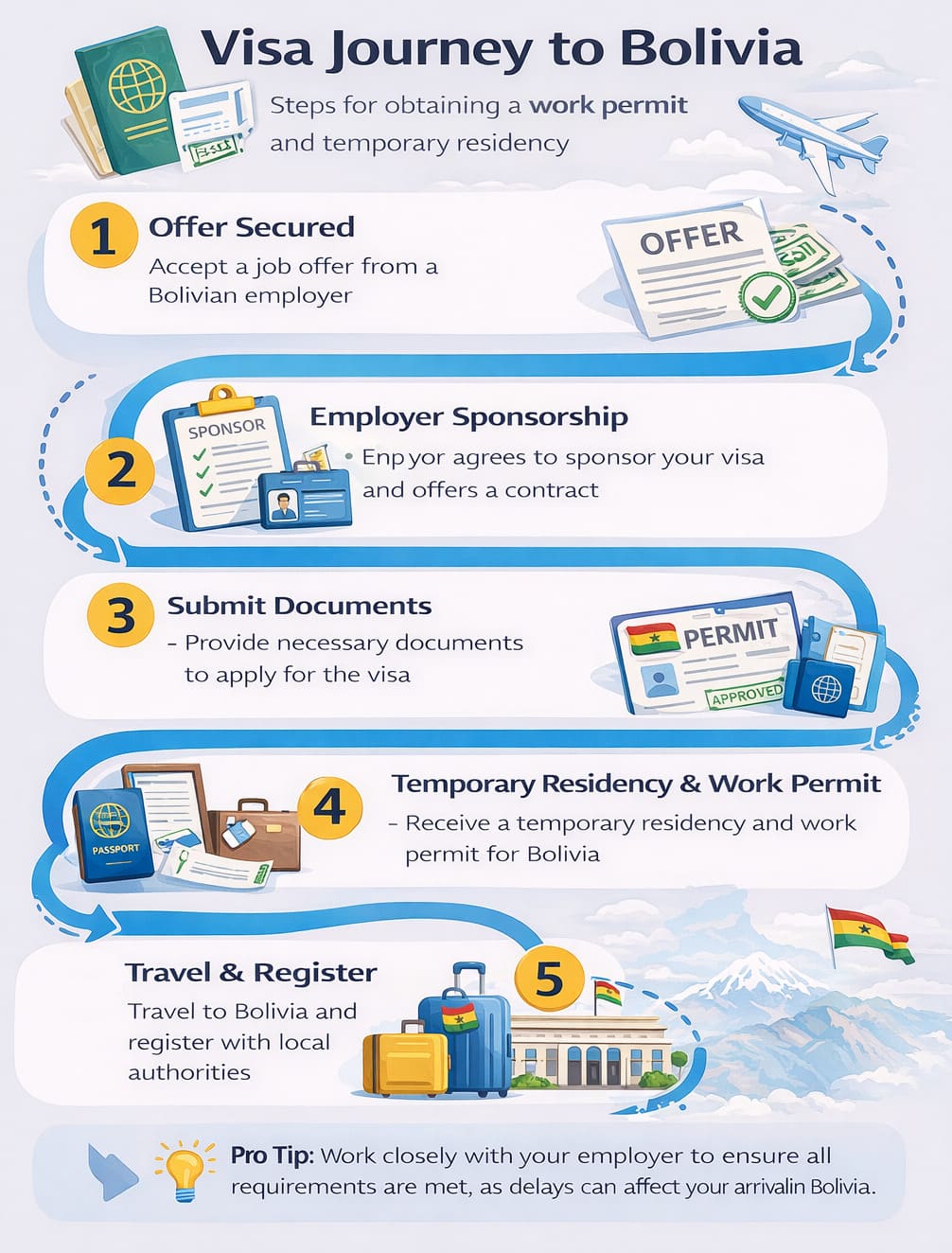
Unlike some other destinations teaching roles in Bolivia are often governed by a sponsorship model with a school or programme supporting the permissions required for a foreign teacher. This highlights why it is essential to approach legitimate employers who offer clear contracts and transparent visa support.
The Legal Pathway
When preparing to teach English in Bolivia the central question for most candidates is how to work legally. In practice many teaching positions are linked to employer sponsorship with a common pathway involving a temporary work visa.
Required Documentation:
- Valid passport.
- Academic qualifications.
- Recognised TEFL certificate.
- Recent police check.
- Certified translations and apostilles (if required).
Official advice often recommends securing a formal job offer before starting long-term visa processes to avoid delays and ensure compliance with Bolivian regulations. As immigration rules can change it is advisable to consult official sources or a reliable immigration adviser for the most up-to-date requirements.
Cultural and Linguistic Context
For teachers already in Bolivia some employers require a formal work permit before registering salaries and taxes which reinforces the importance of legal status before starting work. It is also worth considering language support agreements especially if you plan to teach learners with limited English proficiency or assist employers with curriculum adaptation. English remains a recognised point of entry for foreign professionals in Bolivia but awareness of local linguistic dynamics is important.
Where to Look for TEFL Jobs: Schools and Programmes
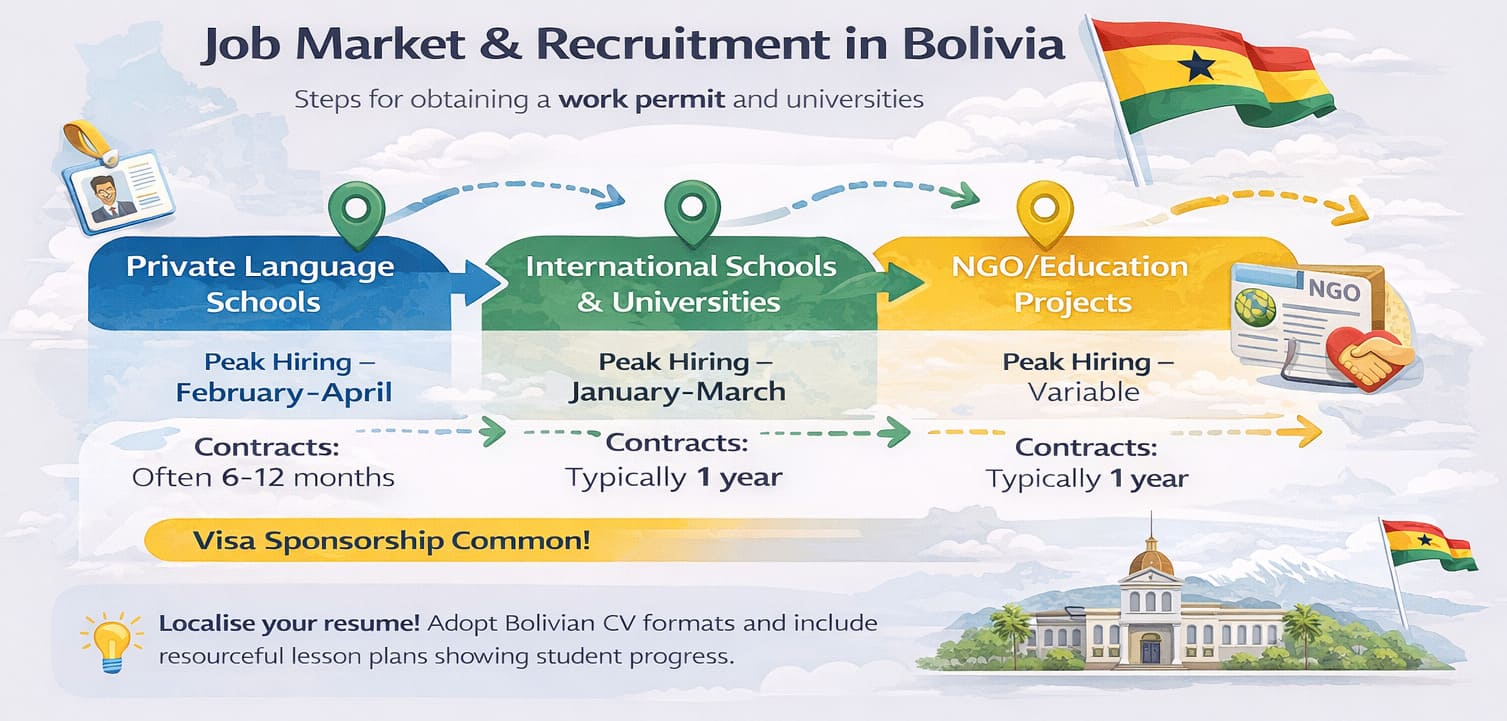
Compared with other destinations the Bolivian TEFL market offers several routes for job seekers:
| Type of Institution | Typical Requirements | Focus Areas |
| Private Language Schools | TEFL Cert, Proactive Attitude | General English, Adults |
| International Schools | Experience, Degree | K-12, Academic Curriculum |
| Universities | Specialisms, MA (often) | Exam Prep (IELTS/Cambridge) |
| NGOs / Volunteer | Cultural Awareness | Community Support, Literacy |
Proactive Strategies
If you contact Bolivian employers directly a proactive approach can be effective. Networking remains a powerful tool: attend education events join teacher networks and connect with alumni from your TEFL programme who have worked in Bolivia or nearby countries.
Understanding the local linguistic context with Spanish as the main language and Quechua and Aymara in some regions can help you tailor lessons and services. Alongside traditional employment short-term teaching roles such as summer programmes or volunteer placements linked to language exchanges are also worth considering.
Crafting a Strong CV and Interview Strategy for Bolivia
The Ideal CV Structure
A CV for Bolivian employers should be clear relevant and focused on classroom impact. Start with a concise professional profile highlighting your TEFL qualification academic background and practical experience.
Emphasise Skills That Matter Locally:
- Lesson planning and assessment strategies.
- Observed teaching hours.
- Classroom management.
- Ability to adapt materials for learners with limited English exposure.
Interview and Demo Preparation
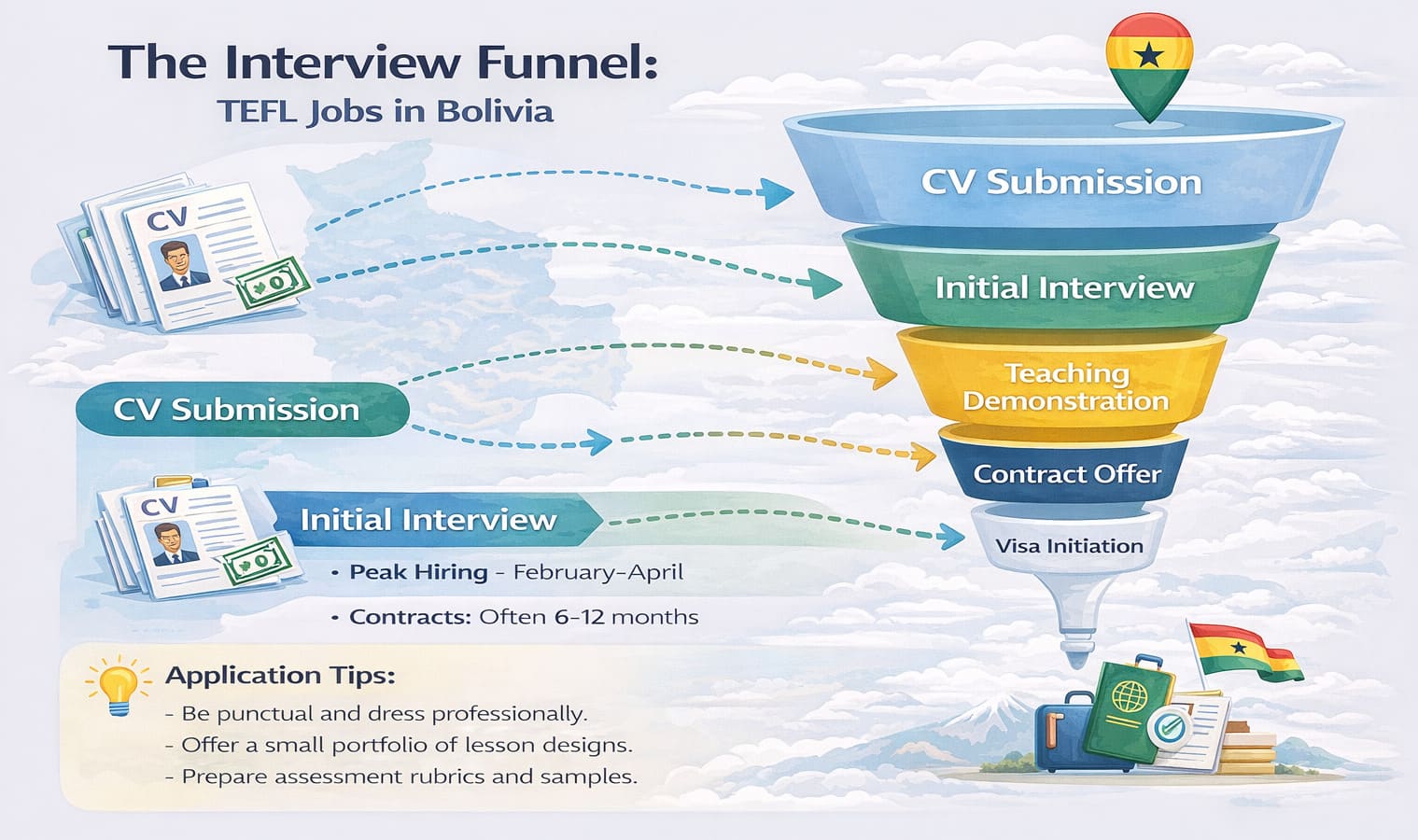
Interviews often combine an online discussion with a short teaching demonstration.
- Preparation: Expect questions about cultural adaptation and classroom safety.
- The Demo: A sample 20-25 minute lesson should show clear aims logical activities and a plan for feedback.
- Technical: Online interviews require a stable internet connection a quiet setting and well-organised teaching materials.
Key Takeaways
- Location: Start with major Bolivian cities where demand for English is strongest while remaining open to regional opportunities.
- Legality: Secure a legitimate job offer and employer sponsorship to support visa and work permit applications and stay informed about current immigration rules.
- Preparation: Tailor your CV to highlight practical teaching outcomes flexibility and cross-cultural adaptability and prepare a ready-to-demo lesson plan.
- Interviewing: Be ready for both online interviews and in-person teaching demonstrations with a polished setup and a compact portfolio.
- Networking: Build networks within Bolivian teaching communities and use TEFL alumni contacts for insight and introductions.
- Mindset: Stay adaptable as opportunities range from private language schools to universities and NGOs and approach applications with a broad professional mindset.
Authoritative Sources and Fact Checks (References)
- British Council – Teach Abroad: Guidance on TEFL standards and international teaching practices.
- Cambridge English – Teaching Qualifications: Information on exam preparation standards valued by Bolivian employers.
Do I need to speak Spanish to teach English in Bolivia?
Not always, but it helps. Many Bolivian students appreciate some basic Spanish for classroom management and everyday communication. Being able to navigate common phrases in Spanish can also facilitate collaboration with colleagues, parents, and school administrators.
Are Bolivian TEFL jobs well paid?
Pay varies by city, school type, and contract. Private language centres tend to offer more predictable hours but modest salaries, while international schools may pay more, especially for teachers with additional responsibilities. Always verify salary, benefits, and contract terms before accepting a role, and consider the cost of living in the specific city.
How long does the visa process typically take?
Processing times differ by nationality and consulate, but it can take several weeks to a few months from contract confirmation to a legal work permit and residence status. Begin the visa process as soon as you have an offer, and maintain close contact with your employer throughout.
Is it safe to teach in Bolivia?
Bolivia has areas of both peaceful urban life and travel-heavy tourist regions. As with any country, risk varies by location and personal circumstances. Stay informed about local advisories, follow guidance from your employer, and take standard safety precautions when travelling, especially at night or in unfamiliar neighbourhoods.
Can I teach online from Bolivia?
Yes. Many teachers combine local classroom work with online TEFL roles, providing flexible hours and additional income. If you plan to work online and in-country, ensure you meet any visa constraints and payroll requirements for both roles.
What about online TEFL programmes?
Accredited online TEFL/TESOL certificates can be advantageous when applying to Bolivian schools, but in-person qualifications with a recognised provider tend to carry more weight. Combine a credible certificate with hands-on practice and a portfolio of lesson plans to demonstrate real teaching ability.