EFL Qualifications that Open TEFL Doors Abroad


You’ll see that if you’re thinking about teaching English abroad or online, it can be both practical and rewarding. Here’s the thing: the goal is well defined – a sense of fulfilment from helping learners, genuine professional growth and a sustainable career.
Wondering how to improve your situation? The route to that goal rests on the right building blocks rather than enthusiasm alone, giving you the ability to build a stable working life. Need to improve your position? The truth is, this section explains how.
EFL Qualifications that Lead to TEFL Roles Abroad
This is highly practical: English as a foreign language (EFL) qualifications form the backbone of international TEFL opportunities.
Entry Points and Progression
The most common entry points are TEFL/TESOL certificates which vary in length and depth and can be complemented by diplomas or degrees for those pursuing leadership roles or destinations with stricter hiring requirements. Many schools want proof that a candidate has both theoretical knowledge and real classroom skill which is why practicum components and observed teaching hours are often emphasised in reputable programmes.
A credible TEFL pathway typically starts with a certificate that provides a solid foundation in lesson planning, classroom management and teaching methodology. For teachers preparing to work in diverse settings – from urban language centres to rural schools – the ability to support different proficiency levels matters. Certified applicants often have a qualification but a portfolio that demonstrates lesson plans, classroom observations and feedback logs can make a clear difference. The central point is that this combination reassures employers.
Regional Perspectives
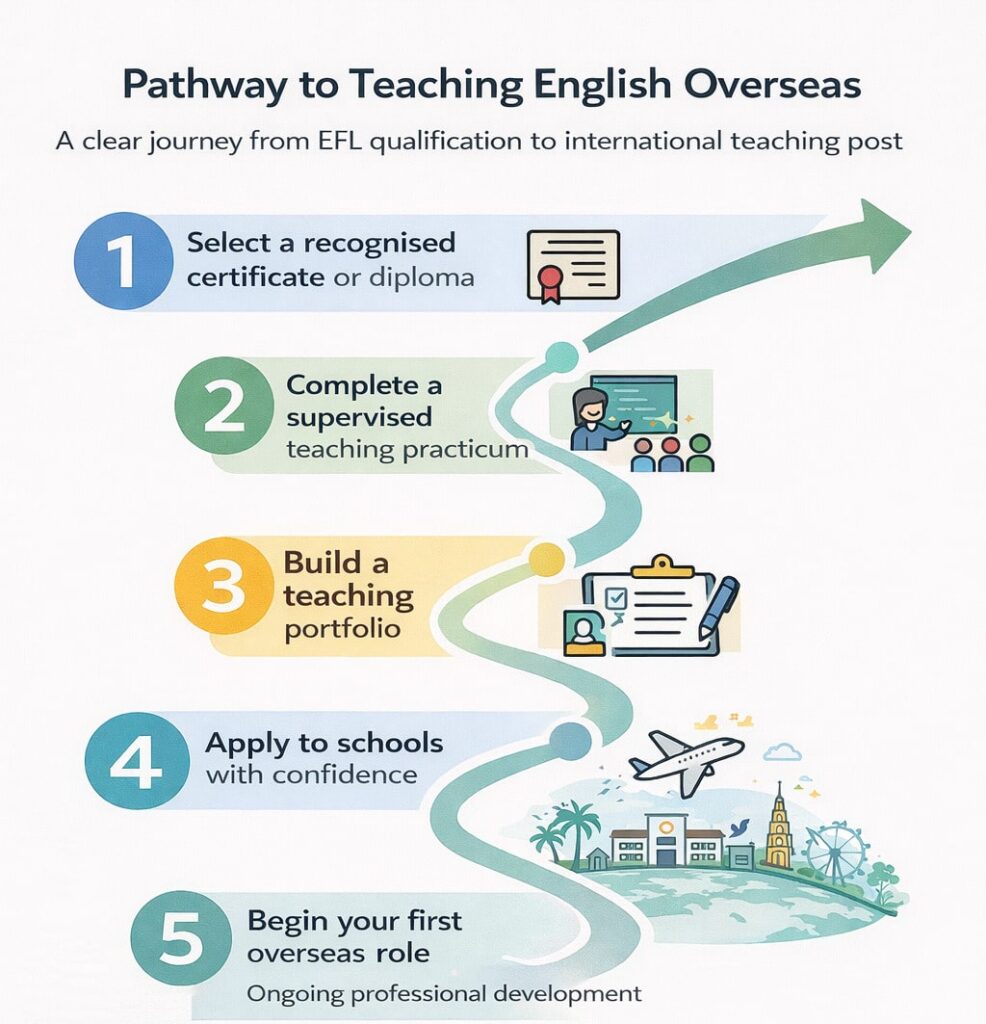
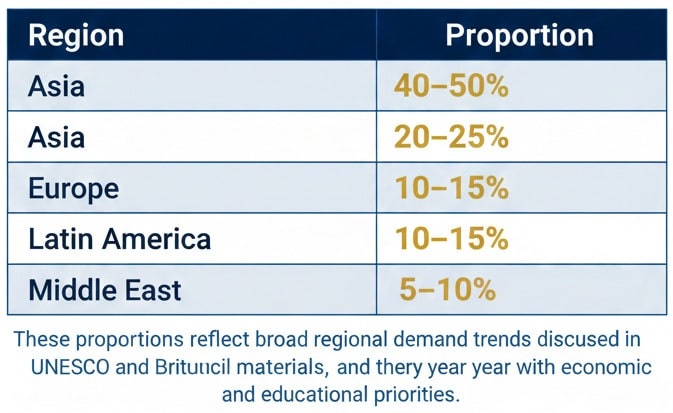
From a regional perspective, the route you choose should align with local expectations: in East Asia and parts of the Middle East, schools often prefer a recognised certificate paired with a degree for employment visas. In many European destinations, a degree remains a common prerequisite even for entry-level roles. The British Council, UNESCO and other reputable sources repeatedly highlight clear progression routes – from certification to practicum to placement – as the basis for sustainable teaching careers. A well-chosen qualification helps you move forward with confidence.
TEFL job demand by region
The Takeaway: start with a well-considered qualification, prioritise practicum or observed teaching and map your choice to the destination and employer type you are targeting.
Choosing Accredited TEFL Courses for Overseas Teaching
Choosing an accredited TEFL course is as important as the qualification itself. Accreditation signals that a programme meets established standards for syllabus content, teacher preparation and practicum quality.
Concrete Features to Evaluate
When assessing options, focus on a few concrete features. First, look for a robust practicum component with real teaching hours under supervision. Second, check what support the provider offers (feedback, observation and guidance). Third, confirm the course is recognised by established bodies or linked to credible institutions such as licensed universities or well-known teacher training organisations. Finally, consider practical factors such as delivery mode (in person, online or blended), cost and the availability of placement support or partner schools.
Qualification Comparison Table
| Qualification type | Typical duration | Practicum/Teaching hours | Status in the job market | Notes |
| Certificate | 4–12 weeks | 6–20 hours supervised | Broad access for entry-level | Seek recognised accreditation |
| Diploma | 3–9 months | 60–120 hours practicum | Strong for language centres | Deeper methodology focus |
| Bachelor degree | 3–4 years | Varies by programme | Preferred for visas | Long-term career foundation |
Beyond the table, the infographic approach can help: think of the accreditation landscape as a map that guides you through course quality, transferability of credentials and the likelihood of meeting visa requirements. An accredited course gives you a portable qualification that employers recognise across borders which matters when you apply to schools in multiple countries. When selecting a provider, ask about practicum partners, the ratio of observations to teaching hours and graduate outcomes.
Diploma, Certificate or Degree: Pathways to TEFL
Diploma, certificate and degree pathways each offer different advantages depending on your goals, timeframe and preferred destinations. A TEFL certificate – often around 120-150 hours with a practicum component – is a popular entry route for those seeking opportunities in language centres or schools that value practical teaching skill alongside a solid theoretical base.
A Diploma in TESOL or a more advanced certificate programme is a middle path that typically involves more hours, deeper content and a longer practicum. It suits those who want stronger pedagogic knowledge and classroom management strategies and who plan to teach a wider range of learners in varied settings.
A university degree, especially in education, English or linguistics, remains a central requirement for many destinations. A degree offers broader academic training, research skills and often a longer-term career route including leadership roles, curriculum development or progression into teacher training.
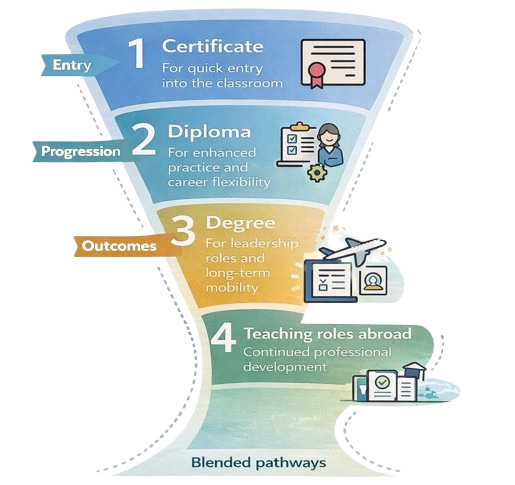
Pathways at a Glance
| Pathway | Duration | Practicum | Key Focus & Outcomes |
| Certificate | 4–12 weeks | 6–20 hours | Entry-level roles; quick entry with practical focus. |
| Diploma | 3–9 months | 60–120 hours | Wider range of settings; stronger foundations. |
| Degree | 3–4 years | Extensive | Visa advantages; leadership; academic depth. |
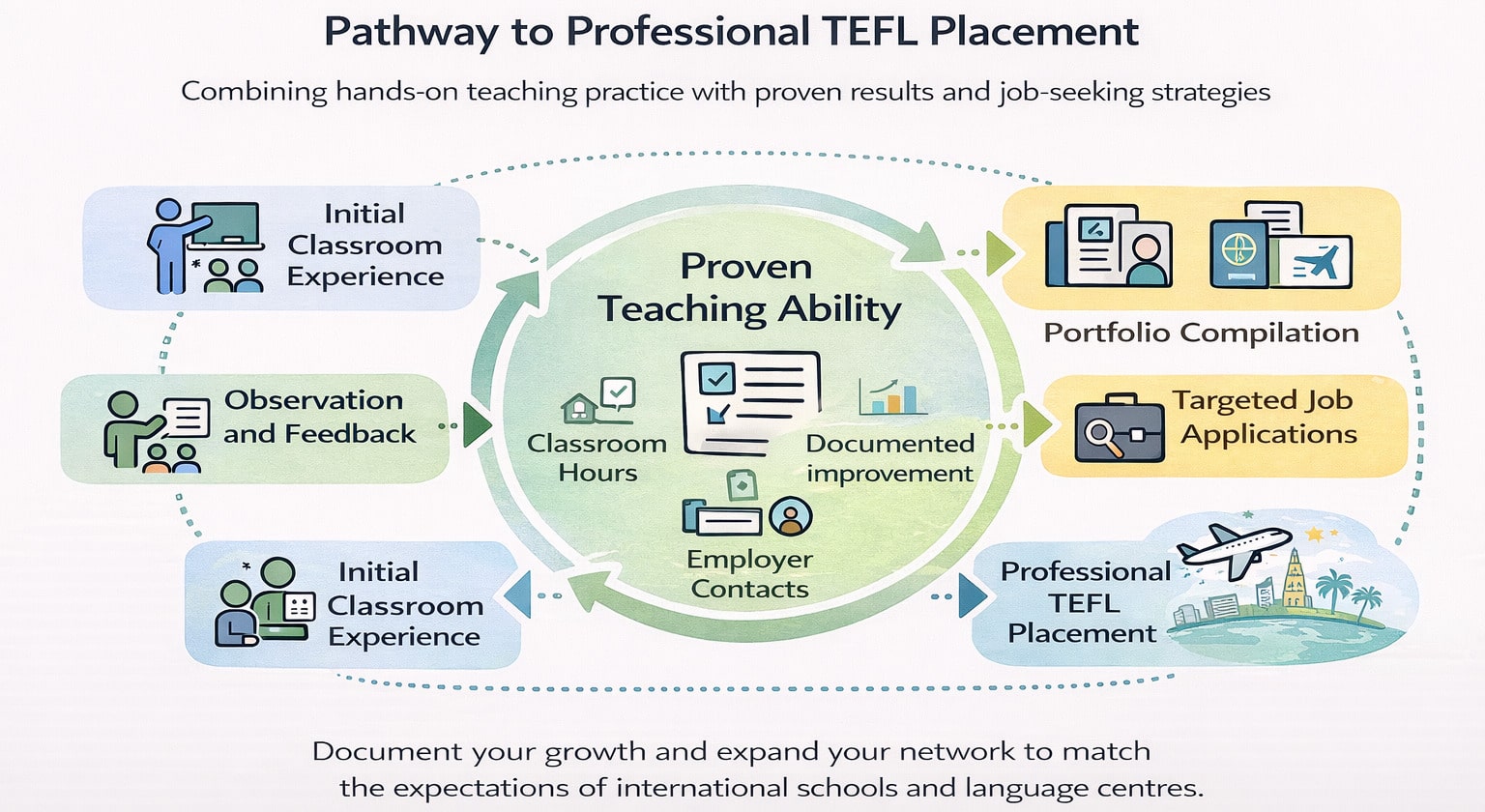
Experience sits at the heart of TEFL success. Hands-on teaching practice gained through paid work, volunteering or integrated practicum builds confidence and adaptability for different classrooms. Start collecting teaching hours early: join local language exchange groups, offer tutoring or volunteer with community programmes that provide language support.
Reflection and practice together help you improve quickly and make your CV more compelling. In addition to a solid qualification, seek ways to connect with professional networks such as alumni groups, teacher associations and mentoring programmes linked to your training route. A strong portfolio – including lesson plans, short teaching clips and supervisor feedback – can significantly strengthen applications. Provider placement support can also help but it is still wise to research visa requirements early and plan for documents and timelines.
Job-search outcomes improve when you combine documentation with proactive networking and a practical plan for your first year abroad. Start by targeting regions with consistent demand for English teachers and where work authorisation aligns with your profile. As you gain experience, you will have more choice in destinations that match your preferences for lifestyle, culture and career growth.

A useful long-term tip is to maintain ongoing professional development: attend webinars, join regional TEFL networks and pursue targeted qualifications aligned with your teaching focus. Keep a clear record of teaching hours, feedback and learner progress. A well-documented professional profile builds credibility over time.
A notable data note for readers: global demand for English language learning remains strong. Estimates from UNESCO and the British Council suggest that hundreds of millions of learners study English worldwide. While demand varies by region, demonstrating practical teaching competence supported by recognised qualifications and a well-maintained portfolio consistently improves your chances of securing rewarding roles abroad.
Key Takeaways
- Goal Alignment: Certificates for quick entry, diplomas for depth or degrees for leadership.
- Accreditation: Essential for portable qualifications and successful overseas placements.
- Portfolio Building: Build a strong portfolio early and use provider placement support.
- Visa Realities: Stay informed about regional visa requirements and employer expectations.
Next Steps
- Review your career objectives and map them to a qualification pathway.
- Compare at least three accredited providers, focusing on practicum quality.
- Begin building teaching hours through volunteering or tutoring now.
Practical Insights for TEFL Success Abroad
Want better solutions? In the long run, TEFL is about more than a certificate, combining functionality with aesthetic appeal. What counts most is that it unites thorough preparation, real classroom experience and alignment with your personal and professional goals. By choosing recognised courses with rigorous practicum, building a credible portfolio and actively pursuing placement opportunities, you can be well placed to teach English overseas with confidence.
The bottom line is one thing to remember: as you plan your TEFL route, keep in mind that regions differ in demand, visa requirements and cultural expectations. You can apply this: a well-chosen qualification paired with hands-on teaching experience and a proactive approach to networking remains one of the most reliable ways to turn your goal into a sustainable international teaching career. You’ll find that continually reflecting on your teaching practice, pursuing relevant specialisations and seeking chances to support newer teachers as you progress will help you get the results you’re aiming for.
Authoritative Sources and Fact Checks (References)
- British Council – Teach English: Primary resource for global English teaching standards and career progression.
- UNESCO – Education Transformations: Source for international education statistics and global literacy trends.
- Cambridge English (CELTA/DELTA): Reference for internationally recognized teaching qualification standards.
Do I need a CELTA to teach abroad?
CELTA remains highly respected and opens doors in many reputable schools worldwide, but it is not universally mandatory. Your TEFL certificate with a solid practicum can also suffice for many destinations, especially if you show extensive classroom experience and a strong portfolio.
Is it worth paying for extra practicum hours?
Extra practicum hours can be valuable, particularly if you’re aiming for competitive destinations or specific learner groups. They demonstrate commitment to effective teaching and provide richer feedback for improvement.
How do I build a compelling teaching portfolio?
Gather lesson plans, classroom observations, supervisor feedback, and short teaching videos or audio recordings. Include reflections on learner progress and adaptivity to different contexts. A robust portfolio pairs evidence of impact with clear demonstration of reflective practice and a plan for ongoing professional development.