How to Find Your First Online TEFL Teaching Job


The impressive part is for many emerging English teachers the dream of online teaching can be exciting yet overwhelming, offering both convenience and quality. What counts most is that you may want to work with students on different continents but you are not sure where to start, which certificate counts, how to present yourself online and where to find trustworthy jobs without being burned by fraud. Facing challenges? This guide cuts the confusion with a clear and pragmatic approach, from certification to career development, from identifying serious employers to interviews and demonstration lessons. It uses well established teaching practice.
Here’s the deal: the TEFL online market has grown in recent years, allowing tutors to deliver lessons, manage virtual classrooms and meet a number of student needs. This growth involves more responsibility. Certification, creating a convincing online presence and verifying potential employers are key to turning your knowledge of English into a sustainable and rewarding online teaching career. This article follows a structured approach, focusing on recognised standards and qualifications and highlights the practical measures you can take today to reach your first online post in TEFL.
Understanding TEFL Certification and Online Teaching Paths
Searching to improve your position? The TEFL/TESOL ecosystem is diverse and offers a range of qualifications that meet different career goals and market needs. At one end are entry level certificates which are often 120 hours long and offer an introduction to pedagogy and course content for online classroom environments. Educational qualifications such as CELTA, Certificate in English Language Teaching to Adults, or CertTESOL are recognised internationally by schools and recruitment platforms. In many cases employers differ in the qualifications they value most but a combination of solid pedagogy, practical teaching experience and digital fluency tends to open more doors. For online roles a recognised certificate is important.
The online teaching path is not one size fits all. Some newcomers begin with a reputable 120 hour TEFL certificate and a short portfolio of micro teaching videos while others pursue accredited certificates plus a short practicum or observation component to showcase real classroom skills. It is also common for aspiring online instructors to combine qualifications with continuing professional development, attending webinars on classroom management in virtual spaces, learning to use interactive whiteboards or gaining familiarity with learning management systems and video conferencing tools. In the long run many teachers supplement initial qualifications with more advanced credentials or specialise in areas such as young learners, exam preparation or business English to widen their job prospects. Credible sources discuss the range of qualifications and their relative recognition in the field including widely accepted references such as CELTA and CertTESOL and general descriptions of TEFL/TESOL qualifications found in encyclopaedia style sources and teaching handbooks.
How Certification Affects Online Opportunities
Unlike other options certifications influence employers’ confidence especially for online roles that involve interaction with students. Employers want assurance that a teacher can plan courses, manage time effectively, maintain professional development and ensure security and accessibility online. A CELTA or CertTESOL certificate is often viewed as a benchmark in many markets as it includes a practical teaching element and supervised teaching practice. Online marketplaces expect not only a certificate but evidence of how you use an online learning programme, how you plan activities, how you manage technology and how you assess learners’ progress.
Beyond formal certificates online courses highlight practical experience and reflective practice. Employers often look for evidence of this. Apprentices benefit from a small portfolio of examples, short clips and programmes adapted to international language education standards. Overall certification supports entry into the profession but continuous development, a strong online presence and demonstrated teaching skills together offer more opportunities. In this context educational authorities and encyclopaedic references trace TEFL/TESOL qualifications and their role in professional development and sector councils stress the importance of accredited programmes for credibility.
Online courses indicate the value of teaching adapted to digital environments. In a world where students learn across time zones and devices online teachers who understand learner autonomy, feedback strategies and digital classroom management are better positioned to achieve these aims. This means once you have obtained a certificate your next steps, creating a convincing profile, building teaching samples and preparing for virtual interviews, become essential. The goal is to establish yourself as a competent and reliable online teacher whose practice translates well to live video sessions, screen shared activities and interactive language tasks.
Building a Standout Online TEFL Profile and CV
Your online profile and CV are more than a résumé, they are a promise to future schools about how you teach, how you connect with pupils and how you use technology in learning. Start with a clear learning tailored title that communicates your niche, for example “Online TEFL Teacher Specialising in Young Learners and Conversation Skills”. Your professional summary should be concise, outlining your teaching philosophy, your experience with online platforms and your ability to adapt teaching to different levels of competence. The rest of your CV should present a logical trajectory, teaching roles, relevant training and any measurable results such as improved student feedback or test scores. A well structured CV with consistent terminology and concise bullet points makes your experience easier for recruiters to assess.
In addition to your CV an online teaching portfolio can significantly increase your chances. Including lesson plans and designs. Your portfolio should reflect your ability to work across different platforms such as Zoom, Microsoft Teams or Google Meet. What matters most is your familiarity with interactive tools such as polls, breakout rooms and virtual whiteboards. If possible add references or testimonials from former students or colleagues and information showing learner progress and satisfaction. Building credibility requires consistent presentation: use a professional photo, ensure your contact details are easy to find and tailor your CV and cover letter to each job posting highlighting the skills that matter most to that employer.
The key thing is when you send your CV focus on clarity and quality. Start with a strong professional summary that conveys your niche and enthusiasm. Present your qualifications and teaching experience clearly and describe your e learning experience with concrete examples of platforms, classes and learning outcomes. Add a short evidence based section on your approach to lesson planning, classroom management and student engagement in online settings. Finally you can provide short micro lesson samples or links to demonstration videos so the content remains accessible and professional. A well prepared CV and portfolio inform recruiters not only about your skills but also about your commitment to professional growth and learner success. As with certification credible guidance from teaching authorities and widely used templates can help you build a profile that communicates quality and reliability.
Sourcing Genuine Online TEFL Jobs and Agencies
Searching for legitimate TEFL jobs online begins with knowing where to look and how to protect opportunities. Begin with direct applications to schools or universities that offer English online tuition and expand to reputable programmes specialising in language courses. The aim is to identify employers and programmes that offer clear conditions, transparent pay structures and documented guidelines for student support, supervision and candidate evaluation.
When evaluating a vacancy a responsible employer will be transparent about probation periods, cancellation policies and data protection practices. These markers help distinguish legitimate organisations from fraudulent operating patterns. Give attention to red flags that often indicate fraud or unfair practices such as requests for upfront payments or promises of unusually high immediate earnings with little evidence of a credible position. Always check the details of a provider’s business, look for independent reviews if possible and use recognised consumer protection guidance to assess opportunities. By combining careful research with a clear understanding of your own value and boundaries you can identify stable reputable online TEFL roles.
Criteria for evaluating online TEFL jobs and agencies
| Criterion | What to look for | Why it matters |
| Accreditation and legitimacy | Recognised certificates, clear company information, transparent terms | Builds trust; reduces risk of scams |
| Transparent pay and contracts | Clear hourly rate or salary, payment schedule, tax and invoicing details | Ensures you know what you’ll earn and when you’ll be paid |
| Schedule clarity | Weekly hours, time zones, cancellation policies | Helps you plan your other commitments and avoid burnout |
| Student-safety and data protection | Privacy policies, platform security, class conduct guidelines | Protects both you and learners in online spaces |
| Support and escalation | Tutor support lines, grievance procedures, feedback mechanisms | Ensures help is available if issues arise |
| Trial/ probationary periods | Clear criteria for progression or termination | Sets expectations and fairness in early stages |
| Reviews and reputation | Independent reviews, references from former teachers | Provides evidence of reliability and work culture |
| Upfront fees | Absence of fees for training or placement | A strong indicator of legitimate opportunity |
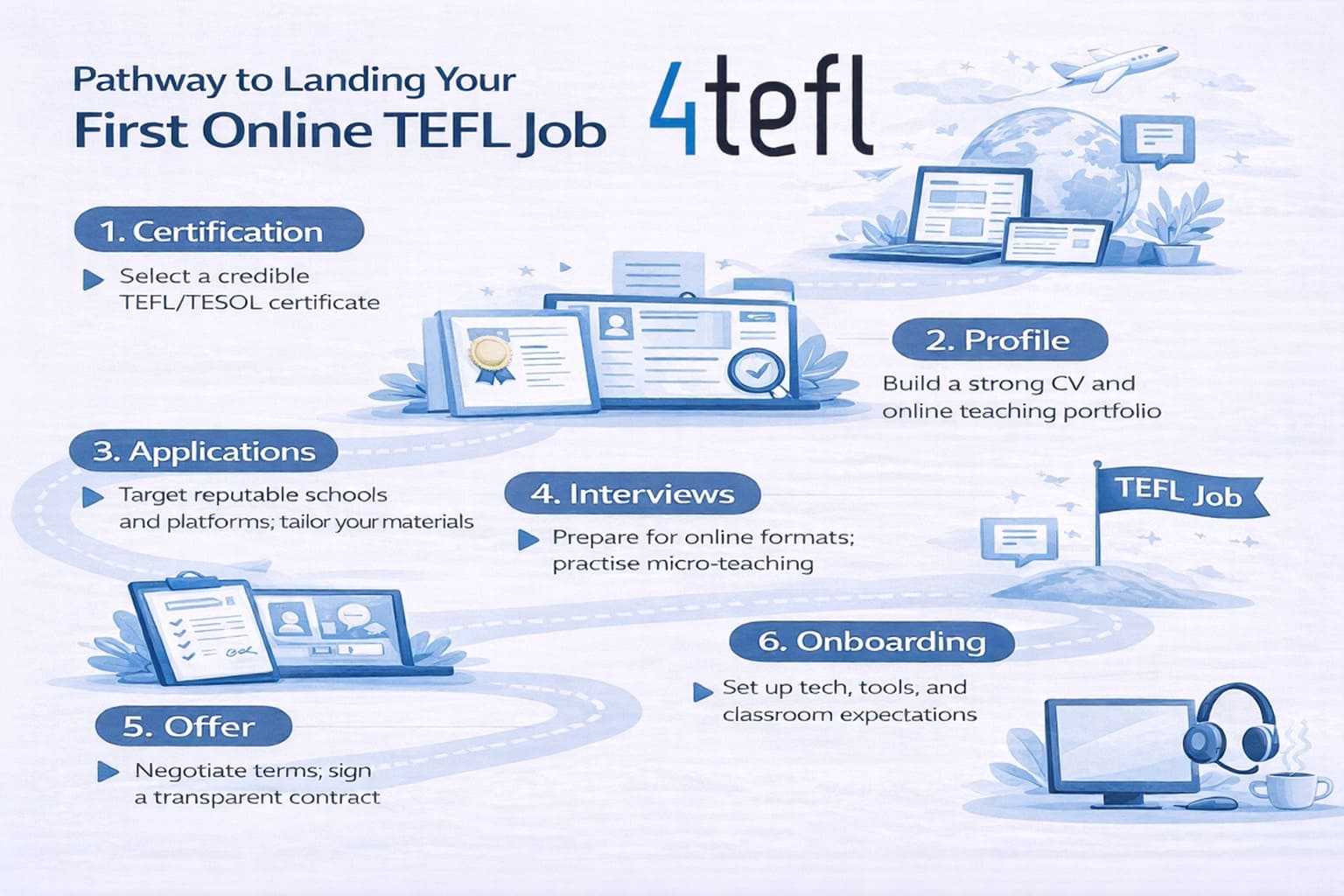
According to educational publications global demand for English learning continues to increase in many regions promoting the development of online teaching roles. With increased access to digital programmes more experienced online teachers are sought to deliver well structured lessons across different cultures. This growth comes with the responsibility to seek credible employment systems and protect your professional interests. A disciplined job search strategy combines direct applications to reputable schools with careful platform verification and a willingness to present a compelling portfolio that demonstrates your ability to teach effectively online.
Strategies for Acing Interviews and Demo Lessons Online
First impressions in online interviews are as important as in person meetings. Ensure your technology and environment are professional, test your microphone, camera, lighting and internet connection in advance, select a quiet well organised space and keep distractions to a minimum. In your interview preparation research the employer, their context and learner profile and be ready to articulate how your approach supports their learning outcomes. Expect questions about your teaching philosophy, classroom management, differentiation for mixed ability groups and how you integrate technology into lessons. Concrete examples from your prior experience such as how you handled a challenging learner or how you used a digital tool to keep students engaged can make your responses memorable and credible.
A successful online demonstration session shows your practical skills and your ability to manage a digital classroom. Before you start teaching prepare a clear lesson plan. During the lesson balance teacher input and interaction with learners, provide clear instructions and monitor understanding. Manage timing effectively, check with different learners and be ready to adapt if the class does not progress as planned. After the presentation be prepared to reflect on the lesson and respond to feedback showing that you can adapt to learners’ needs. Employers who value evidence based practice respond positively to structured reflection on teaching.
Several practical tips can help you succeed in interviews and demonstrations. Prepare a concise adaptable micro lesson that you can customise for different levels and age groups. Have brief success stories that quantify learner progress for example improvements in speaking confidence or vocabulary use. Demonstrate how to use the main functions of common platforms such as screen sharing, breakout rooms, polls and chat management and explain how these tools create engaging learning experiences. A balanced combination of preparation, professionalism and the ability to connect with online learners often leads to strong job offers.
Conclusion
End with a brief note on professional development: building a long term sustainable online TEFL career requires ongoing CPD, practical teaching samples and an active professional network. Consider joining forums or associations focused on TEFL/TESOL to stay current with best practice, technology updates and market demand. The field rewards teachers who continuously refine their craft and adapt to the evolving needs of diverse online learners.
Authoritative Sources and Fact Checks (References)
- Cambridge English: Official Celta Certification Overview.
- British Council: Teaching English Online Professional Standards.
- UNESCO: Digital Learning and ICT in Education.
- Westbridge CPD Institute: CPD Accreditation: CPD accreditation for organisations and professionals. Recognising quality learning, training and development across all industries.
Do I need a TEFL certificate to teach online?
Not every online TEFL job requires a formal certificate, but most reputable platforms prefer or require at least a recognized certificate (such as a 120-hour TEFL or similar). Having a credible qualification is a strong signal to employers and can widen your opportunities, especially for higher-pay roles and long-term contracts.
Which TEFL certificate is best for online teaching?
The best choice often depends on your goals. A well-regarded, accredited certificate such as CELTA or CertTESOL is widely recognised by schools globally. An online certificate can also be valuable if it includes a practical component or a supervised teaching practice. The key is to choose a programme from a credible provider and to accompany it with a portfolio of sample lessons and teaching videos.
How long does it take to get certified?
Time to certification varies by programme. A standard 120-hour TEFL certificate can take several weeks if studied part-time, or a few weeks intensively. More extensive or practicum-based certificates (including CELTA or CertTESOL) typically involve several weeks of study with practical teaching components. Always verify return policies and practicum requirements with the provider.
How much can I earn teaching online?
Online TEFL earnings vary widely based on factors such as qualifications, platform, location, demand, and hours worked. Entry-level roles may offer modest hourly rates, while experienced teachers with specialist knowledge or business English credentials can command higher pay. Earnings are also influenced by contract type (hourly vs. salary) and scheduling flexibility. It’s best to research platform pay scales and negotiate terms before accepting an offer.
Are online TEFL jobs scams?
Yes, scams exist in any online job market. Common red flags include upfront fees for training or placement, promises of guaranteed work, vague contract terms, and requests for sensitive information early in the process. Always verify the legitimacy of a school or platform, seek independent reviews, and rely on well-known, non-profit or government-backed guidance when in doubt.
Where should I look for credible online TEFL jobs?
Start with established schools and reputable platforms that publish transparent terms and provide real contact information. Direct outreach to schools, universities, or language organisations can also uncover legitimate opportunities. Use your CV and portfolio to demonstrate your capabilities, and ask current teachers for credible referrals. Ensure that any platform offers clear policy documents, reliable payment methods, and a support structure.