
Mastering the CELTA: Practical Strategies for Success


In the crowded world of English language teaching, CELTA keeps its place as the benchmark qualification for newcomers aiming to teach abroad or online. The challenge isn’t only about enduring four exhausting weeks of training. It’s about developing a lasting, evidence-based way of planning, practicing, reflecting, and responding-something you actually carry with you once you step into a real classroom.
This piece doesn’t sell motivation; it shares field-tested methods that work under CELTA pressure. The focus stays sharp: structured planning, deliberate practice, disciplined time use, and meaningful feedback. Whether you picture yourself teaching in a fast-paced urban school or online from your living room, these principles travel with you long after the course ends.
Mastering CELTA Planning: Turning Structure into a Lifeline
Planning holds CELTA together. The course throws input sessions, teaching practice, and observation at you in quick succession, and without a working system, things fall apart fast. A solid plan gives you breathing space, keeps you aligned with CELTA assessment standards, and saves you from those last-minute panic marathons.
Start each week with clear and measurable aims-small, specific targets you can track. Not vague goals like “teach better,” but practical ones such as improving your lesson timing or writing sharper, learner-centred lesson aims. You’re not just “doing CELTA.” You’re showing that you can build, deliver, and reshape lessons that actually serve learners’ needs.
Turn planning into a reliable habit. Build your own toolkit: a notebook or digital planner dedicated entirely to CELTA. Divide it into recurring blocks-reading, planning, teaching practice, observation notes, and reflection. Work backwards from learning outcomes. Start with the aim, then plan the path. Ask yourself: What will my learners do? What can I observe to measure progress? How will I adjust next time?
Illustrative weekly balance for CELTA planning and practice
| Resource/Task | Purpose | Time (per week) |
| CELTA input sessions | Theory and technique | 8-10 hours |
| Teaching practice (TP) planning | Prepare micro-lessons | 3-4 hours |
| Observed TP and feedback | Receive and integrate feedback | 6-8 hours |
| Reflective journaling | Document learning | 2-3 hours |
| Readings and assignment work | Coursework tasks | 6-8 hours |
A structured map lowers mental strain. It lets you respond to feedback calmly and helps you demonstrate consistent, evidence-based progress. Remember, CELTA tutors aren’t grading your creativity-they’re looking for proof of thoughtful, learner-focused planning.
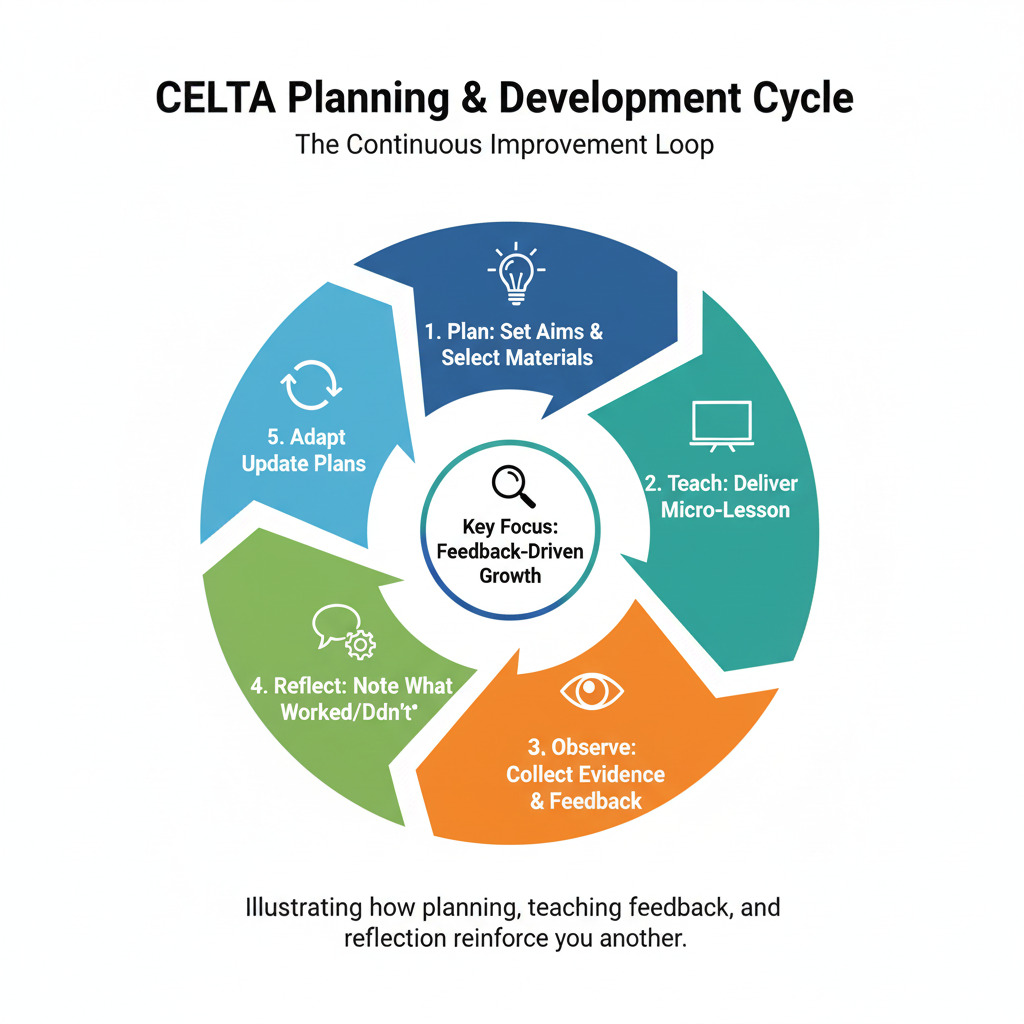
Turning Practice into Progress
Teaching practice is where it all happens. CELTA’s heartbeat. The best candidates don’t just go through the motions-they use practice to target precise teaching skills. Begin with micro-teaching: short, laser-focused lessons built around a single grammar or skill point. Keep your aim tight, sequence your stages carefully, and watch how students react. Adjust in real time if needed.
Micro-teaching gives you a safe space to fail fast and fix quickly. That’s how skill grows. Every TP (Teaching Practice) brings feedback-sometimes blunt, sometimes kind-but always valuable. Use it. After each session, note one or two small things to improve next time. Don’t wait till week four to act on feedback. Tiny, consistent changes stack up.
CELTA thrives on agility. You’ll be tested on how you react when something doesn’t land-an activity stalls, timing slips, a concept confuses your group. The course isn’t about perfect delivery; it’s about real-time responsiveness.
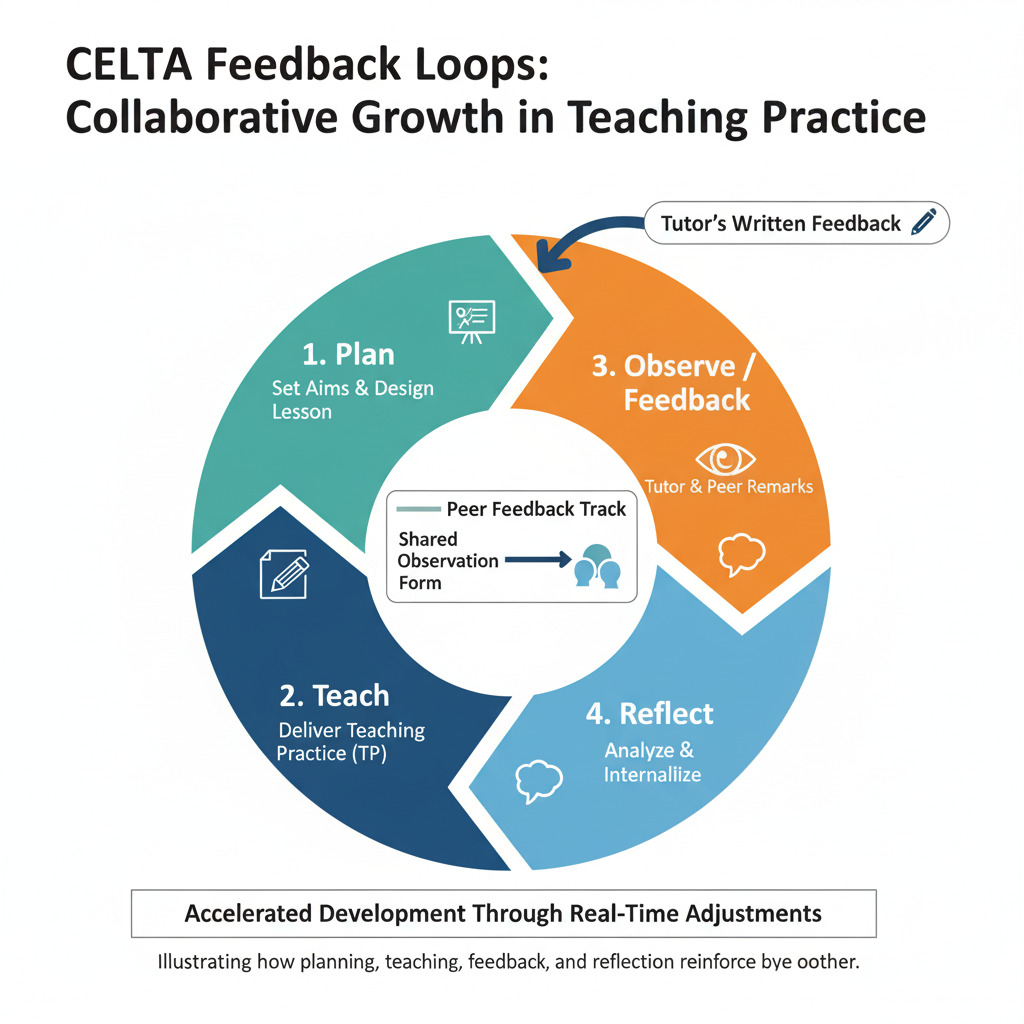
Practical practice activities
| Activity | Focus | Duration | Success measure |
| Micro-teaching 10-15 minutes | Targeting a single language focus or skill | 1 session per week | Clear aims achieved; smooth transitions; learner engagement high |
| Paired micro-lessons | Collaborative planning and delivery | 2 sessions per week | Evidence of co-planning and effective feedback handling |
| Video-recorded TP | Self-review and tutor critique | 1 per week | Notable improvement in clarity of instructions and timing |
| Error-correction workshop | Focused grammar or pronunciation corrections | 90 minutes | Increased accuracy in subsequent lessons |
| Observation with feedback | External perspective on practice | 1-2 hours | Concrete, actionable suggestions for improvement |
| Reflective journaling | Metacognition and planning | 15-20 minutes per TP | Evidence of growth over time, linking feedback to changes |
Learn to observe your learners closely. Notice their faces, their body language, their pauses. Adjust tasks when energy dips. That instinct-reading the room-is what separates a good trainee from a strong teacher.
Managing Time and Reflection Without Losing Sleep
CELTA eats time. The workload is intense, and without structure, days blur together. The trick isn’t to work nonstop-it’s to work with focus. Guard your time like it’s part of the course.
Build a weekly calendar that reflects your real commitments: input sessions, teaching blocks, and meetings with your tutor. Around those, block time for lesson prep, reading, and reflection. Schedule “focus weeks” when you zoom in on one key area, like feedback or lesson staging. This kind of planning isn’t rigid; it’s strategic.
Reflection anchors the entire course. CELTA assessors care about your growth as much as your current ability. After each teaching practice, write a short reflection-no fluff. Describe what happened, analyze why, and note what you’ll do differently. Over time, you’ll see your teaching style taking shape in those notes.
Illustrative weekly time-management plan
| Day | Morning | Afternoon | Evening |
| Monday | Read course notes | TP planning and materials prep | Personal time and light review |
| Tuesday | Input session follow-up | Micro-lesson design | Reflective journaling (20 minutes) |
| Wednesday | TP practice | Observed TP preparation | Self-review and notes |
| Thursday | Peer observation | Feedback implementation | Light reading or video review |
| Friday | Assignment work | Reflection consolidation | Break / social time |
Don’t underestimate personal wellbeing. Fatigue kills focus faster than anything else. Sleep properly. Eat food that keeps you alert, not wired. Step outside for ten minutes between sessions. It’s small maintenance, but it keeps you sane. A clear head plans better, absorbs feedback faster, and handles stress without spiraling. That’s what turns survival into progress.
Feedback: Making It Work Both Ways
Feedback in CELTA can be humbling. Tutors and peers dissect your lessons in detail, and it’s easy to take it personally. Don’t. Feedback is data. Listen, take notes, and repeat back what you heard to confirm you understood. Then, translate it into one or two concrete action steps.
Keep a notebook just for feedback. Label it “Implementation Log” if that helps. Each page should track what was said, what you changed, and how it went next time. When tutors see you applying feedback quickly, they notice. It’s one of the clearest signs of professionalism on the course.
Feedback prompts and questions
| Aspect | Prompt | Actionable question to ask |
| Clarity of aims | Were the aims visible to learners? | How can I make aims explicit at the start of the lesson? |
| Classroom management | Was the classroom smoothly run? | What cue or routine helped maintain flow? |
| Learner engagement | Were tasks engaging and appropriate? | Which activity elicited the most language use? |
| Monitoring and feedback | Was monitoring active and targeted? | What form of feedback would help students adjust next time? |
| Error correction | Was feedback timely and constructive? | How can I differentiate feedback by learner level? |
| Giving feedback | Was feedback precise and focused? | What form of feedback would help students adjust next time? |
Giving feedback matters just as much as receiving it. When it’s your turn, be precise. Talk about what you saw and how it affected learners. Skip the vague “nice energy” comments and go for specifics: “The instructions confused students because of the sequence.” Follow the OIS structure-Observation, Impact, Suggestion. It keeps everything practical.
CELTA works best when feedback feels like teamwork. You’ll see real growth once everyone treats criticism as part of collective improvement, not competition. The whole environment-Cambridge, British Council, tutors-all of it is built around reflective practice fed by strong feedback loops.
Practical Takeaways and Moving Forward
CELTA isn’t just a qualification-it’s an investment in how you teach, think, and respond under pressure. These methods-structured planning, targeted practice, smart time use, and open feedback-help you not only pass but actually grow.
Start small:
- Create a CELTA notebook with weekly SMART goals.
- Run two short micro-teaching sessions each week with a peer.
- Keep a reflection log using the three-step model (What, Why, Next).
- Set clear time blocks for planning and review.
- Observe as many teaching styles as you can. Borrow what works.
CELTA pushes you hard, but it pays you back with skill, clarity, and confidence. By the time you’re done, you won’t just be teaching-you’ll be thinking like a teacher.
What exactly is CELTA, and who is it for?
CELTA (Certificate in English Language Teaching to Adults) is the most recognised initial TEFL qualification globally. It prepares you to teach English to adults and young adults in varied settings, including schools, language centres, and online platforms. The course blends theory and practice, with an emphasis on learner-centred teaching, lesson planning, and reflective practice. Official guidance from Cambridge English and the British Council outlines the core components: input sessions, observed teaching practice, feedback, and assessment.
How many hours of teaching practice are required?
A common requirement across CELTA courses is a minimum number of hours for observed teaching practice, typically around six hours, though many centres provide more. These hours are designed to demonstrate your ability to plan, deliver, monitor, and adjust lessons based on learner needs. The exact quantity may vary by centre, but the emphasis remains on genuine, supervised teaching practice.
What are typical challenges CELTA trainees face, and how can you overcome them?
Common hurdles include managing a heavy reading load, balancing TP planning with observation feedback, and maintaining energy across intensive weeks. To overcome these, adopt a structured planning system, use time-blocking for TP and reflection, and develop a concise feedback routine with peers. Building a habit of quick, focused reflections after each TP helps consolidate learning and demonstrates progress to assessors.
How can I balance CELTA with other commitments?
Plan ahead with a realistic schedule that protects dedicated CELTA time, seek early support from your centre regarding assignment deadlines, and communicate with friends and family about your programme. Practising disciplined time management—such as batching similar tasks and using short, focused study blocks—reduces stress and preserves personal well-being.