Maximising TEFL Earnings in the Digital Classroom, 2026

The growth of online language learning will reshape how teachers earn a living in 2026. And prospective TEFL/TESOL instructors now demand information on what platforms are paying the highest rates, and how to give teachers the best advantage in a competitive market. The answer is subtle: your earnings are determined by platform business models, your qualifications, your niche expertise, and the way you manage your time across time zones and currencies. Instead of heading for a single website that meets your needs, you stand to gain by understanding payment structures, selecting paths suitable for your goals, and establishing a professional profile of credibility that attracts high-quality learners. This article dissects an already divided landscape, contrasts what kinds of financial arrangements are available, and shows ways in which one may earn more effectively without compromising quality or compliance with regulations.

Market Dynamics for Prospective Teachers
For prospective English teachers serving abroad or online, the labour market for TEFL/TESOL is quite dynamic. Market trends indicate ongoing demand for remote teaching, particularly for students who need to move, work flexible schedules, take specialised courses and/or take long, intensive exam-preparation classes. Certification and training are not box-ticking requirements, but instead a signal of professional and dependable behaviour that will result in better-paying jobs. Furthermore, areas of higher value (business English, IELTS/TOEFL tutoring, small-group or course-based formats) also offer better earning potential. Throughout, this guide continues to stress how training should provide a credible pathway for advancing in a career by aligning with Ofqual-regulated standards and internationally recognised TEFL/TESOL frameworks.
To contextualise the 2026 landscape, you’ll need a proper framework for comparing pay and opportunity across platforms. The following article discusses the differences in models (salary-based, commission-based, per-minute or per-lesson systems, course-based payment), factors affecting pay (e.g. the teacher’s credentials, demand from students, language specialisation needs in these specific environments, flexibility in hours), and practical ways to use the technology in the best interests of teachers. If you’re a newbie or looking to elevate your online teaching career, the plan is to provide reliable, evidence-backed guidance that supports your preparation for certifications, informs you if you are on the right platforms, and offers tips for increasing income that will last.
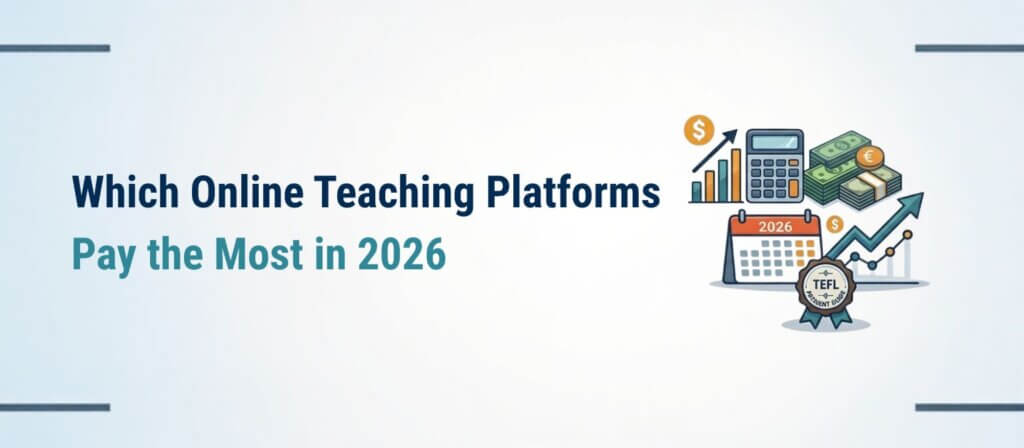
Which Online Teaching Platforms Pay the Most in 2026
By 2026, “the highest-paying platform” will do no more than combine models that work for you and your circumstances. Some platforms have salary-style contracts that produce a predictable monthly income, which can be a safe but capable option. Some are marketplaces where you can set your own rates and, when demand is strong and well aligned with your offer, deliver higher payouts. Others work on per-minute or per-lesson payments, rewarding efficiency and a consistent schedule. The key is how well you align a platform’s model with your skills, availability and the types of learners you want to serve.
For most teachers, the sweet spot is some combination of the two: high-earning marketplaces for spikes of demand, along with a regular salary-based platform for steady cash flow and payment for benefits. Pay is also influenced by geography and demand. In areas of great demand for English in business or exam training, teachers who deliver targeted, high-demand services can earn a premium on marketplaces (particularly in local or regional sectors with high student demand). Others, of course, offer salary-based online schools with steady paying structures that support ongoing income in quieter periods.
The trick is to create a network across spaces for a diversified portfolio, whilst keeping a robust teaching profile that centres on known qualifications. When it comes to attracting quality levels, however, governments and bodies of higher education focus increasingly on the importance of solid credentials and continuing professional development from teachers who have stronger credentials and are better prepared for opportunities for higher pay, especially when they need to be trustworthy, in subject matter, and can result in high levels of student effectiveness. Education and training levels will define who your online TEFL/TESOL career could be.
Platform pay isn’t just the hourly payment; it’s an indicator of what you are qualified to teach and how well you can deliver meaningful results. Teachers qualified with Level 5 Ofqual-regulated TEFL/TESOL qualifications (in conjunction with niche credentials (e.g. business English, preparation for IELTS, or working with younger students)) are often suited to higher-paying positions or premium student segments. To put this briefly, the higher the credential, the higher the access to well-compensated platforms and courses, the better the scheduling options and also the broader the scalability with group classes or packaged courses. That’s most important for platforms that partner with schools, corporates or run exam prep at scale. On a broader scale, in 2026 flexibility combined with top-end niches that have proven credible is what has you generating the highest earning potential. Prioritising platforms that you can play to (you may excel with one-to-one learning, having small-group classes, or you may prefer learning from the course side) should be in conjunction with a solid Ofqual-aligned training portfolio. The payoff not only reflects in higher wages, it also comes with much greater satisfaction in employment, professional growth, and a strong career course in the changing field of online English teaching.
Comparing Platform Rates for TEFL/TESOL Teachers Worldwide
Compensation for online TEFL/TESOL teaching is highly inconsistent across platforms and models. In 2026, four broad categories are generally found: salary-based online schools, online marketplaces where teachers determine or share rates, per-minute or per-lesson pay plans, and course-based compensation for packaged content.
| Platform type | Example models | Pay model | Earnings potential | Notes |
| Marketplace (teacher-set) | iTalki, Preply | Teacher sets rates; platform takes commission | High upside with strong demand | Success hinges on building a reputation |
| Marketplace (tiered) | Graduated pricing | Platform sets/moderates rates | More predictable; lower ceiling | Good for beginners/rating growth |
| Salary-based schools | Language institutes | Fixed salary or guaranteed hourly wage | Stable, predictable income | Often requires schedule rigidity |
| Course-based platforms | Self-paced programs | Pay per course or per enrolment | Scaled passive income | Best for course creation skills |
| Hybrid | Mixed platforms | Combined salary and commissions | Balanced earnings with growth | Diversification lowers risk |
A way to think about earning potential expectation is by matching the type of platform with the typical work pattern. With niche-specific topics (e.g. technical English for IT professionals or high-stakes exam coaching), platforms where you can offer premium rates often make more per hour, especially if you can maintain your occupancy during peak periods. Conversely, sites that pay a flat hourly wage or guaranteed hours will generally have predictable income, which can be important when juggling multiple streams of income or starting out. Per-minute models are adaptable and scalable but require careful calendar management to maximise utilisation and minimise gaps. With some variety through a small number of platforms (for instance, one-time course sales, recurring student subscriptions, and live lessons), earnings can often be the most resilient.
Source citation: These observations are consistent with industry trends reported by authorities and educational researchers, including UNESCO Education sector studies and OECD education research (UNESCO, 2023; OECD, 2023). UK government and education authority guidance also focuses on the ability to safeguard quality and learner outcomes (gov.uk/Ofqual references).
How Certification and Training Boost Online Earning
Certification, in online TEFL/TESOL work, is a tangible signal of quality for prospective students and employers. In competitive markets, a valid qualification is a way you stand out among many profiles. It also helps you earn higher rates, can lead to premium lessons and/or get hired more easily, particularly if you are targeting a corporate market. Your certification isn’t just about the piece of paper; it’s about the pedagogy, assessment, and classroom management skills that you use in every session. With a good teaching record and documented credentials, you provide a compelling value proposition for both the learner and the hiring manager.
Ofqual-regulated qualifications have extra weight in the UK and overseas markets. A Level 5 TEFL/TESOL diploma, for example, is created to be linked to well-recognised professional practice standards in international education, in alignment with other regulated teaching qualifications. This alignment can facilitate enrolment in online schools that require formal accreditation, and introduce roles in areas such as curriculum development, teacher training, or leading small teams of online instructors. Anyone who wants to teach abroad can also use Ofqual-regulated credentials for visa and work permit applications where regulation or requirements for teacher qualifications are very strict.
UNESCO and OECD findings illustrate the increasing sophistication of online learning markets, where learners are looking for tailor-made language skills that relate to their occupation. By investing in micro-credentials and continuing professional development, you show commitment to providing the best instruction possible for your students while gaining further professional support over the long term. To convert the opportunity for training into larger profit, connect your certification plan to the platform model that you will use.
Top Strategies to Maximise Online Teaching Income 2026
- Diversify Platforms: Don’t lean on any one platform. Functioning on multiple platforms (minimum of two large marketplaces and one salary-based site) allows you to align peak periods of demand and hedge against policy changes.
- Specialise in High-Demand Areas: Specialisation is important because you can charge a premium rate. Business English, IELTS/TOEFL preparation and English for specific vocations (medicine, law, aviation, IT) are highly sought after.
- Optimize Calendar and Tools: Adopt a combination of live one-to-one teaching, small-group teaching and stand-alone courses. Group formats generally generate higher cumulative earnings per hour.
- Invest in Branding: Your professional image is crucial. A clear profile with a strong introduction and carefully crafted sample lessons can significantly increase learner trust.
- Stay Informed: Stay aware of regulatory changes, including taxes and currency differences. Maintain a professional approach to pricing, billing and refunds.
Regional Variations and Market Trends in 2026
Earning potential in online TEFL/TESOL is still strongly influenced by regional differences. In many Asia-Pacific markets, English language skills linked to employment and higher education remain highly sought after. Europe continues to offer university and professional opportunities, while in North America and the UK, online schools prioritise reliability and measurable outcomes.
Market trends in 2026 show that learners increasingly seek flexibility, personalised feedback and outcomes-based learning. This aligns with platforms that reward teachers who set clear milestones and demonstrate measurable progress. Governments and international organisations maintain high standards, reinforcing the need for teachers with strong credentials and professional competence.
Choosing the Right Platform for Your Career Path
Identifying your career objectives is the first step. Do you need predictable income or are you comfortable with a commission-based model with higher upside? Next, map your credentials to platform needs. For most reputable marketplaces, strong TEFL/TESOL qualifications, ideally aligned with Ofqual standards, are required for higher-level roles.
Finally, pilot and measure. Start with two or three platforms, then monitor key metrics such as utilisation rate, student retention, and revenue per hour. Use this data to refine your pricing, schedule, and services. By combining clear career goals, relevant qualifications, and continuous evaluation, you can build a strong teaching practice and maximise your earnings in 2026 and beyond.
Authoritative Sources and Fact Checks (References)
- Ofqual (UK Government): UK government regulatory body for RQF levels.
- British Council: Primary source for global standards in ELT.
Which platform pays the most in 2026?
There isn’t a single best platform for everyone. Earnings depend on your niche, credentials, and how you combine platform models (salary-based, marketplace, per-minute, and course-based). Diversifying across platforms and specialising in high-demand topics generally improves earning potential.
Do I need a TEFL/TESOL certificate to teach online?
While some platforms accept a range of qualifications, most credible online schools and marketplaces prefer or require a TEFL/TESOL certificate. An Ofqual-regulated Level 5 TEFL/TESOL credential can enhance credibility and access to higher-paying roles and corporate clients.
Can I teach online without an in-person visa?
Yes, many online TEFL/TESOL jobs do not require an in-person visa, but you must comply with local tax regulations and platform policies. If you plan to teach across borders regularly, consult the relevant government guidance on visas and tax obligations.
How can I maximise my online earning as a TEFL/TESOL teacher?
Diversify across platforms, specialise in in-demand niches (business English, IELTS/TOEFL, exam coaching), create evergreen courses, optimise your calendar for peak demand, and maintain a professional profile with evidence of learner outcomes. Align certification with your niche to command higher rates.
Are regional differences important for pay?
Yes. Demand, pricing, and platform acceptance vary by region due to market maturity, language demand, and corporate client access. A well-rounded, region-aware strategy - combining regulatory-aligned credentials with targeted marketing - tends to yield the best results.
How does Ofqual-regulated training help my TEFL/TESOL career?
Ofqual-regulated training provides a credible, government-regulated standard that many employers recognise. It can facilitate access to higher-paying roles, reduce barriers to entry for online schools, and help you compete effectively for premium learners and corporate clients.