Next-Gen TEFL Hotspots for 2026 and Beyond


One thing to remember: aspiring English language teachers today look at shifting visa policies, developing demand and the growing scope of online teaching alongside traditional classroom roles, uniting functionality with aesthetic appeal.
What makes this different is that, for many, the decision about where to teach is not driven only by remuneration but by:
- Work-life fit.
- Professional growth.
- Cultural adjustment.
- Long-term career prospects.
You might consider that the most compelling TEFL destinations for 2026 and beyond will combine clear pathways to employment with teacher support, sound working conditions and a welcoming living environment, helping you find the ideal fit for your needs. The truth is, this section reflects that. Drawing on UNESCO, the British Council, the OECD and other reputable bodies, we outline credible paths to a successful, ethical and enriching experience overseas or online, combining functionality with aesthetic appeal.
Emerging TEFL Destinations to Watch in 2026
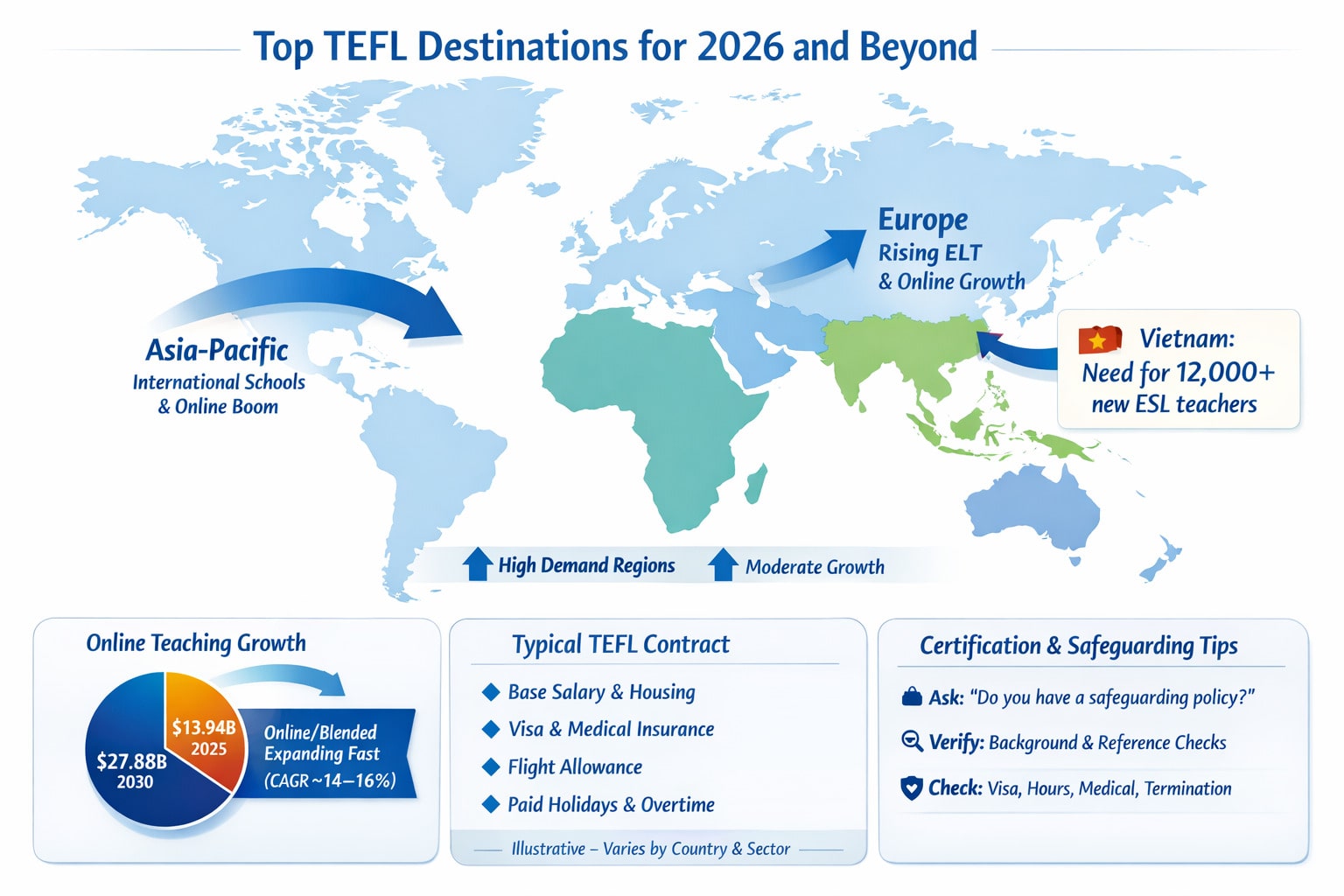
What’s interesting is that, in a world where English remains a global lingua franca for business, academia and travel, several markets are moving towards clearer, better-supported TEFL pathways, offering both stability and quality. Across regions, the markets that tend to stand out share common traits:
- Transparent hiring.
- Realistic workloads.
- Contracts that match local legal frameworks.
- Clear expectations for teacher qualifications.
For many aspiring teachers, the combination of reasonable starting salaries, manageable living costs and straightforward visa routes will shape the best starting point, helping to make your move easier. You’ll also want to weigh teacher support and long-term development, not only the headline pay figure.
Asia’s Expanding TEFL Markets for 2026
Here’s what you should know: Asia remains a force in TEFL, with countries evolving their visa frameworks and employer expectations to attract international teachers.
- Vietnam and Taiwan: Introduced updated visa schemes and clearer hiring channels, making it easier to secure documentation under more transparent conditions.
- Japan: Gradual reopening and shift towards more flexible teaching roles may widen options for early-career teachers and career changers.
- The Philippines and Indonesia: Established networks of teachers and private language-school sectors, which can make entry more accessible.
What’s interesting is that as you assess Asia, the focus should be on reputable programmes, local support and clear employment terms. UNESCO and the British Council consistently emphasise quality teacher preparation and safeguarding standards in international classrooms. Choosing destinations with well-designed local mentoring and accessible regulatory guidance can help you avoid common pitfalls and build a strong foundation for your TEFL career.
Table: Snapshot of Representative TEFL Destinations for 2026
| Region | Popular Destinations (Examples) | Why It’s Appealing | Key Considerations |
| Asia-Pacific | Vietnam, Taiwan, Philippines, Indonesia | Growing demand, modern facilities, emerging visa routes | Verify visa type, ensure contract clarity, language support services |
| Europe | Poland, Portugal, Greece, Spain | Stable demand, expat communities, temperate climates | Understand work permit requirements, recognise local teaching standards |
| Latin America | Chile, Colombia, Mexico, Peru | Moderate cost of living, rich culture, friendly communities | Confirm visa processes, protect against contract pitfalls |
| Middle East & North Africa | United Arab Emirates, Saudi Arabia, Qatar | Generous compensation, housing; professional development | Complex regulations; ensure compliance with local laws |
| Online/Hybrid | Global remote roles | Flexibility, diverse student pools, potential higher hours | Maintain robust tech setup; align with preferred time zones |
Strategic Market Analysis
What to look for in a “strong” market
- Onboarding: Clear entry requirements and a realistic timeline for visas and onboarding.
- Contractual Integrity: Contracts that specify working hours, teaching load, paid preparation time and overtime policies.
- Academic Guidance: A defined induction process and an academic support structure (mentor, training lead or coordinator).
- Class Dynamics: Reasonable class sizes and assessment expectations that match the programme level.
- Financial Clarity: Transparent pay structure (base salary, allowances, bonuses and end-of-contract terms).
Common red flags to avoid
- Vague contracts, unclear working hours or “flexible” schedules that turn into unpaid overtime.
- Promises of a visa “later” or requests to work before legal status is confirmed.
- High fees for placement with little training or poor support.
- Employers unwilling to provide written details about housing, insurance or workload.
- Pressure to accept a role quickly without time to review terms.
Beyond Asia: Other Regions Worth Watching
What makes this different is that emerging opportunities are not limited to one continent. As global mobility continues to shift, you may find attractive openings in regions where English is increasingly tied to tourism, business services, international schooling and higher education partnerships.
- Middle East: opportunities can be strong where contracts are clear, benefits are stated in writing and teachers have recognised qualifications with observed practice.
- Latin America: roles may appeal to teachers prioritising cultural immersion and steady experience-building, especially where private institutes and bilingual schools are well-established.
- Europe: opportunities can be viable where you have the right work status, language skills or a pathway through recognised programmes, universities or specific school networks.
The key is not the region itself but the “fit” between your profile, your legal pathway and the quality of employer support.
Online and Hybrid Pathways for 2026
The beauty of this is that online teaching can now complement on-site work rather than replace it. For some teachers, a hybrid plan reduces risk: you build income online while you prepare documents, interview or transition into an overseas role.
Practical steps that tend to help:
- Choose a clear niche: (young learners, IELTS/EAP, Business English or conversation plus pronunciation).
- Build a small portfolio: lesson samples, short assessments and a micro-lesson outline.
- Track outcomes simply: (attendance, learner feedback, progress notes) to support future applications.
- Keep your schedule sustainable: consistent hours usually matter more than chasing every platform.
Choosing Your Destination: A Practical Framework
The outstanding thing is to clarify your teaching goals early: do you want classroom experience, cultural immersion, salary maximisation or a pathway to graduate study, uniting functionality with aesthetic appeal.
Core Evaluation Factors:
- Visa & Legal: Review visa routes carefully and check employer expectations: contract terms, working hours.
- Benefits: Accommodation, flights, health insurance and any professional development budget.
- Financial Planning: Factor in cost of living and net pay by considering local taxation, housing, transport and everyday expenses to avoid overestimating take-home pay.
Building Your Foundation:
Here’s something useful: building a support network before you go pays dividends, providing a strong balance of form and function. Search for employers with formal induction, local mentors or access to academic support. A good programme reduces early challenges and helps you understand professional expectations, safeguarding responsibilities, reporting procedures and student wellbeing, offering peace of peace.
Preparation Checklist:
- Gain an accredited TEFL/TESOL certificate.
- Build a teaching portfolio with sample lesson plans and assessments.
- Connect with graduate networks in your target regions.
- Gather documents early: transcripts, certificates, criminal record checks.
A simple pre-departure checklist
- Passport validity and key documents (scans + certified copies where required).
- Qualification proof and practicum evidence (observed teaching, mentor feedback, course outline).
- Budget buffer for the first month (deposit, transport, essentials).
- Health cover clarity (what the employer provides vs what you must arrange).
- A “Plan B” option (online hours or a second market to apply to if timelines shift).
How to Choose the Right Destination for You
What’s interesting is that experience level matters: newly qualified teachers often benefit from markets with strong support programmes and well-defined starter contracts. More experienced teachers may target higher salaries or more specialised roles in markets that value advanced qualifications, combining functionality with aesthetic appeal.
Language goals and cultural exposure should guide your choice as well; some destinations offer deeper immersion while others prioritise practical classroom English for workplace or academic settings. Home conditions, healthcare, training, safety and public services should inform your decision, especially if you plan to relocate with dependants or long-term commitments.
From a career perspective, align with destinations that support:
- Ongoing professional development.
- Access to recognised qualifications.
- Opportunities to progress within the teaching ecosystem.
Essentially, safety and ethics should underpin every choice, providing a clear balance of form and function. Review contract terms for clarity on working hours, housing, insurance, termination conditions and any tax or visa obligations. Seek advice from reputable TEFL communities or graduate networks to verify claims and gather real-world perspectives, helping you make grounded decisions.
Authoritative Sources and Fact Checks (References)
- British Council – Teach Abroad: Comprehensive guidance on international English teaching standards and global opportunities.
- UNESCO – Teachers in focus: – Information on global education standards, teacher qualifications, and safeguarding in education.
- OECD – Education at a Glance: Statistical data on global education trends, teacher salaries, and working conditions across member and partner countries.
Do I need a master’s degree to teach TEFL abroad?
Most reputable programmes and destinations accept a bachelor’s degree plus a TEFL/TESOL certificate; some roles, particularly in higher education or the UAE/Qatar, may prefer postgraduate qualifications or stronger credentials. Always check the specific employer requirements and regional expectations.
What is the typical start-up time for a TEFL job abroad?
Start dates often align with academic calendars or school terms, typically 1-3 months after a job offer, depending on visa processing times and contract terms. Early applications and complete documentation can shorten this window.
Is online TEFL teaching a viable long-term path?
Yes. Online TEFL can offer flexible hours and the chance to work with diverse student groups; many teachers combine online work with occasional in-person contracts to diversify income and experience. Prioritise platforms and employers with transparent contracts and clear safeguarding policies.