Practical Pathways to Teaching English Online


The increase in online demand for English has altered where and when teachers work. For many emerging educators it is not a question of finding security but of building a sustainable practice that combines solid pedagogy with reliable technology and a clear professional identity.
The challenge is to enter a market with credible skills sound materials and ethical approaches that operate across borders and time zones while preserving time and effort. This guide proposes a clear framework.
Online teaching of English sits at the intersection of pedagogy connectivity and global scale. UNESCO and the British Council note its practical value. With strong certification well designed lessons effective digital tools and a professional profile teachers can support language growth while maintaining personal resilience and professional flexibility.
Core Pillars of the Report:
- Certification and specialisation
- Technology and classroom setup
- Instructional design
- Development and feedback
- Assessment and inclusion
- Wellbeing
Charting Your Path: Certification, Specialisation and Goals
A credible qualification is the foundation of an online teaching career. Accredited training and assessment signal competence and are often preferred by employers especially when paired with practical teaching experience. In Britain and many other English speaking contexts CELTA programmes remain highly valued for their rigorous approach to online delivery feedback cycles and reflective practice. The documentation you choose matters.
- Accreditation: Seek recognised programmes supported by reputable universities or professional bodies. Accreditation adds credibility.
- Skills Component: The skills component depends on scope and level. Decide whether you need general English, business English, exam preparation or adult learning and balance practicality with engagement. Some qualifications offer niche pathways such as DELTA style routes which can improve career prospects and earning potential.
- Format: Consider the format carefully. Choose a mode of study that fits your schedule and preferred learning style.
- Professional Development: Further professional development is essential. An initial qualification opens doors but ongoing growth in assessment inclusion and educational technology brings long term benefits.
Building a Credible Portfolio
A certificate opens the door but a portfolio shows how you teach in practice. Include recorded teaching segments reflective notes and evidence of learner progress where possible. A well developed portfolio can be added to your CV and demonstrates your approach to online classroom management digital tools and inclusive practice.
Core Teaching Competences
Within the online teaching environment competence is built through daily practice. Key areas include:
- Lesson planning aligned to clear outcomes.
- Effective virtual classroom management.
- Assessment literacy and timely feedback.
- Subject specialisation.
- Inclusive methods that support multilingual and diverse learners.
Technology Setup for Effective Online English Teaching
A strong technical foundation is as important as sound pedagogy. Effective online teachers create stable low stress learning environments and select tools that support clear communication progress tracking and interaction.
Infrastructure Requirements
- Hardware and connectivity: Require a reliable internet connection preferably wired or strong wireless, a clear webcam with good lighting, a quality microphone or headset and a quiet space free from interruption.
- Software and platforms: Should include video conferencing tools with screen sharing breakout rooms and chat functions supported by a learning management system or digital workspace to host materials assignments and feedback. Attention to privacy settings and data protection is essential.
Environment & Accessibility
- Classroom setup: Position the camera at eye level use balanced lighting and minimise distractions. Comfortable headphones can reduce fatigue.
- Digital materials: Create or adapt resources in accessible formats such as transcripts clear fonts and strong visual contrast and provide subtitles where possible.
Table: Modality, Description and Use Cases in Online ELT
| Modality | Description | Best Use Case | Notes |
| Live video lessons | Real-time interaction between teacher and learners | Speaking practice, immediate feedback, live correction | Requires stable bandwidth and scheduling across time zones |
| Asynchronous tasks | Learner-paced activities with caregiver or self feedback | Grammar practice, writing, listening drills between sessions | Enables flexible learning but requires clear instructions |
| Flipped micro-lessons | Short pre-class content followed by in-class tasks | Foundation vocabulary and structures before interactive practice | Demands upfront preparation and learner discipline |
Structured Design: Syllabus Activities and Materials
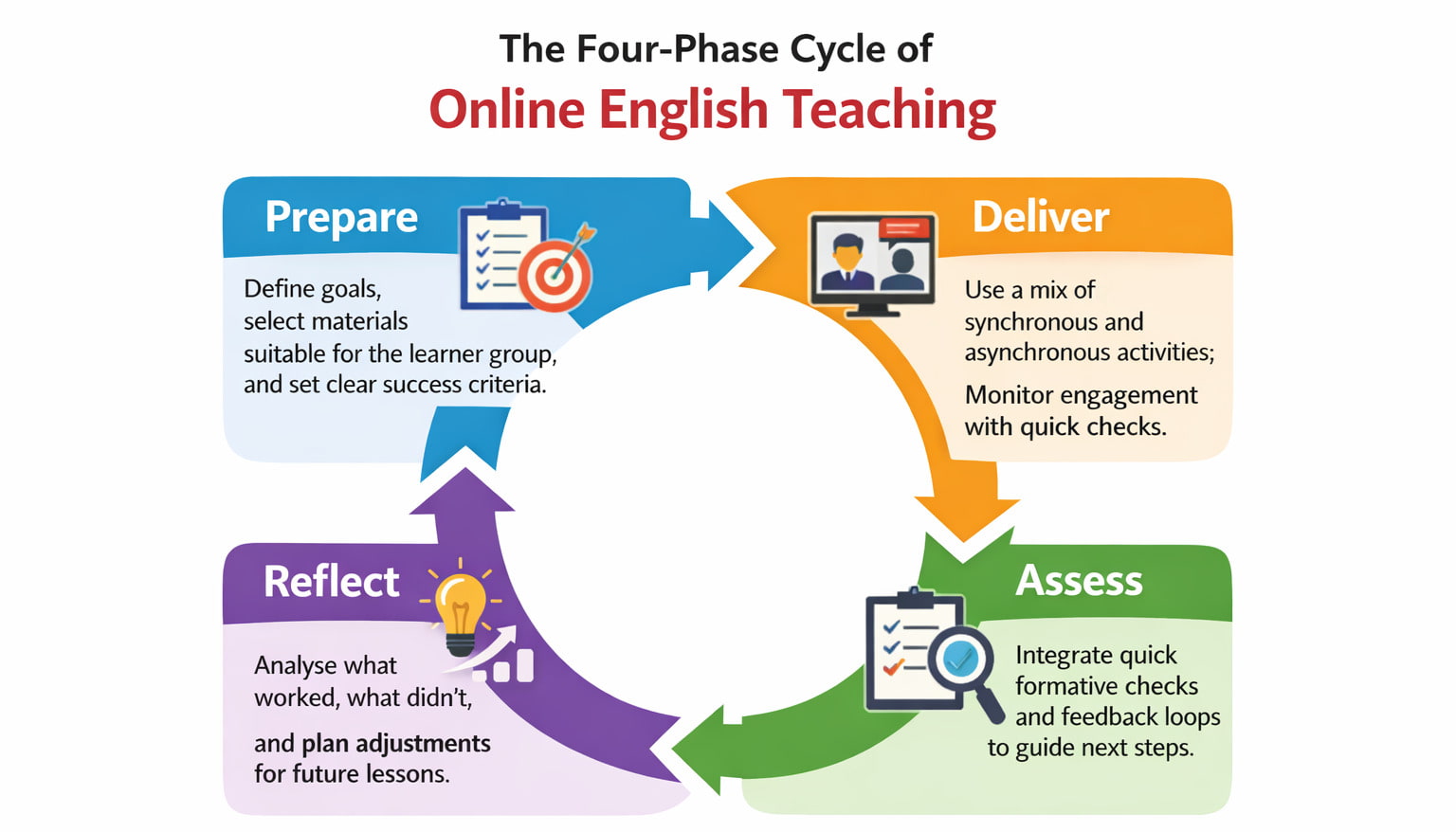
A well structured lesson is the backbone of effective online teaching. It should manage cognitive load offer varied interaction and maintain coherence. A typical 60 minute online lesson can integrate speaking listening reading and writing in a clear sequence.
Lesson Sequence:
- Warm up: Begin with a warm up and objectives to focus attention and set shared goals.
- Presentation: Present and practise new language in context followed by controlled activities that gradually increase complexity.
- Production: Move to meaningful production where learners use new language in speaking or writing tasks that reflect real communication.
- Review: End with review and reflection through a brief summary and a short diagnostic or self assessment to guide next steps.
Differentiation for Learners
Online teaching often brings mixed ability groups. Effective differentiation supports learners at different levels. Regular review of learner profiles and pre course diagnostics helps address individual needs.
Learner Engagement Interaction and Feedback
Engagement drives online learning success. Effective teachers create frequent opportunities for interaction provide clear feedback and foster a supportive classroom culture.
- Interaction Formats: Use multiple interaction formats alternating between teacher led input pair work and group discussion. Breakout rooms support collaboration.
- Feedback Quality: Feedback should be timely specific and constructive using spoken comments written notes and audio feedback to suit different preferences.
- Scaffolding: Clear scaffolding helps learners succeed. Break complex tasks into manageable steps and use checklists to guide progress.
Assessment in Virtual Classrooms
Assessment should be valid transparent and aligned with learning outcomes. Balanced approaches combine informal checks low stakes quizzes and performance based tasks that reflect real language use.
- Formative: Use ongoing formative assessment to monitor progress and adapt instruction.
- Summative: Summative assessment can include projects or tests aligned with target language goals.
- Transparency: Clear rubrics and criteria shared in advance help learners understand expectations.
- Quality Principles: Include privacy fair access accessible materials bias awareness and task adaptation for diverse learner profiles.
Cultural Awareness Language Support and Accessibility
Online English teaching succeeds when it respects cultural diversity and ensures access for all learners. Inclusive practices support students from varied linguistic and educational backgrounds.
- Instructional Language: Use clear instructional language provide glossaries and check understanding regularly.
- Universal Design: Inclusive design offers multiple ways to engage represent ideas and express learning.
- Intercultural Sensitivity: Global awareness means integrating intercultural sensitivity into topics examples and tasks to reflect learners’ contexts.
Career Growth in the Online English Teaching Market
The online English teaching market offers flexible career paths but success depends on qualifications experience and professional networking.
- Contexts: Teachers often work across platforms and contexts including group classes one to one tuition and exam preparation.
- Personal Branding: Personal branding matters. A clear value proposition a professional CV and an online portfolio can significantly influence employability.
- Ongoing Growth: Ongoing development remains vital. Engage in training attend webinars participate in peer observation and stay current with educational technology.
Future Trends and Best Practice
The online English teaching field continues to evolve with rising expectations around technology pedagogy and wellbeing. International organisations emphasise quality standards ethical data use and learner centred design.
Effective teachers stay informed about research trends emerging tools and human centred approaches to language learning. Continuous professional growth experimentation with appropriate technology and a coherent teaching philosophy support long term success across contexts and cultures.
Authoritative Sources and Fact Checks (References)
- British Council – TeachingEnglish: Comprehensive resources on pedagogy and professional development for English teachers globally.
- Cambridge English – Digital Teacher: A framework for digital skills and certification (including CELTA/DELTA) for language educators.
Do I need a CELTA or equivalent to teach English online?
Many online roles accept accredited TEFL/TESOL certificates, particularly when paired with practical teaching experience. CELTA and similar qualifications are widely recognised for their rigorous practicum and feedback processes. Employers often value a combination of credentials, a strong portfolio, and demonstrable classroom practice.
How many hours per week should I plan for teaching and preparation?
Hours vary by role and market. Beginners may teach only a few hours weekly while building a portfolio, while experienced online teachers might schedule 15-25 hours or more, plus time for material preparation and student feedback. Efficient course design and robust time management help maintain balance.
Which platforms should I use, and how do I choose?
Select platforms that align with your teaching context, learner needs, and privacy considerations. Prioritise a stable video experience, clear audio, and tools that support interaction, assessment, and feedback. Do not rely on a single platform; diversify where possible to maximise opportunities.
How can I build a strong teaching portfolio for online roles?
Include certified qualifications, a short bio, sample lesson plans, videos or written reflections of teaching practice (with learner consent), and evidence of learner progress. Include clear examples of differentiation, feedback strategies, and inclusive practices.
Is online teaching sustainable as a long-term career?
Yes, particularly when combined with ongoing professional development, diversification of learner markets (adults, teens, exam prep), and a robust professional network. The flexibility of online teaching can enable long-term stability and cross-border opportunities.