Spain’s TEFL Hotspots: The 5 Best Cities to Teach English

What’s really neat is Spain offers a TEFL pathway coalescing historic culture with modern language demand and providing both convenience and quality. Essentially, for aspiring English teachers, the question is not “where” but “where is best for your goals: stability, salary, climate and career growth”. Spain’s cities differ in scale and opportunity: Madrid’s big-city ecosystem, Barcelona’s cosmopolitan buzz, Valencia’s balanced charm, Seville’s warm Andalusian rhythm and Malaga’s growing English-teaching scene giving you the ability to make your life easier. A well-chosen city can make a big difference.
It’s worth noting that this article guides you through the five top Spanish cities for TEFL, compares cost of living and salaries, sets out formal certification pathways and offers practical steps for a successful move uniting functionality with artistic appeal.
With the right documentation and a clear plan you can secure rewarding roles across private academies, public language centres and international schools. Spain has specific visa rules especially for non-EU citizens where getting the correct work authorisation is essential. As you read you’ll see city-by-city differences, typical pay ranges and realistic living costs supported by credible sources from recognised authorities and educational bodies. The aim is to give you a solid framework for planning your TEFL in Spain.
In the sections that follow you’ll see a city-focused overview, a clear look at living costs and earnings, guidance on certification and practical advice for relocation. What matters most is the content draws on established industry knowledge and comparative data from credible organisations including the British Council, OECD and national statistics bodies to give you a trustworthy model for planning your TEFL in Spain.
Top 5 Spanish Cities Ideal for TEFL Teaching Careers
Spain’s five strongest TEFL hubs range from the nation’s capital to its sunlit coastlines offering both comfort and quality. The central point is that Madrid and Barcelona anchor the market with strong demand, dense networks of language schools and well-established expatriate communities. This is precisely what you need. Valencia offers a more affordable lifestyle with rising opportunities, Seville provides a calmer pace and deep cultural immersion and Malaga’s English-teaching scene continues to grow. Unlike other options, each city presents a distinct blend of working conditions, social life and professional networks so your choice should align with your personal priorities whether that is maximising hours, minimising cost of living or enjoying a particular Spanish lifestyle.
The TEFL marketplace in these cities includes private language schools, academies linked to international education networks and occasional roles in bilingual schools. Teaching hours may include evenings and weekends particularly in private language schools that run after-school classes or weekend intensives. This is efficient for many teachers as strong opportunities often appear once you build a local network and earn a certificate with recognised accreditation. In Madrid and Barcelona demand is high but competition can also be strong. Valencia, Seville and Malaga often offer a more balanced workload and more accessible housing options where some contracts may include accommodation allowances.
The key point is the right fit depends on your preferences whether you prioritise a large urban environment with an active social setting or a more relaxed atmosphere with a strong sense of community. Your choice will affect visa options, cost of living and opportunities for private tutoring and it will shape your overall quality of life. A planned approach to certification and job searching will help you build a sustainable TEFL career in Spain.
Madrid, Barcelona, Valencia, Seville: TEFL Hotspots Explained
Madrid and Barcelona stand out as the most developed TEFL markets in Spain. Madrid’s size translates into a wide range of English-language schools, international programmes and corporate language training. Salaries in private academies can be competitive and the city’s transport network makes commuting straightforward helping you make daily life easier. Barcelona shares many of these features. Both cities have active expat communities which can ease your transition and offer informal tutoring opportunities to supplement income.
Valencia and Seville offer compelling contrasts and provide both comfort and quality. Valencia has a mild climate, more affordable housing and a growing number of language schools, making it appealing for teachers seeking steady hours without intense city pressures. Seville provides a slower pace, a warm winter climate and strong cultural immersion which can be attractive for longer-term stays focused on community and continuity. Malaga has experienced a rise in TEFL activity driven by its pleasant climate and steady flow of English learners along the Costa del Sol.
For new teachers choice often comes down to cost, language-school density and the strength of professional networks. Madrid and Barcelona may offer more hours and more varied teaching environments though they require careful budgeting and time management. Valencia and Seville offer lower rents and community-centred environments supporting smoother relocation. Malaga offers many of these advantages with a coastal lifestyle.
A practical tip: join local expat and teacher groups to learn about contract terms, housing options and preferred teaching niches. The best opportunities often come from local networks and word-of-mouth recommendations rather than job boards.
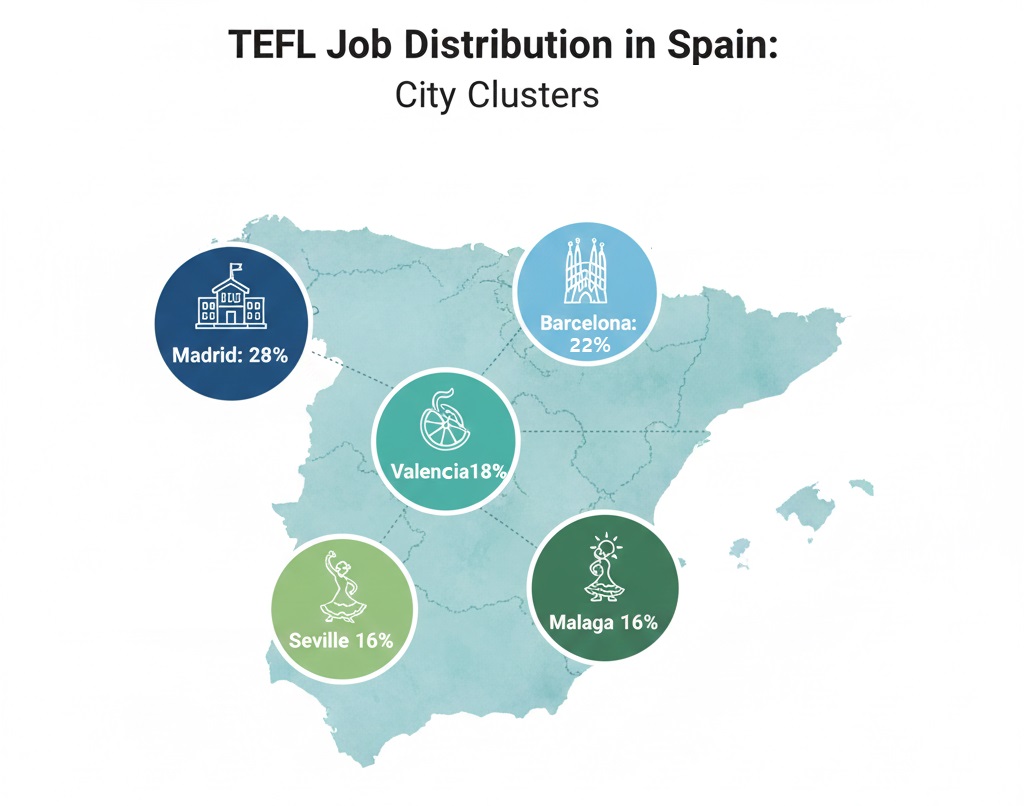
Here’s the thing: for credible context, information on urban cost of living and educational demand aligns with international assessments and national statistics bodies which consistently show Madrid and Barcelona as high-demand hubs, with Valencia and Seville offering more affordable living alongside growing English-language education opportunities.
Cost of Living and Salary Trends for TEFL in Spain
The amazing part is the cost of living in Spain changes considerably by metropolis, offering both convenience and quality. Get this: in Madrid and Barcelona housing typically represents the biggest monthly expense, with rents for one-bedroom flats in city centres commonly higher than in other Spanish cities. Facing challenges? Valencia, Seville and Malaga offer more affordable alternatives, particularly outside historic districts, and this disparity can significantly determine monthly budgets and overall quality of living for TEFL teachers, helping you preserve time and effort. Beyond rent, daily prices also vary.
Pay trends in Spain’s TEFL sector mirror city-level price dynamics. Private language schools and academies normally offer monthly salaries in the range of roughly 1,000–1,400 EUR in Madrid and around 1,050–1,450 EUR in Barcelona depending on qualifications, hours and the inclusion of co-teaching or practicum components. Valencia and Seville typically offer lower ranges, broadly around 900–1,300 EUR and 850–1,200 EUR respectively, with Malaga often falling in between. Wages are commonly described as modest. For many TEFL teachers, private tutoring in the evenings or at weekends can significantly boost take-home pay, particularly in bigger cities where demand for conversational English is high.
A three-city snapshot of typical monthly salary bands (gross) helps clarify the landscape, though exact figures depend on hours, employer type and contract specifics:
- Madrid: 1,000–1,400 EUR
- Barcelona: 1,050–1,450 EUR
- Valencia: 900–1,300 EUR
- Seville: 850–1,200 EUR
- Malaga: 900–1,350 EUR
Typical TEFL salary ranges by city (EUR/month)
| City | Typical monthly salary (EUR) | Notes |
| Madrid | 1,000–1,400 | Private academies; higher competition for extra hours |
| Barcelona | 1,050–1,450 | Higher cost of living; substantial after-hours work potential |
| Valencia | 900–1,300 | More affordable housing; steady number of language schools |
| Seville | 850–1,200 | Budget-friendly city life; strong cultural draw |
| Malaga | 900–1,350 | Growing TEFL market; coastal lifestyle |
The broader context from international and national sources supports these patterns. While exact salaries fluctuate by year and by school type, the combination of high demand in major cities and comparatively lower living costs in Valencia, Seville and Malaga tends to create a favourable balance for teachers pursuing a sustainable TEFL career in Spain (British Council’s TEFL market insights corroborate the general trends described here).
Formal Pathways: How to Get TEFL Certification in Spain
Unlike other alternatives, documentation is a step in accessing TEFL roles in Spain with a range of credible pathways available depending on your previous qualifications, timeframes and career goals. You’ll notice that the most widely recognised routes include a 120-hour TEFL certificate from a reputable provider, often complemented by a practicum or observed teaching component. For many employers, a certificate with a practical teaching element signals readiness to handle classroom dynamics, design lessons and deliver engaging speaking activities which makes your work easier, resulting in making your life easier.
Spain-based and international providers offer both in-person and online formats. In-person courses in Spain can be advantageous for networking, practicum opportunities and immersion in the local teaching context. Online formats offer flexibility for those already abroad or balancing travel. When selecting a programme, look for accreditation by recognised authorities such as Cambridge English (CELTA) or Trinity College London, and ensure the practicum portion includes real classroom teaching hours under supervision.
For non-EU applicants, securing a valid work pathway is essential.
What makes this different is a practical step-by-step approach to documentation might look like this:
- Here’s the thing: decide on a TEFL pathway (certificate-only vs certificate plus practicum, in person or online).
- Choose a reputable provider.
- What’s interesting is complete the course and gather supporting documents (certificate, transcripts and any required verifications).
- Marveling how to improve your situation? The truth is plan for a practicum placement if offered, ideally in a local school or partnered language centre.
- Prepare your CV and cover letter to align with Spanish TEFL job markets; highlight language skills, cultural adaptability and any prior teaching experience, enabling making your life easier.
- Unlike other choices, apply to roles in your target city and network with local teacher groups to uncover hidden postings and referrals.
For non-EU applicants, it is prudent to coordinate your documentation with the visa application process and understand the employment-permit requirements relevant to your contract. Credible organisations and national education bodies emphasise the importance of a solid, verifiable TEFL credential and practicum experience for employability in Spain’s competitive TEFL market.
City-by-City TEFL Snapshot: Opportunities, Hours and Lifestyle
Madrid offers abundant teaching hours with a mix of private academies and corporate language training. Expect a busy schedule that might extend into evenings, but the city’s professional networks and international communities can accelerate your integration.
Barcelona mirrors Madrid’s opportunities but comes with a higher cost of living, although the city’s cosmopolitan atmosphere supports career development and networking.
Valencia provides a balanced combination of affordable living and a steady TEFL market including language schools focused on bilingual education and university-aligned programmes. Seville’s strengths lie in its warmth, community focus and lower entry barriers for teachers new to the country. Contract opportunities can be competitive, with a lifestyle that blends employment with rich Andalusian culture.
Malaga sits well along the coast, offering a growing number of English-teaching roles alongside an appealing climate and lower living costs compared with Madrid and Barcelona.
Lifestyle conditions can significantly influence job satisfaction. In Spain’s larger cities, public transport, language exchanges and social networks can shorten the adjustment period. In historic cities like Seville, day-to-day living may revolve around walkable neighbourhoods, local markets and strong community ties. A well-planned relocation, including housing search strategies and initial language preparation, can dramatically improve your early months in the country.
Hiring Practices and Visa Considerations for Spain
Spanish TEFL hiring practices value formal certification, classroom readiness and adaptability to different school settings. Private language schools prioritise practical teaching skills, flexibility in scheduling (including weekends and evenings) and the ability to create engaging lesson programmes for a range of ages. Facing challenges? Public-sector programmes and private bilingual schools follow more formal structures, including adherence to curriculum standards and in some cases state-level alignment. Spain is part of this wider framework. Here’s the aspect: advance planning on visa requirements, timelines and employer sponsorship can prevent delays and support a smoother transition into your teaching role.
Visa considerations vary by nationality. The key point is EU/EEA citizens can work more freely in Spain, non-EU applicants typically require a work permit tied to a formal job offer. Some teachers start with a student visa while completing a local practicum or certification programme, then convert to a work visa after securing a contract. Employers often assist with this process. What’s interesting is visa procedures can change and are jurisdiction-specific, so consult the Spanish consulate or official government portals for the most up-to-date guidance and cross-check with your prospective employer about required support and contract conditions.
The great part is hiring landscapes reflect regional differences, offering both convenience and quality. Madrid and Barcelona’s large English-teaching ecosystems provide abundant opportunities but may come with stricter qualification expectations, whereas Valencia, Seville and Malaga often offer more accessible entry points for new teachers and those seeking longer-term placements. A better approach is to network through local teacher associations, attend language conventions and participate in university outreach programmes to access job leads that are not widely advertised. Always verify each opportunity carefully.
Practical Insights: Next Steps for Prospective TEFL Teachers in Spain
Now you have a clearer sense of the five top metropolises, how do you move forward? Start by clarifying your priorities: are you seeking the most manageable potential salary, the highest chance of a long-term contract or an authentic Spanish lifestyle with a reasonable cost of living? This is a game-changer: once your priorities are aligned, you can organise your certification path, housing research and visa planning. Make a practical timeline. But wait, what makes this different is that when you are ready to apply your CV and cover letter should highlight your classroom techniques, your adaptability to new settings and your willingness to engage with local communities. Here’s the thing: leverage your networking channels to gather information on contract conditions, housing options and family-friendly neighbourhoods if you are relocating with dependants.
What makes this different is that you should invest time in building a professional network before you relocate. Local expat groups, teacher associations and language schools often host events that introduce you to potential employers and fellow educators. This is a game-changer: consider taking a short introductory language course in Spanish cultural integration and practical communication with your future learners and school staff. The great thing is that ultimately you should prepare well. What makes this different is that a well-structured plan reduces stress and helps you focus on the most important part: delivering inspiring, effective English teaching that supports your learners’ goals and gives you a meaningful TEFL career in Spain.
As you move from planning to action, the best TEFL experiences in Spain come from thoughtful city choice, proper certification and a proactive approach to building your local network. You know what? The five cities outlined here each offer a pathway to rewarding teaching, cultural immersion and sustainable income. This is absolutely essential: by combining credible certification with strategic job-hunting you will maximise your chances of securing a role that aligns with your personal and professional ambitions. Stay curious, stay connected.
Authoritative Sources and Fact Checks (References)
- British Council: Market insights and reports on English language learning and teaching globally, often including specific country data for Spain’s education sector.
- OECD (Organisation for Economic Co-operation and Development): Data and analysis on living costs, employment patterns, and education statistics for member countries like Spain.
- Spanish Ministry of Foreign Affairs, European Union and Cooperation: Official guidance on visa requirements, work permits, and residency for non-EU citizens.
- Cambridge English: Official site for internationally recognized TEFL qualifications, confirming certification standards.
Do I need a degree to teach English in Spain?
In many private academies, a bachelor’s degree is preferred but not always required, especially for entry-level roles if you hold a recognised TEFL certificate with practicum. Public-school positions and certain programmes may require a degree or credential. Always verify with the employer and the programme you’re applying to. (British Council guidance and Spanish education guidelines provide broader context.)
Is CELTA necessary to teach in Spain?
CELTA or a similar CELT-qualified certification is highly valued and can improve employability, particularly in bilingual or private schools. However, it is not universally mandatory for all TEFL roles; many employers accept a reputable 120-hour TEFL with practicum, especially in less competitive markets or for entry-level positions.
How many hours can I expect to teach weekly?
Typical weekly hours range from 15 to 25, depending on the city, school type, and contract. Supplementary private tutoring is common and can significantly boost earnings, especially for teachers who build a local network and client base.
Can I teach in Spain with an online TEFL certificate?
An online TEFL certificate can be acceptable for many private language schools, provided it includes a practicum or supervised teaching component. More formal roles or bilingual schools may prefer in-person training or a certificate with an observed teaching practicum.
How long does it take to obtain TEFL certification?
Certificate-only programmes usually take a few weeks to a few months, depending on intensity and format. Practicum-integrated options require additional time but can immediately benefit your job applications by showing hands-on teaching experience.