Teach English in Madrid: A Practical Certification Toolkit


The clever part is Madrid is an attraction for aspiring English teachers, a destination with growing demand for English in private language schools and the support of private institutions and a welcoming community of expatriates.
Navigating documentation standards and the realities of working in Spain can be daunting combining functionality with aesthetic appeal. This guide cuts through the confusion with practical steps based on evidence to:
- Become certified.
- Choose the right course for the Madrid labour market.
- Address recognised standards.
- Begin teaching with confidence.
By focusing on the essentials quality documentation and market-sensitive training you can move forward with clarity.
The Core Challenge
For many readers the core problem is not simply “get a certificate” but “get the right certificate that employers recognise and that leads to real teaching opportunities in Madrid.” The city’s language schools prioritise teacher quality classroom readiness and a demonstrable ability to manage real lessons. This article describes a practical path from certification to classroom with concrete steps clear benchmarks and tools you can use to apply for jobs in Madrid.
In addition to documentation the Madrid market rewards TEFL teachers who can demonstrate proven classroom practice adaptability and cultural awareness combining functionality with aesthetic appeal. You will find a mix of:
- Language academies.
- International schools.
- Private training providers.
- Online roles that complement fieldwork.
By aligning your training with recognised standards and the expectations of Madrid employers you can accelerate your move from qualification to employment with a clear plan and realistic timelines. The following sections are presented in logical order but you may begin with the most relevant parts for your situation.
What Certification Do You Need to Teach English in Madrid
The English teaching sector in Madrid generally requires a solid TEFL or TESOL qualification and many employers give particular attention to a practical teaching component offering both credibility and quality.
Key Standards for Qualifications:
- The Benchmark: A 120-hour course with observed teaching practice remains the standard in many reputable programmes.
- Recognised Certifications: Qualifications such as DELTA or CertTESOL are highly valued by language schools in Madrid.
- Regulation: For a reliable benchmark regulated Ofqual-aligned qualifications are often referenced in the UK as indicators of quality and consistency in TEFL training.
In Spain there is no national TEFL requirement guaranteeing employment in schools in Madrid. Many employers prioritise a certificate issued by a recognised awarding body and documented classroom practice over lesser-known qualifications. Smaller academies may accept credible online courses with structured practical components. When evaluating options look for a certificate that clearly documents hours academic level practical elements and recognised accreditation offering both credibility and quality.
Strengthening Your Position:
To strengthen your position in Madrid ensure your certificate includes:
- A formal breakdown of hours and modules.
- A clearly defined teaching practicum with observed lessons.
- Documentation of assessment criteria and feedback procedures.
Employers in Madrid often expect certificates that demonstrate clear training in lesson planning classroom management assessment and reflective practice. By checking these details before applying you reduce the risk of choosing a course that does not meet Madrid’s hiring expectations. If uncertain ask prospective employers in Madrid which certificates they prefer and select a programme that matches those expectations.
How to Choose a TEFL Course for Madrid’s Job Market
Choosing the right TEFL course for Madrid requires evaluating both course structure and employer expectations within the local labour market offering both convenience and quality.
Criteria for Selection:
- Practicality: Prioritise training programmes with clearly defined practical hours and documented assessment in teaching tasks.
- Balance: Look for courses that provide a balanced combination of theoretical foundations practical micro-teaching and supervised teaching practice.
- Format: Full-time intensive courses often around four weeks are common for DELTA and CertTESOL pathways. Part-time or online formats can also be effective when they include local teaching placements.
- Outcomes: Search for established awarding bodies and programmes with strong graduate outcomes. Some providers offer job placement support or links with Madrid schools.
Meeting Ofqual Standards for Madrid TEFL Careers
In England and Wales qualification standards are regulated by Ofqual and many TEFL providers align their courses with recognised quality assurance principles combining functionality with aesthetic appeal. Although Ofqual regulation is UK-based the standards it represents — clear learning outcomes transparent assessment and documented teaching practice — align closely with what Madrid employers seek.
What Ofqual Alignment Signals:
- External validation of the course.
- Hours assessments and outcomes meet established academic criteria.
- Reliability for international schools or organisations valuing cross-border recognition.
Essential Documentation Portfolio: A comprehensive portfolio strengthens your application. Ensure it includes:
- A defined curriculum and explicit learning outcomes.
- A structured assessment system (written assignments + observed practice).
- Verifiable documentation: transcripts hours and level descriptors.
- Lesson plans observation feedback and reflective journals.
Practical Steps to Certify and Start Teaching in Madrid
Phase 1: Preparation
- Select a Course: Choose one with structured teaching practice.
- Complete Training: Fulfill required hours and collect official documentation (certificates transcripts assessment results).
- Tailor Documentation: Prepare translations where necessary and create a professional CV tailored to the Madrid market.
Phase 2: The Job Search
- Focus: Target established language schools international schools and organisations with structured roles.
- Networking: Attend teaching events and connect with alumni in Madrid.
- Online Presence: Utilize LinkedIn or a teaching portfolio website.
Phase 3: Continuous Development
Consider short specialist courses focusing on classroom management young learners or exam preparation. Learning basic Spanish can support communication with students parents and colleagues and assist integration into the school community.
Madrid TEFL Job Market Demand Sectors and Salaries
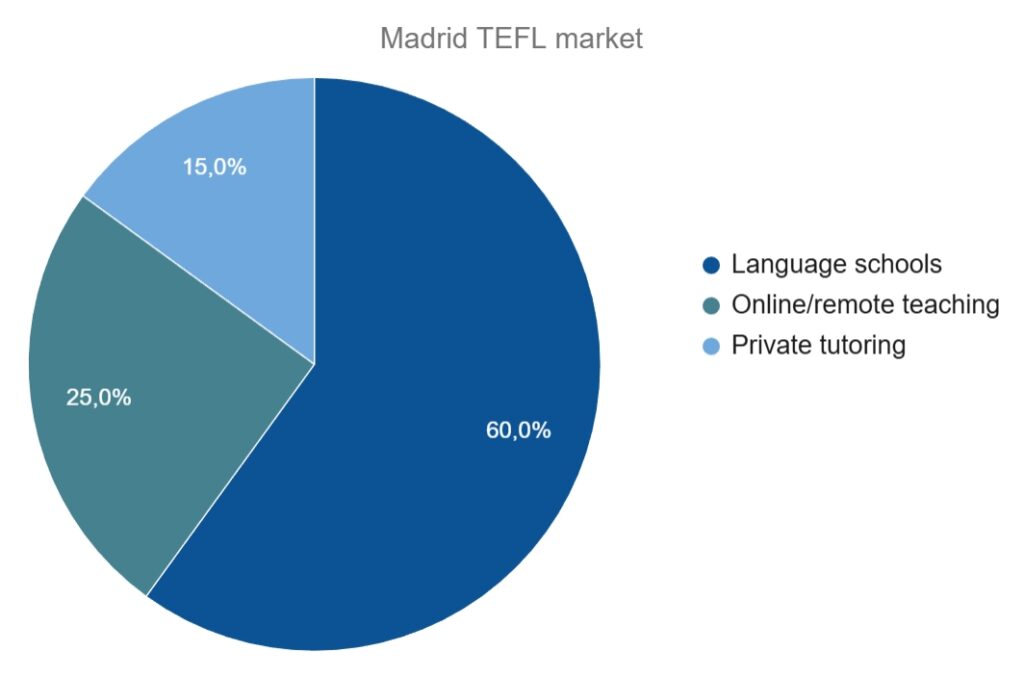
Madrid’s TEFL market is diverse with demand concentrated in private language schools international programmes universities offering English-taught courses and private tutoring.
Table: Madrid TEFL Market Snapshot (Approximate Ranges)
| Sector | Typical Role | Typical Gross Monthly Salary |
| Language schools | Full-time teacher | €1,200 – €1,800 |
| Online / Remote | Online instructor or hybrid class | Variable (depends on hours) |
| Private tutoring | One-to-one or small group | €1,000 – €2,000+ (depends on hours) |
Salary figures vary depending on sector experience location and whether private tutoring or online teaching supplements income.
Legalities and Logistics: Visas Permits and Taxes in Madrid
Resident and Work Status:
- Non-EU Nationals: Require a work visa and residence permit. Many employers sponsor authorisation although the process may take weeks or months.
- EU and EEA Citizens: May work without a separate visa though registration with local authorities is usually required.
- The NIE: The Número de Identificación de Extranjero is essential for employment banking and official matters.
Taxation and Social Security:
Obligations depend on residency status and income level. Consult a local tax adviser or your employer’s HR department to understand deductions and monthly contributions. Compliance with tax social security and professional development obligations supports a stable and sustainable teaching career in Madrid. Always verify requirements with official sources and seek professional advice where necessary.
Authoritative Sources and Fact Checks (References)
- Ofqual (The Office of Qualifications and Examinations Regulation): Official resource for regulated qualifications and quality standards in the UK.
- Spanish Ministry of Foreign Affairs (Visas and Permits): Official information on work permits and residency for non-EU nationals.
- British Council – Teaching English (Career Advice): Global benchmark for English language teaching standards and international recognition of DELTA/CELTA.
- Spanish Tax Agency (Agencia Tributaria): Official portal for understanding taxation and social security obligations for residents and workers in Spain.
Do I need a TEFL certificate to teach in Madrid?
While some language schools may hire without a certificate, most reputable Madrid employers expect a recognised TEFL/TESOL certificate with a substantial practicum. CELTA or CertTESOL are widely respected in Madrid’s market. Always check with target employers for their specific requirements.
Is Spain’s visa process difficult for teachers?
For non-EU citizens, a work visa and residence permit are typically required and can take several weeks to months. Employers often assist with the process after you have a job offer. EU/EEA citizens generally don’t need a separate work visa but should ensure they have the right residency documentation.
How long does TEFL training take?
Full-time, instructor-led TEFL courses (including practicum) usually run around 4 weeks, though online or part-time formats can vary from 8 to 12 weeks or more. Choose a format that guarantees substantive teaching practice and a clear practicum component.
Are online TEFL courses accepted by Madrid employers?
Many Madrid employers value the practicum and a credible awarding body. Online courses with a robust in-person or supervised practicum may be acceptable, but in-person teaching practice is frequently highly regarded.
What about pay in Madrid?
Pay varies by sector and experience, with language schools offering a core range and online/private tutoring providing additional income possibilities. Prepare a realistic budget and a salary negotiation plan that reflects Madrid’s cost of living and your teaching hours.
What should I do after certification to start teaching in Madrid?
Build a targeted CV and portfolio, gather evidence of your practicum, and leverage any job-placement support from your course provider. Networking with Madrid teaching communities and applying through reputable job boards will help you land roles faster.
How can I improve my long-term career in Madrid?
Seek ongoing professional development, such as specialised courses (e.g., Young Learners, exam preparation), and consider supplementing with private tutoring or online courses. Language skills in Spanish can also improve classroom rapport and community integration.