Teaching English in Istanbul: TEFL Certification and Careers

Istanbul is at a particular cultural meld where East meets West, ancient history is blended with a modern economy, and education is a top priority. For aspiring English teachers, the market holds an exceptional entry point into the TEFL/TESOL profession, an industry that is consistently experiencing steady demand for teachers, a multitude of teaching environments, and certification possibilities that can match global standards.
Understanding the Landscape
But the market can be confusing: where should you start, with what qualifications are you able to compete in such an environment, and what does a teaching career in Istanbul truly entail? With this guide, you are going through the pathways along with the accreditation considerations, the local job landscape, and career paths you can pursue after your TEFL certificate is completed.
Whether you are intending to teach for a year in Istanbul, establish a long career in Turkey, or blend classroom work with online teaching, taking a practical TEFL/TESOL course is a step that is critical.
The aim of this paper is to provide actionable, verified information based on recognised standards (including Ofqual-regulated programmes and internationally recognised TESOL qualifications). You will also receive assistance on adapting to the Istanbul job market, comprehending industry standards, and planning a career suited around technology in education and the worldwide demand for English language skills. A guide to the city’s teaching landscape recognises the role of quality qualifications, local culture, and professional expertise. If you select accredited, practice-based training and search for qualified roles in knowledge-driven jobs and have a grasp of your goals, you can be better prepared to work in a role that aligns skills and career potential with your aspirations whilst enjoying one of the world’s most dynamic cities.
For prospective teachers, this article is aimed at being a solid book of practical strategies through steps, authoritative reference points, and practical information that will help you register confidently enough and start the path of your Istanbul TEFL journey on strong footing.
TEFL Certification in Istanbul: Pathways to Teaching
TEFL/TESOL training courses in Istanbul provide a range of TEFL/TESOL training courses, from face-to-face courses at local language schools to accredited online courses that offer a practical part of teaching. With so many emerging teachers, the decision is based on accreditation, practicum quality, and adherence to internationally recognised programmes.
Core Course Elements
As a matter of course, you will generally hear of the 120-180-hour TEFL in practice, the latter of which includes part-time courses over several weeks. The best options usually involve:
- Receiving a supervised practicum in actual classrooms.
- Mentoring from experienced teachers.
- Very clear assessment criteria.
Based on established frameworks, most of the programmes are provided by Ofqual-accredited providers as well as from Cambridge/Trinity-affiliated institutions, so your certificate has international value. Wherever you can, confirm the course is in line with Ofqual-regulated standards and international TESOL standards.
Two Primary Certification Routes
In Turkey, pathways to certification often diverge along two routes:
- In-person courses: These usually take place locally and include a compulsory practicum.
- Online programmes: These involve flexibility for students balancing work, travel, or study, while still delivering a practicum requirement in a local school or partner setting.
The challenge is to find a course which integrates theory and hands-on teaching practicum and guarantees the certificate is accepted by potential employers living in Istanbul or elsewhere. Regulator and education bodies’ guidelines state that quality TEFL/TESOL training includes lesson planning, assessment for learning, diverse instruction procedures (communicative approach and task-focused instruction), and a strong commitment to inclusion at the teaching and learning level, with good practicum supervision.
Evaluation Criteria
In assessing a path for certification, the quality must be evaluated in terms of several criteria: a practicum (excluded from post-certification), observation of the teaching, clarity on knowledge learning (i.e., congruence with international curriculum), and delivery of clear standards. It can also assist through comparing syllabus comprehensibility, e.g., grammar awareness and assessment, classroom technology coverage, and reading student reviews and graduate outcomes in order to gauge applicability. Well-known providers cite how their programme results coincide with those of Ofqual or global awarding bodies and provide partial timetables, assessment rubrics, and practicum information. Finally, consider how the programme may facilitate job placement or career advice in Istanbul, as many in the city prefer more formalised training that encompasses on-the-job teaching experiences and a solid professional profile.
Accredited Training for Istanbul English Teaching Careers
Accreditation is important because it determines the way your employers view your TEFL/TESOL qualification. A qualified certificate (an Ofqual-regulated certificate, for example, or one issued by an established worldwide awarding body like Cambridge CELTA or Trinity TESOL) sends the message that the course meets accepted teaching qualifications for preparation, assessment, and practicum.
Why Accreditation Matters
In an already competitive Istanbul environment, an accredited status will help you to be more competitive in the employment market at private language schools, international schools, and corporate training programmes. It also enables you to travel globally when you want to teach abroad or move when you are older. Aspiring educators prefer to go the route of an accredited teacher who brings payback for the money you invest into your education in the form of jobs and professionalism.
What to Expect from Professional Training
More than a core TEFL/TESOL certificate, many Istanbul courses offer teacher development content that reflects an international standard. Key modules typically include:
- Lesson Planning: Designing effective educational structures.
- Classroom Management: Maintaining an engaging and orderly environment.
- Assessment and Feedback: Measuring student progress accurately.
- Differentiated Instruction: Adapting methods for all learners.
- Educational Technology: Incorporating modern tools into language learning.
Practicum pieces offer hands-on experience with teaching under supervision, guided feedback for shaping pedagogy, and building up confidence in classroom practice. Accredited training in other degrees through consortium institutions will also provide the possibility of getting certified in CELTA or DELTA, which is vital for career advancement, as this can be beneficial at international schools or university-affiliated language centres, for example.
Verification and Credibility
Ensure to verify the awarding body, length and intensity of the course, practicum arrangements, and post-course career support when choosing a programme. If you are going to go to the awarding body official listings on the awarding body’s site, consult them to confirm their published materials. Practising in the real world can be used to prove the credibility of your training. Most accredited courses have observations of teaching practice, peer responses, and reflective practice portfolios that track your progression over the course of a series of micro-lessons, unit plans, and a culminating teaching demonstration. They also highlight professional ethics, inclusive teaching methods, and mindfulness of local needs.
In Istanbul, employers appreciate those with the capacity to address multiple student profiles, from pupils in private language schools to groups of students who take corporate language training instruction. With dependable accreditation, this means you have finished an advanced course and are ready for the realities of the classroom. This need to find this out is especially required when enrolling in international or accredited schools that ask staff to adhere to specific regulations or to apply to recognised professions.
Job Market in Istanbul: Schools, Agencies, and Online
Turkey’s economic and cultural centrality contributes to increased demand for English language teaching in several sectors in Istanbul. The private language school space is the leading entry point for new teachers, which can provide a wide set of offerings, classroom sizes, and student ages.
Market Segments
The city’s substantial student population, global corporations, and tourism industry combine to provide opportunities for English language instruction. Through the Ministry of National Education (MEB) and by making English widely available to attract foreign students, the Government of Turkey promotes the acquisition of the language in its educational policies.
The primary sectors include:
- Private Language Schools: Majority of entry-level positions with diverse curricula.
- International Schools: Higher expectations, prestigious credentials, and structured career paths.
- Universities / Language Centres: Longer-term contracts and research-driven roles.
- Corporate Training Agencies: Focused on business English and industry-specific vocabulary for professionals.
- Online Channels: Flexibility for teaching students in Istanbul and beyond.
Typical English Teaching Opportunities in Istanbul
| Sector | Typical Roles | Training/Qualifications Sought | Why Istanbul Advantage | Entry Notes |
| Private language schools | English teacher, conversation tutor | TEFL/TESOL (120-150 hrs); degree preferred | High demand, variety of ages and levels | Often hires locally; visa support varies |
| International schools | Primary/Secondary English teacher | TEFL plus bachelor’s in subject; native-fluency | Prestige and structured career paths | Highly competitive; may need Turkish basics |
| Universities / language centres | ESOL instructor; language centre lecturer | TEFL/TESOL; master’s or higher often preferred | Longer-term contracts; research opportunities | Work permit considerations; institutional rules |
| Corporate / private sector | Corporate trainer; business English | TEFL/TESOL; industry experience advantageous | Strong demand in multinational companies | Requires specialised vocabulary/flexible hours |
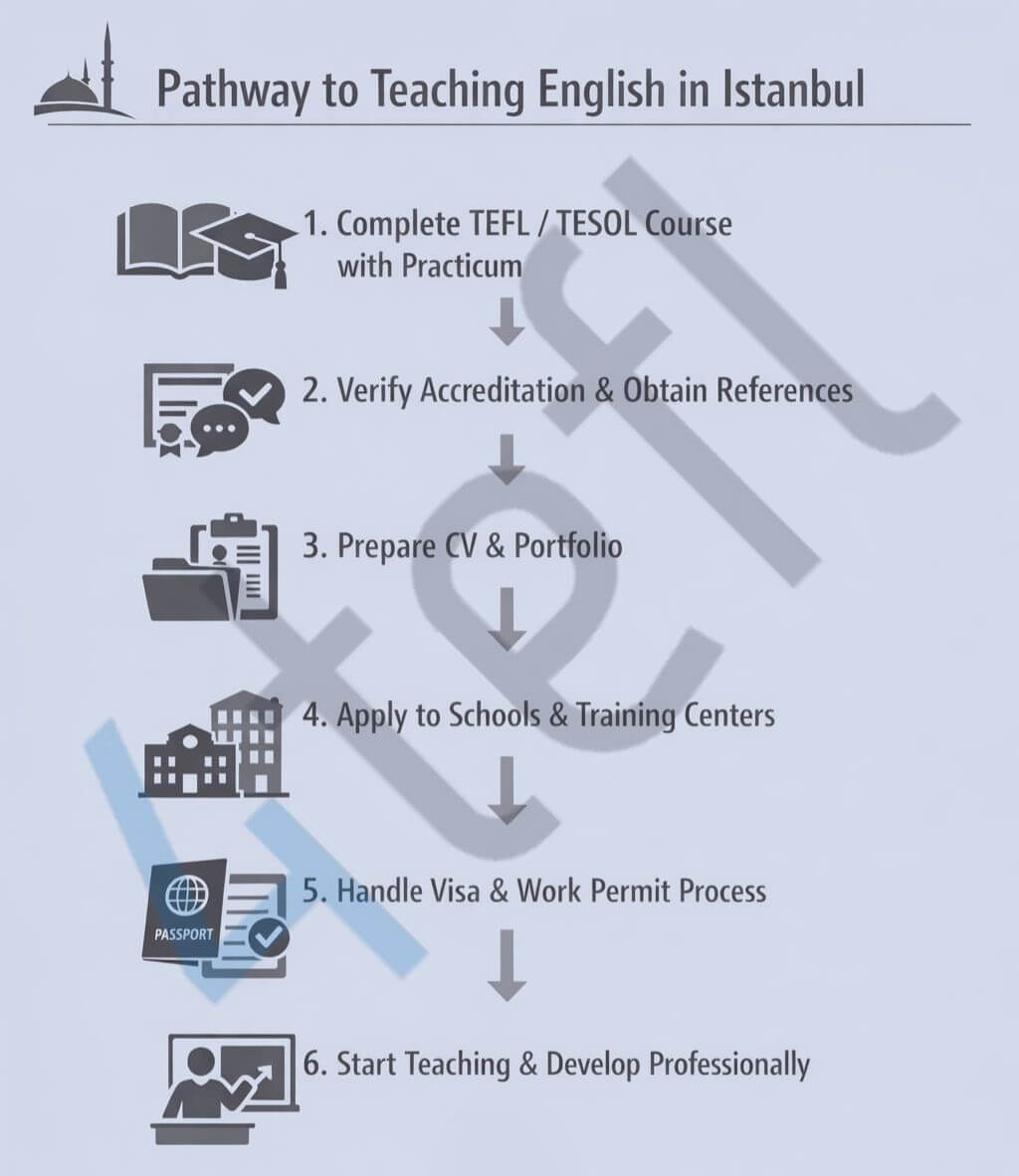
Career Pathways After TEFL Certification in Istanbul
A TEFL diploma opens doors into various first jobs in Istanbul, usually used as a stepping stone or entry point to later teaching or leadership roles; the range of initial positions in education most often begins with certification.
Professional Growth
Entry-level posts in private language schools, language academies, or language centres also offer an opportunity to practise classroom management as well as lesson making, lesson planning, and student evaluation skills and develop portfolios of lesson plans and student results. Early career teachers often work to get to know how to build depth and structure in the curriculum, teaching routines in the classroom, and develop good levels of rapport with students and parents.
While experience grows, opportunities for specialisation arise in the form of:
- Examination Preparation: IELTS, TOEFL, Cambridge exams, etc.
- Business English: Professional communication for corporate environments.
- English for Academic Purposes (EAP): Preparing students for higher education.
Advanced Career Routes
Many teachers also shift to lead teacher roles, be they coordinators of language programmes, or even mentors for new teachers, contributing to school improvement and teacher development. Based in Istanbul, you can also take steps towards international career routes if you make use of a few strategic pathways. Some teachers advance to curriculum development, programme coordination, or teacher training, with duties such as teacher development programme design, workshop delivery, and practicum-based mentorship for aspiring teachers.
Those who want the best possible long-term potential have an avenue to career advancement and may undertake higher education programmes like CELTA, DELTA, or master’s degrees in TESOL or Education to enhance their career opportunities in higher or even worldwide education.
Long-Term Strategy for Success
International demand for English language learning translates into high levels of professional development needs, coupled with the positive effects of early investment in CPD (Continuing Professional Development) on more competitive job offers and greater professional security. A successful degree and job search in Istanbul require more than just a high enough academic standard; the ideal Istanbul graduate is someone who can combine experience with the learning process, communicate effectively with multicultural pupils, and stay current with evolving technology.
As the language landscape changes, building a network of colleagues, attending professional development events, and reading publications on policy shifts will be invaluable in maintaining your competitiveness and effectiveness over time. One possible long-term pathway is combining classroom teaching with online work, allowing you to diversify your income and adapt to changes in the market. The ability to develop a strong professional portfolio and consistently look for pathways forward is key to maintaining long-term success in the field.
Authoritative Sources and Fact Checks (References)
- Ofqual (The Office of Qualifications and Examinations Regulation): Reference for regulated qualification frameworks and TEFL level standards.
- British Council Turkey: Information on English language education standards and cultural exchange in Istanbul.
- Republic of Türkiye Ministry of National Education (MEB): Official regulations regarding foreign language instruction and teacher requirements in Turkey.
Do I need a degree to teach English in Istanbul?
Many private language schools in Istanbul hire teachers with a TEFL/TESOL certificate and a bachelor’s degree. Some international schools and higher education institutions may require a degree in a relevant field and additional teaching credentials. Always check the employer’s requirements and consider aligning your qualifications with job postings you intend to pursue.
Is TEFL certification sufficient to work in Istanbul?
For many private language schools and online teaching roles, a credible TEFL/TESOL certificate with a practicum is sufficient. International schools and some universities may require more advanced credentials or a teaching licence. It’s prudent to target accredited programmes that meet recognised standards (Ofqual, Cambridge/TESOL) and to verify visa expectations with potential employers.
What is the best TEFL course for Istanbul?
The best course depends on your goals. If you want the strongest credential with broad recognition, choose an Ofqual-regulated programme or a CELTA/TESOL course with a substantial practicum component. Ensure the course includes classroom observation, feedback, and a clear path to employment support. Check for practicum in real classrooms and alignment with international best practices.
How long does it take to get TEFL certification in Istanbul?
ypical 4-week intensive courses or longer part-time formats are common. Some providers offer 120–180 hour courses with flexible scheduling and a supervised practicum. Duration depends on the programme you select and the pace you choose, but practical teaching experience is a standard requirement in accredited programmes (course syllabi and provider information).
Do I need to know Turkish to teach English in Istanbul?
urkish language knowledge is not usually required for private language schools, international schools, or online teaching. It can be helpful for daily life and classroom rapport with Turkish-speaking students or colleagues, but most roles focus on teaching English as a foreign language. Many schools prioritise native or near-native English proficiency and effective classroom communication.
What visa do I need to work in Istanbul?
Most employers will assist with the necessary work permits and residence procedures. You will typically need a work visa or permit to be employed legally in Turkey. Some teachers begin on a short-term visa (e.g., tourist or student visa) that is not a long-term solution, so it’s important to secure a formal work permit through your employer and follow Turkish immigration rules. Check with your employer and the Turkish consulate for the latest requirements.
How can I find a job in Istanbul after TEFL certification?
Start by targeting accredited TEFL programmes that offer career support and job placement assistance. Build a strong CV and teaching portfolio, including a short teaching demonstration video and sample lesson plans. Apply to private language schools, international schools, and university language centres, and use professional networks or recruitment agencies that specialise in language teaching. Attend local TEFL events, join online forums, and keep a flexible approach to roles and contract types (employer practices; industry guidelines).
What are typical career milestones after TEFL certification in Istanbul?
Early milestones include securing a teaching role, delivering effective lessons, completing practicum requirements, and building a professional portfolio. Mid-career milestones may involve taking on lead teacher roles, coordinating language programmes, or designing curriculum and teacher development workshops. Long-term milestones can include advanced certifications (CELTA, DELTA), senior teaching positions, or transitions into teacher training, programme management, or academic roles. Your progression will depend on your experience, ongoing CPD, and opportunities available in Istanbul’s education sector (professional development norms; accreditation pathways).