Teaching English in Oman: A Practical TEFL Guide for Aspiring Teachers


The key thing is Oman is a compelling destination for TEFL/TESOL professionals who are searching for a rewarding teaching experience in the Gulf offering both convenience and quality. What’s clear is English is progressively integrated into formal education the economy and public life making a constant demand for qualified teachers who can offer attractive language teaching suited to local cultural and related requirements.
Purpose of this Guide
This guide is intended to help future teachers chart the course from documentation to teaching based on recognised standards and practical advice resulting in making your life easier. Whether you plan to teach in:
- Private language centres
- International schools
- Universities
- Online settings serving the Omani market
You’ll find clear steps, realistic expectations, and concrete resources to support your journey.
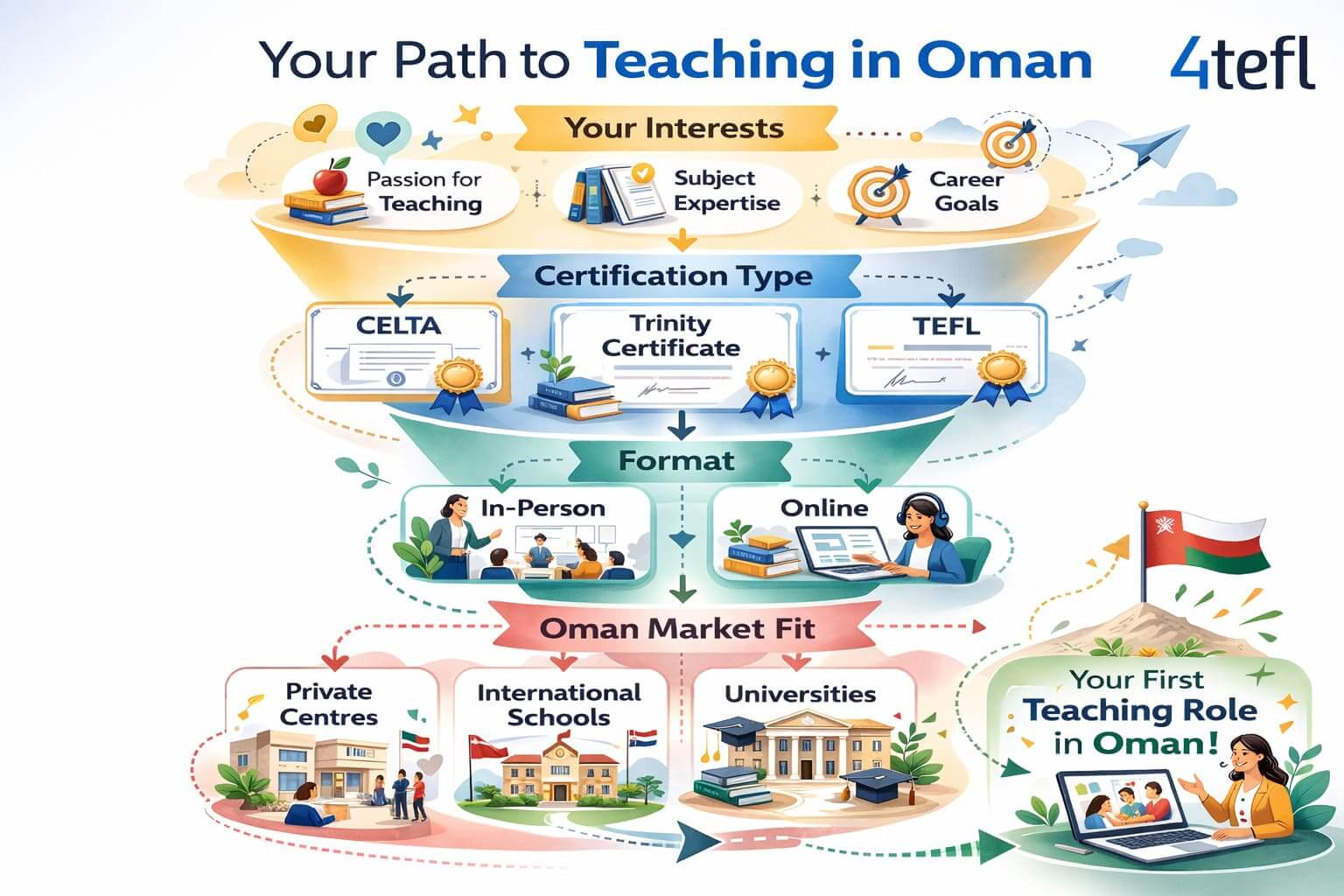
The teaching of English in Oman includes several moving parts obtaining a recognised TEFL certificate appreciated by Oman’s employers visa routes and employment licences developing classroom proficiencies corresponding to local circumstances and preparing for a respectful cultural life. The process is bolstered by international accreditation standards such as Ofqual-aligned programmes and Cambridge or Trinity certificates and by Oman’s own education landscape which prizes professionalism reliability and a learner-centred approach.
This section provides practical advice on the selection of certification applying for roles provision of teaching in different settings and integration into Omani communities while preserving personal well-being and professional growth. By the end you should feel confident to take targeted TEFL/TESOL courses for the Oman market and approach your first post with clarity.
Obtaining Recognised TEFL Certifications for Oman
In Oman employers focus on meeting international standards and possessing practical teaching skills offering both convenience and quality. A recognised TEFL certificate indicates you can complete a structured training programme demonstrate skills in the classroom and provide teaching adapted to learners.
Key Credentials
For many roles especially in private language schools and some international schools, the following are viewed favourably:
- CELTA (Cambridge)
- Trinity TESOL
- 120-hour TEFL (with a solid practicum component)
These programmes are often aligned with Ofqual or equivalent UK-regulated or internationally recognised standards which helps recruiters compare courses across providers and verify quality. There are fewer intensive online options and employers prefer those with practical components and recognised accreditation combining functionality with quality.
Choosing Your Route
Choosing the right certificate depends on your timeline budget and career aims.
- High-End Recognition: If you plan to teach in a well-funded international school a CELTA or Trinity TESOL completed with an in-person component or a high-quality blended format can offer the strongest recognition.
- Practical Entry: For language centres or online roles which attract a wide range of learners a 120-hour TEFL of good quality with integrated practice can be practical and widely accepted provided the course is offered by a credible institution and covers real-time teaching practice.
Important: It is important to check your chosen certificate is recognised in Oman by consulting potential employers or recruitment agencies reducing the risk of holding a qualification that is not valued in the local market. Where possible look for courses that provide a structured assessment framework feedback from tutors and clear guidance for classroom management and lesson planning combining functionality with quality.
Comparison of Certification Routes
To help you compare options quickly consider this concise table of common TEFL certification routes:
| Certificate type | Typical duration | Format | Pros | Oman recognition notes |
| CELTA (Cambridge) | 4 weeks (FT) | In-person / Blended | Strong practicum, global respect | Widely preferred by international schools |
| Trinity TESOL | 4 weeks (FT) | In-person / Blended | Focus on assessment/feedback | Highly regarded; comparable to CELTA |
| Ofqual-regulated 120h TEFL | 8–12 weeks | Online + Practicum | Accessible, foundation level | Acceptable for many private centres |
| 150–180 hour TEFL | 6–12 weeks | Online / Mixed | Flexible, affordable | Acceptance varies; verify with recruiter |
| Postgraduate Diploma/MA | 1–2 years | Online / Campus | Career progression/leadership | Required for most university roles |
Application Preparation
These options show how Oman’s ecosystem often values a recognised certification with a solid practical element. In addition to the type of certificate recruiters will look for:
- Up-to-date teaching methods.
- The ability to manage mixed-ability classes.
- A clear plan for lesson organisation.
When selecting a course check for compliance with recognised standards for instance Ofqual-regulated courses or Cambridge or Trinity credentials and for courses that provide guidance for the delivery of English teaching in multilingual contexts making your path clearer. Always obtain transcripts and certificates in durable formats digital copies plus paper originals and arrange for apostilles or attestation if required by your future employer or the embassy in Oman.
Practical Steps:
- Create an inventory of your current qualifications.
- Make a list of target employers (private language schools, international schools, universities).
- Confirm certification requirements with these organisations.
- Contact potential employers with a short portfolio: a CV, a sample lesson plan, and evidence of your practicum teaching.
If you are unsure how best to proceed a reputable TEFL/TESOL training provider can offer advice align your objectives with the realities of Oman’s market and suggest pathways adapted to international and local criteria making your transition smoother. A course that includes classroom observation assessment strategies and inclusive pedagogy will prepare you more fully for the diverse classrooms you may encounter.
Overview of Oman’s Education Landscape
You’ll find that Oman’s education system is a mixture of public and private provision with English being a central component in the modernisation of programmes and workforce development combining functionality with quality. The Ministry of Education and other government bodies drive policy standardisation and teacher training frameworks while private and international institutions shape day-to-day teaching practices in mainstream schools and language centres.
English is introduced from the early years and extended through middle and secondary education creating a wide range of classrooms from beginner learners to advanced communicative tasks. This diversity offers TEFL/TESOL professionals the opportunity to specialise adapt materials and apply different pedagogical approaches to suit student needs and institutional aims.
ESL Landscape Categories
- Ministry of Education: often operate within national curricula using approved textbooks and recognised assessment frameworks.
- Language Centres: offer alternative settings where class sizes schedules and student cohorts can vary considerably.
- Universities: may host English for Academic Purposes programmes or teach English for specific disciplines requiring higher levels of academic language proficiency and sometimes collaboration with subject specialists.
For teachers this means selecting roles that align with your expertise whether you prefer structured public-school environments or dynamic commercially driven private institutions offering both convenience and quality. It is common practice for schools to require background checks health examinations and certificates confirming compliance with local regulations and child protection standards. Oman’s education sector places strong emphasis on professional development collaboration and culturally sensitive teaching. Professional development often ranges from classroom training to leadership roles such as programme coordinators teacher mentors or programme managers.
Professional Progression
Keen observers of Oman’s education sector note a strong emphasis on professional development collaboration and culturally sensitive teaching. Professional progression often follows a path from classroom teaching to leadership roles such as curriculum coordinators teacher mentors or programme managers. In Oman as in other GCC countries it is prudent to understand the local legal and cultural context particularly around professional conduct safeguarding and workplace norms.
Many employers offer structured induction mentoring and ongoing training programmes in areas such as:
- Language assessment
- Classroom management
- Integration of technology into language learning
For those who wish to remain long term the development of advanced qualifications in TESOL applied linguistics or education can help you move into teacher training assessment or educational management within schools or universities.
Understanding the operational side of Oman’s ESL sector helps you shape your job search and career development strategy offering both convenience and quality. It is useful to monitor recruitment agencies and school websites for current vacancies as well as local expatriate and professional networks. Networking can provide insight into school cultures contractual expectations and annual recruitment cycles which influence the timing and manner in which roles are advertised and filled making your planning more effective. Because Oman’s education sector values reliability and adaptability showcasing a combination of strong classroom practice flexibility with curricula and a commitment to student-centred learning will strengthen your application across a range of settings.
Online and Hybrid Opportunities
In addition to formal roles online and hybrid opportunities have increased as digital learning becomes more common in Oman. Some programmes partner with Oman-based institutions to deliver English language courses remotely offering teachers a chance to contribute to accredited curricula from abroad. When considering online or blended roles assess the stability of the platform the availability of teacher support and the level of interaction feedback and real-time assessment. A practical approach is to consider several options such as a traditional classroom position alongside an online role so you can compare workload pay and benefits as you plan your first years in Oman.
Job Opportunities and Visa Routes
The practical side is that opportunities for teaching English in Oman are divided among private language schools international schools and universities with private language centres often the most accessible launching points for new teachers offering both stability and quality.
- In Muscat and other major cities you will find a number of exam preparation general English language and business English programmes.
- Employers often appreciate practical pedagogical experience in addition to a recognised certificate and may give priority to teachers who have a record of keeping learners engaged with multimedia resources communicative activities and targeted language practice.
- International schools may offer more competitive salaries and benefits but often require higher qualifications and a more selective recruitment process including interview lessons and demonstration classes.
Visa Routes and Sponsorship
Essentially visa routes in Oman operate through employer sponsorship. The usual route is employer sponsorship.
- Process: The employer usually guides you through the steps necessary to obtain the work permit and residence card (Iqama).
- Requirements: You must anticipate background checks medical examinations and document verification such as degree certificates or apostilles.
- Contracts: Duration is often one to two years and incorporate options for renewal according to performance and institutional needs.
- Health: Some institutions require pre-employment medical examinations and vaccinations in accordance with Oman’s health and safety requirements offering both stability and quality.
Strategic Job Hunting
Assessment of visa options should take into account the practical conditions of relocation and employment. Start by confirming with your prospective employer that they are sponsoring your work visa and will provide the necessary documents including a contract a copy of the company’s business licence and formal invitation letters if required. It is sensible to create realistic timelines as visa processing can take time. If you have flexibility align your job search with the main recruitment periods that fit academic calendars or the beginning of the school year. You should also consider local rules regarding work permits for expatriates and any restrictions that may apply to your field of employment and how soon you can begin teaching after arrival.
For Newcomers:
- Use established networks and credible recruitment channels.
- Connect with TEFL or TESOL alumni groups.
- Participate in virtual job fairs.
- Review contract terms carefully: salary, housing allowance, travel tickets, annual leave, healthcare, end-of-service benefits, and visa renewal conditions.
A well-negotiated contract often includes accommodation or a housing allowance annual return flights and health insurance which can significantly affect your standard of living in Oman. Finally be attentive to cultural standards and professional expectations during interviews as a clear and well-prepared presentation of your teaching philosophy lesson examples and a concise demonstration will strengthen your application offering both stability and quality.
Salary Contracts and Career Progression
Salaries of English teachers in Oman vary considerably depending on the sector size of the employer location and the teacher’s qualifications.
- Private Schools/Centres: Monthly remuneration is often more modest with many roles offering a basic salary plus benefits such as housing allowance health insurance and annual flights.
- Higher Education/International Schools: Often provide higher salaries sometimes supplemented by housing allowances paid annual leave and professional development support.
While private sector roles may be more accessible for first-time expatriates international school and university positions typically reward experience and higher qualifications with greater compensation and enhanced career pathways. It is important to view wages as part of a wider set of benefits as healthcare and professional development opportunities affect overall quality of life.
Employment Benefits
Conditions of employment in Oman often include benefits that support expatriate teachers:
- Gratuity
- Housing allowances or furnished accommodation
- Health insurance
- Annual airfares
Contract duration varies and most teachers sign agreements for two years while renewal often depends on satisfactory performance programme needs and compliance with local regulations. For professional advancement many teachers move into senior positions become curriculum coordinators or mentors or transition to teacher training programme development or school leadership roles. Completing a master’s degree in TESOL or Applied Linguistics can accelerate progression to increased responsibility including part-time university teaching or full-time roles within educational authorities.
From a professional development perspective Oman offers ways to strengthen your practice through structured training and reflective practice. Some employers offer structured induction programmes and professional development days while others encourage participation in regional workshops and international conferences. Building a portfolio that demonstrates successful lesson design assessment strategies and student achievement can support negotiation for pay rises promotions or additional responsibilities combining functionality with quality. When planning your salary progression consider not only the monthly pay but also the value of housing support health insurance flight allowances and the potential for long-term savings within the Omani context. A well-structured package often provides greater financial stability and a clearer pathway to senior roles in education combining functionality with quality.
Practical Classroom Techniques for Oman
Effective teaching in Oman requires adaptability to different classrooms including mixed-ability groups varied levels of English proficiency and diverse cultural backgrounds. Begin with a learning approach that promotes cooperation speaking listening reading and writing in practical contexts. Use pair work small group work and project-based activities to develop communicative skills incorporating reading and listening texts that reflect both local and global culture helping to make your teaching more effective. Teaching provision should include clear objectives a variety of activities and explicit opportunities for spoken practice error correction and feedback that respect the dignity and self-confidence of learners combining functionality with quality.
Management and Resources
- Classroom Management: Predictable routines, clearly posted expectations, and well-structured group work. Use clear transitions, timed activities, and consistent signals to reduce off-task behaviour.
- Materials: Adapt authentic content to match learners’ interests while ensuring copyright compliance and alignment with local examinations.
- Technology: Integrate digital flashcards, online quizzes, and interactive board activities, but prepare low-resource alternatives for limited connectivity.
Assessment and Feedback
Assessment and feedback are essential to monitor progress and guide instruction combining functionality with quality.
- Use informal tools: exit cards, quick quizzes, and observation notes.
- Provide constructive and specific feedback, celebrate improvement, and identify next steps to prevent discouragement.
- Differentiation: Design tasks for different ability levels within the same class offering extension activities for advanced learners and supported tasks for beginners.
Lesson Design (Typical 60-Minute Cycle)
- Warm-up
- Aims-focused language input
- Controlled practice
- Communicative activity
- Output
- Closing reflection
This structure supports learners at different stages and helps teachers track progress. Cultural references relevant to Omani learners should be taken into account with sensitivity to religious and regional norms. Finally adopt reflective practice by noting after each lesson what worked what did not and how you can adapt activities materials or grouping in future lessons. With careful planning and a flexible approach you can build learner confidence trust and communicative competence.
Cultural Preparedness, Safety, and Living in Oman
Cultural preparedness is central to a successful experience in Oman. Here’s the thing: respect for local customs dress codes and etiquette improves personal safety and classroom relations. In public and professional circles Omani society appreciates civilised introductions patience and recognition of privacy opening doors and saving you time and effort. English teaching environments often reflect these values. Before you arrive take time to learn about local traditions related to gender roles religious practices and daily routines offering both reassurance and confidence.
Tip: Many expatriates find it useful to learn some greetings and phrases in Arabic; even modest language efforts highlight cultural sensitivity and willingness to engage with the community.
Security and Well-being
The bottom line is Oman’s security and well-being are well supported by government healthcare and expatriate networks. The country’s safety profile is strong.
- Always follow your employer’s travel guidelines and local laws.
- Stay informed about official events, festivals, and the effects of Ramadan on daily life and school schedules.
- Keep informed about local rules regarding noise and outdoor activities.
- Maintain copies of essential documents and secure digital backups.
Lifestyle and Integration
Life in Oman offers a combination of practical considerations and enriching possibilities.
- Accommodation: arrangements vary according to contract with many expatriates receiving housing support.
- Urban Living: Utilities, internet, and mobile connectivity are reliable.
- Daily Costs: align with many Gulf economies; you’ll encounter a diverse dining and shopping scene that blends traditional Omani flavours with international cuisine.
- Community: Engagement with expatriate communities can help you navigate bureaucratic processes and social settings.
In your daily life balancing work commitments with personal time exploring nature coastlines and regional towns can significantly enrich your overall experience in Oman. Cultural awareness extends to the rhythms of day-to-day life such as the importance of family community and religious commitments. Be modest and respect local standards of dress in public spaces especially for those who visit religious places or traditional markets opening doors and making your life easier. Sharing cultural awareness with your students can be a powerful teaching moment that rewards mutual respect and curiosity which benefits teachers and learners. By approaching your time in Oman with curiosity humility and commitment to professional and personal growth you develop both personally and as an educator able to engage with a range of perspectives.
Practical Settling-In Guide
Relocating to Oman involves practical measures that go beyond securing a teaching post.
Housing
Housing is often a central consideration and many employers offer housing assistance or local accommodation. To assess offers compare:
- Rent and Utilities
- Maintenance responsibility
- Proximity to your workplace
- Access to shops and healthcare
Transport and Connectivity
Put simply transportation options in Oman range from private vehicles to employer-organised shuttles and public services where appropriate. In urban areas you will find dependable taxi services and transport options making daily travel manageable.
- Banking: Banks offer expatriate services and acceptance of international cards.
- Steps: Set up a local bank account, obtain a SIM card, and choose a reliable internet plan.
Healthcare
Unlike other options healthcare in Oman is well developed with private and public alternatives available.
- Most employers offer health insurance; check what is covered and the preferred network.
- Action: Understand dental, optical, and emergency care services. Carry important medical documents in print and digital form.
- Familiarization: Become familiar with local emergency numbers the location of your nearest medical facility and the procedure for obtaining prescriptions.
With careful planning and supportive networks you can enjoy a comfortable safe and culturally rich life in Oman saving time and effort.
Authoritative Sources and Fact Checks (References)
- Oman Ministry of Labour: Key resource for understanding expatriate labor rights, employment contracts, and sponsorship regulations.
- Royal Oman Police: Official instructions for the residency card process, medical examinations, and security clearance requirements.
- British Council Oman: Guidelines on teaching standards, professional development workshops, and certification recognition in the Sultanate.
What type of TEFL certification is best for Oman?
For many roles, CELTA or Trinity TESOL offers the strongest recognition, particularly for international schools, while a well‑regarded 120‑hour TEFL with a solid practicum can be suitable for private language centres. Verify with potential employers to ensure your certificate is recognised in Oman.
Do I need a local police clearance or background check to teach in Oman?
Yes. Employers commonly require background checks and attestation of documents. Some roles may require apostilles or embassy/consular verification. Check with your employer and the Oman embassy or consulate for exact requirements.
How does the visa process work for teaching in Oman?
Employers sponsor your work visa and facilitate the residence process (Iqama). You’ll typically provide a contract, degree certificates, and health checks. Processing times vary; plan for several weeks up to a few months.
What is the typical salary range for English teachers in Oman?
Salaries vary by school type and location. Private language centres often offer a modest base with benefits (housing allowance, health insurance), while international schools may provide higher pay and more comprehensive packages. Always evaluate total compensation, not just monthly salary.
How can I prepare for cultural and classroom challenges in Oman?
Study local etiquette, dress modestly, learn basic Arabic phrases, and approach classroom management with sensitivity to cultural norms. Use learner-centred methods that respect multilingual backgrounds and religious practices.
What are the best ways to find teaching jobs in Oman?
Start with reputable TEFL/TESOL providers, international school job boards, recruitment agencies with GCC experience, and direct applications to schools in Muscat and other cities. Networking with alumni and attending regional education fairs can be particularly effective.