TEFL Demystified: A Global Guide to Teaching English

English teaching abroad is a dream that is hard to resist: the ability to travel, work with people from different cultures and contribute to language teaching in vibrant communities. But to bring that dream to life requires clarity: what TEFL actually is, which certificate will best suit you, where you can teach and how you can develop in a way that aligns with your life aims.
In this guide the core principles are distilled to practical expert advice informed by research and real-world experience. It’s meant for aspiring teachers at every stage whether you’re fresh out of school contemplating a mid-career pivot or considering online teaching as a flexible option. By the end you’ll have a clear path to take your first confident steps or accelerate your TEFL journey with confidence.
What TEFL is and why it unlocks teaching abroad
It is the study of methods practice and assessment designed to improve learners’ use of English in a variety of contexts. TEFL training will give you the basics, the planning of lessons classroom management skills assessment and the practice techniques used to teach which do really work in any culture age and situation.
We must realise that TEFL is not one box-ticking exercise but a collection of certificates (some more demanding some more internationally accepted) each with their own requirements and benefits. For the connected world of today TEFL qualifications open doors to classes around the world and online spaces no matter where you are in the world.
Global Market and Demand
English language instruction continues to be one of the fastest growing fields within the world of education and is a key sector played by a huge cross section of learners ranging from schoolchildren to professionals interested in developing career interests according to UNESCO and the British Council. Those requirements result in positions at schools language centres universities and corporate language programmes of all sorts on many fronts.
The fundamental promise of TEFL is hence actionable, with the right preparedness you can become part of a burgeoning multilingual teaching ecosystem and be part of learning which is impactful.
Certification Nuances
TEFL is a well-known concept but the documentation regarding certificates and accreditation may be confusing. Some employers prefer certain certifications or practicum experience over others others stress the value of showing classroom preparedness through a strong teaching dossier. We know that if one is not able to differentiate between a TEFL certificate TESOL certificate and CELTA-type qualification in order to show who can be taught where one is teaching and how many learners may be involved schools might not value the qualification and your credentials may make schools uncertain.
Crucial Requirement: In many regions a legitimate 120-hour TEFL certificate plus a supervised practicum is required if you are wanting to go into entry-level service such as language centre teaching in government schools or summer programmes.
Some schools may prefer a degree that has a recognised qualification with much more of a practicum component and demonstrable demonstrations of how students teach live. That fact is a stark reminder that choosing your certificate must be informed by your destination and the direction you want to take your career not by the one that’s cheapest or the fastest.
The quality assurance and standardisation of teacher training is as noted by reputable sources such as UNESCO, the British Council and OECD essential to preserving the quality of learning and safeguarding learner outcomes. The bottom line isn’t hard: buy a certification that confirms you can plan teach and reflect upon good English practice. Seek out programmes that feature a relevant teaching practicum and which also offer guidance and feedback (from experienced mentors) with clear paths to learning and ongoing professional development.
Where you teach can affect the expectations, in some geographical areas practicum in person is highly valued and in others a formal online course with solid teacher portfolios could be considered as part of the package. You’ll learn skills that go a long way for a person: lesson development across all types assessment to measure progress and outcomes classroom management to create a friendly environment skill transfer based in classroom contexts age levels and language. Just as you begin your journey TEFL is a place to learn both in your classroom and where you can work as a citizen for the world so too can you unlock new communications.
Types of TEFL certificates and which suits you best
The current TEFL certificate landscape covers online self-learning courses and hands-on in-person programmes including practicum periods in real classrooms.
In-Person vs. Online
- Face-to-face 120-hour TEFL course: One that fuses theory with large amounts of guided teaching feedback from teachers who have more experience than students and a supervised teaching practicum. They are typically more expensive and time-consuming but they offer a high degree of instructor feedback plus live class experience features that many schools highly value. Some destinations especially Europe and places like Asia tend to be more than happy to adopt this theory practicum combination and even employers will require the same. That’s the idea: to demonstrate that you can transform theory into effective classroom practice from the beginning.
- Online TEFL certificates: Convenient for those juggling travel schedules or budgets. A typical format is approximately 120 hours of study with some optional live components and an opportunity for an assessment model to adjust flexibility. The bright side is accessibility and affordability which is why online TEFL is appealing for novices or anyone looking to get into the field right away. The catch is that many employers still prefer a robust practicum or a more tightly scripted mentor-driven experience. So when you assess a digital programme look for one that has an accredited practicum option, setting up a local school for example or doing a supervised teaching practicum in consultation with a qualified trainer to provide feedback.
Top-tier Qualifications
Those targeting the most recognised qualifications CELTA (Cambridge English) and CertTESOL (often issued by more than one awarding body) are at the top of the list. CELTA is well known for being excellent quality in teaching because of its high quality of teaching practice and widespread recognition. CertTESOL has the same type of recognition though it’s more differentiated depending on the region or the employer.
If you’re looking at these pathways consider your timetable budget and how valuable to your target places a pool of evidence around teaching practice is. The British Council and other related bodies state that credible properly structured programmes with specific assessments along with provision of support to new teachers when working in real classrooms are essential.
Summary Comparison Table
To help you compare options at a glance, here is a simplified table covering common certificate types:
| Certificate type | Typical duration | Practicum component | Approximate cost range | Global recognition notes |
| In-person TEFL (standard 120-hour format) | 4 weeks full-time or longer | Yes (supervised teaching practice) | £1,000–£2,500 (varies by institution and location) | Highly valued by many schools; strong local and regional recognition; practical teaching experience a key asset |
| Online TEFL certificate (120 hours) | Flexible, self-paced | Often optional; some include practicum via partner schools | £200–£800 | Widely accessible; recognition varies by region; great for entry into teaching or supplementing a portfolio |
| CELTA (Cambridge English) | 4 weeks full-time (intensive) or part-time options | Yes, substantial practicum | £1,300–£3,000 | Among the most widely recognised certificates globally; strong employability in many markets |
| CertTESOL (e.g., Trinity or Cambridge awarding bodies) | 8–12 weeks part-time or similar intensive formats | Yes, supervised teaching practice | £1,000–£2,500 | Highly respected in multiple markets; recognised by many schools and institutions |
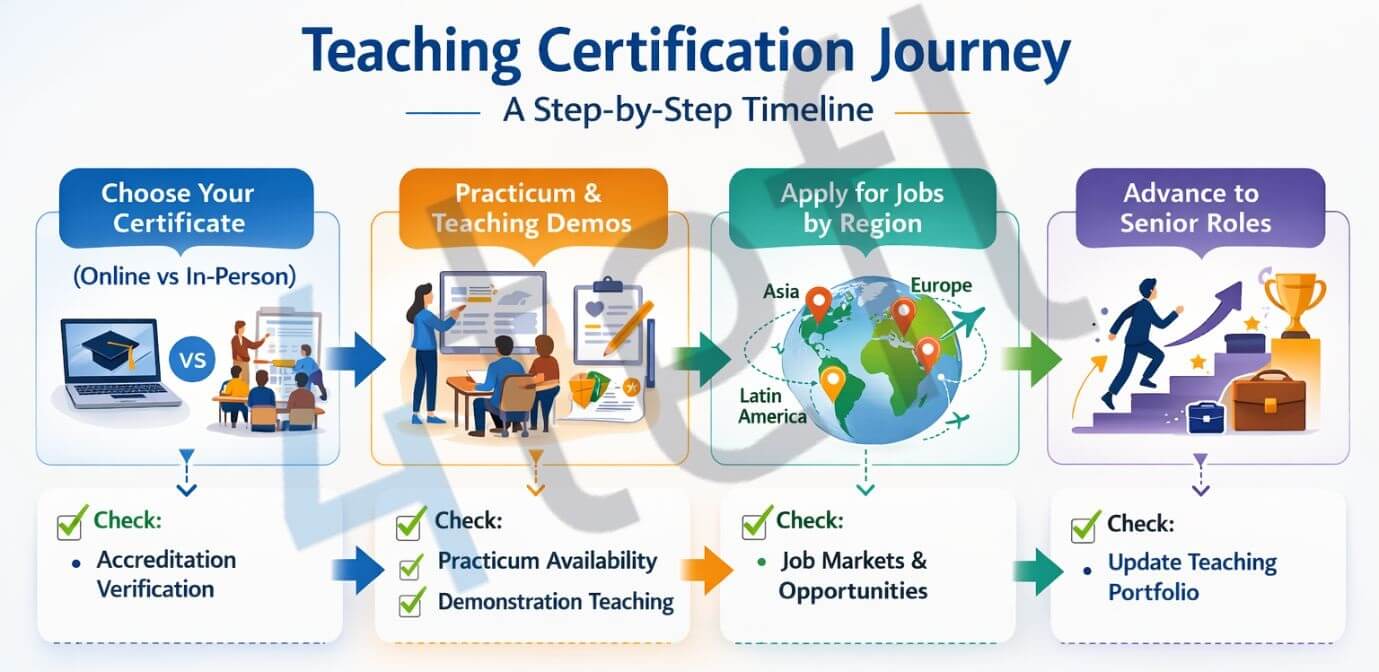
The emphasis in choosing is not simply price or duration; it is alignment with your destinations’ expectations and your desire for hands-on practice. UNESCO, the British Council, and OECD stress that quality assurance in teacher training supports learner outcomes and ensures consistency across programmes. When you select a certificate, verify accreditation status, practicum quality, and the availability of ongoing professional development opportunities after certification.
Where to teach: destinations visas salaries explained
TEFL can be universally appealing but there’s a lot of geographical specificity involved in teaching abroad. This can be different in many places where visa access is easy or where English teachers want to work in jobs already established in the market sponsorship can be more complicated language proficiency may be demanded or qualifications need to be acquired.
Regional Demand
The general tendency is that there is an influx of English teaching in East Asia, Europe, Latin America and the Middle East (demand is moulded by local education policy tourism business exchange and public language courses). In all instances getting a job generally depends on having the proper blend of a recognised TEFL certificate bachelor’s degree and a pristine professional record.
Visa and Legal Considerations
The exact visa and work permit requirements will vary by country and have to abide by laws that change with economic times trade agreements and seasonal labour needs. So we are advised to check official government sources before our move and to understand common document preparations such as police checks medicals and background checks which come with work visas. UNESCO and OECD guidance on mobility and skills highlight the rise of formal qualifications in a global employment environment that prizes transparency and portability of credentials.
Market Specifics
- Asia: Demand is still strong in many Asian countries for native English-speaking teachers with private English schools public education schools and corporate training many of whom have housing or on-site accommodation allowances.
- Europe: Demand in the European region is strong in terms of language schools university-linked programmes and many countries offer attractive tax and salary packages for teachers holding recognised certificates at university levels.
- Latin America: Can provide private language centres as well as bilingual schools and its living costs are moderate compared to those in Western Europe.
- Middle East: Both school and corporate training sectors have a strong demand for English teachers often with generous expatriate benefits.
Your decision will be informed by interests in climate cost of living language culture experience and career direction. Understanding visa regimes contract norms and local teacher demographics with good knowledge of local systems and also of contract structures and local teacher shortages will guide you as to where to put your search.
Financial Realities
Salary and contractual realities are also of course local different from contract to contract as it pertains to region type of contract and institution. In some markets a job may include housing stipends private lesson commissions and flight allowances in other markets a simple salary without extras. When assessing offers think of net income after tax cost of living medical services healthcare travel and professional development options. Public information from government bodies and international sources stress that sustainable teaching abroad requires that workers receive guaranteed contracts clear pathways and continued support to nurture the well-being of teachers. If you’re after an experience you do not want to lose from travel but still want someone to be able to help you do all your research and look for a solid destination for a balanced experience that is also budget friendly.
Practical tips for building a standout TEFL career worldwide
If you have dreams of destinations and dreams of destination planning first develop a strategic plan that begins with what you want to do with your goals then go backward to the practical steps. Start with a suitable certificate one that aligns with your markets and timing. For highly competitive areas or reputable universities it would be best to obtain a certificate along with a good practicum and visible teaching practice.
The Professional Portfolio
Develop a personal teaching portfolio early in your career:
- A teaching video sample.
- Lesson plans.
- Three to five lesson unit plans.
- Anonymised feedback from practicum supervisors.
An effective teaching portfolio can enable you to showcase your style of instruction your presence in the classroom and your capacity to work with learners who learn differently. In hiring employers place just as high an emphasis on tangible evidence of teaching excellence as they do on the certificate itself and demonstrating a track record can help you stand out in competitive hiring pools.
CV and Application
Develop a strong CV and cover letter that demonstrate your abilities as a TEFL teacher as well as your ability to communicate across languages. Clearly quantify the impact: improvements in a particular skill area students reporting success in specific learning goals positive feedback in the classroom or successful classroom management outcomes. Add a short 60–90 second teaching demo video if you can and include references from practicum supervisors or volunteer coordinators who have first-hand experience of your teaching abilities. Also highlight your flexibility readiness to respond to local curriculum requirements ability to work with teachers schools and parents and willingness to collaborate with local teachers and parents.
Networking and Continued Growth
Research from credible sources supports the idea that teachers should present a balanced profile including professional qualifications practical experience and a respectful culturally competent attitude toward learners and communities. Be prepared to pursue continued education and networking. Attend conferences participate in local and online teaching communities and seek mentorship from experienced professionals. Look for opportunities to work with local teachers coordinate with them observe their classes and ask for advice about what you teach and where you want to go.
Participation in professional organisations and continuing education allows you to keep improving your methods assessment practice and the techniques used to evaluate teaching effectiveness while staying aware of changes in educational technology and online instruction. According to international organisations career development opportunities for TEFL teachers are supported by structured development plans reflective practice and collaborative leadership in schools and language centres.
Career Progression
Then you have a clear career progression: Teacher → Senior Teacher → Director of Studies → Programme Supervisor which can give you a sense of direction as you progress. When you are prepared to go international or move online match your skills to the market. If you are seeking online teaching you will need a good home setup a professional teaching presence and a solid digital portfolio. Consider local cultural training the country’s language basics and an openness to working within school timetables and programming constraints for on-site positions. The global TEFL ecosystem rewards teachers who combine strong certificates with real teaching opportunities adaptability and a focus on learner-centred results. The best educators improve systematically accept feedback and develop networks that lead to long-term resilience.
Certification standards accreditation and timelines
Accreditation matters simply because it conveys quality assurance and enables schools to know you are trained with confidence. Accredited organisations and reputable bodies provide standards for course content practicum requirements mentor feedback and the criteria used for assessment. Differences in how well-regarded certifications compare with those with fewer practicum components or opaque assessment practices can shape employment decisions and visa eligibility.
International organisations and major education ministries highlight that strong evidence-based teaching practice and fair accessible credentialing contribute to learner outcomes and teacher mobility. For a certificate check for clear learning targets demonstrable practicum hours with observed practice and a credible system of assessment.
Expected Timelines
Timelines depend on the type and depth of the programme and your personal schedule including the workload you undertake.
- Face-to-face certificates: Typically require full-time study over about four weeks including substantial practicum teaching.
- Online certificates: More flexible and can be finished in weeks or months depending on the learner’s pace and the practicum available.
Employers might ask for a minimum number of practicum hours or for portfolio proof of hands-on practice and sometimes an integration of online theory with local practicum may be acceptable. In the future set aside time for an entry phase and build up your teaching portfolio even if you later pursue further qualifications such as postgraduate study so that you may access higher institutions or more senior positions. UNESCO the British Council and OECD highlight that a strategic approach to obtaining a credential tying career goals to credible certificates improves mobility and employability.
TEFL opportunities online vs in-person and regional focus
Online TEFL has increased opportunities outside a specific country, teachers can work from home or travel while teaching. Online roles differ by platform and student demographic, some programmes focus on primary and secondary learners others on business English or exam preparation. Good online teachers need a well-structured audio and video setup reliability and the ability to present engaging interactive lesson plans across time zones.
The online market is crowded but a strong profile with a TEFL certificate a good portfolio and positive client feedback can build a stable career over time. International organisations believe that online language learning is a major trend supplementing face-to-face teaching rather than replacing it.
On-site teaching remains valuable for immersion cultural exchange and classroom interaction that online roles may not provide. Regions with mature English teaching markets often offer structured contract systems professional networks and clear pathways to leadership roles within schools language centres or universities. For many teachers a hybrid approach spending time teaching abroad before teaching online from a home base offers the best balance between cultural experience and flexibility. Demand for English worldwide remains strong supported by education policy and international mobility highlighted by UNESCO and national education agencies. To navigate this landscape successfully build a strong portfolio stay informed about visa developments and expand your professional network.
Next steps and practical insights
If you have read this far you are probably ready to take concrete steps.
- Map your preferred regions: Start by mapping your preferred regions and typical visa requirements.
- Choose a certificate path: Choose a certificate path that aligns with those targets ensuring it includes a meaningful practicum.
- Create a portfolio: Create a compelling teaching portfolio early including lesson plans a teaching video and anonymised feedback from practicum supervisors.
- Set a timeline: Set a realistic timeline for completing certification securing a job and relocating internationally or building an online teaching presence.
- Establish a profile: Establish a professional online profile highlighting your strengths language skills and cultural competence.
- Plan for development: Finally develop a flexible plan for ongoing professional development keeping an eye on opportunities to expand your skills through advanced certificates language training or leadership roles within educational organisations.
Conclusion: Key Takeaways and Next Steps
Teaching English in TEFL opens doors to teaching worldwide with a spectrum of certificates designed to fit different budgets schedules and regions. Choose a certificate that delivers practical teaching experience align it with your destination goals and build a robust teaching portfolio early. Understand visa requirements and living costs to evaluate offers realistically and plan for ongoing professional development that supports long-term career resilience.
The best TEFL journeys combine credible credentials hands-on practice and a commitment to learner-centred teaching that respects cultural diversity. By staying informed networking thoughtfully and applying intentional well-documented practice you will be well positioned to embark on a rewarding career teaching English worldwide.
Authoritative Sources and Fact Checks (References)
- British Council – Teaching English Resources: A resource hub offering lesson plans, teaching activities and professional development materials for English language teachers.
- Cambridge English – Teaching English: A collection of teaching materials, exam preparation resources and professional guidance for English language educators.
Do I need a native English speaker status to teach abroad?
Native status is often preferred by employers, particularly in certain markets, but it is not always a requirement. Many schools prioritise teaching ability, certification, and cultural adaptability over native status. Demonstrating strong classroom skills and learner-centred practices can help you secure roles even if you are not a native speaker.
Can I teach English abroad with just an online 120-hour TEFL?
It depends on the destination and employer. Some schools accept online certificates for entry-level roles, especially if you can supplement with a solid teaching portfolio, demonstration videos, and positive practicum feedback. Others prefer in-person practicum experiences. If you plan to teach in regions with higher credential expectations, consider combining online study with a local practicum or a short in-person course.
How long does it take to become job-ready after completing a TEFL certificate?
Many new teachers feel ready to start applying within a few weeks of finishing a certificate with practicum. However, it’s wise to accrue some teaching practice and build a portfolio over a few months, especially if you’re aiming for competitive markets. Continuous practice, reflective teaching, and feedback will accelerate your readiness and confidence in diverse classroom environments.
What are the most in-demand regions for TEFL right now?
Demand fluctuates with policy and economic trends, but regions with strong English-education ecosystems include parts of East Asia, Europe, and Latin America. Always verify current market conditions through reputable international education organisations and national education portals, rather than relying solely on informal job boards.
Do I need a degree to teach English abroad?
In many markets, a bachelor’s degree is a common requirement or strong preference. Some destinations prioritise teaching credentials and practical experience over higher degrees, while others require degrees for work visas. Always verify the visa and employment prerequisites for your target country through official government sources and reputable international organisations.
Is CELTA worth pursuing if I want to teach in multiple regions?
CELTA is highly recognised and valued in many markets, especially for in-person teaching in language centres and schools. It’s a solid investment for building credibility quickly. If you plan to teach online primarily, a strong online certificate plus a robust teaching portfolio may suffice, but CELTA can open additional doors in traditional classrooms and school networks.
What’s the best way to choose a TEFL provider?
Prioritise accreditation, a clear practicum component, reputable trainers, and transparent cost structures. Read learner feedback and confirm that the programme aligns with your destination goals and the kind of schools you want to work for. Avoid options that promise instant hiring without real teaching practice or verifiable outcomes.