Understanding TEFL Accreditation for Career Growth

What makes this different is that TEFL accreditation is more than a badge or a title. It’s a practical signal that a course has met recognised standards for content, delivery and assessment.
For aspiring teachers planning to teach overseas or online, accreditation helps you:
- Tell the difference between programmes that offer real, job-ready preparation and those that prioritise marketing over learning.
- Save time and effort in your job search.
- Gain confidence that your investment is consistent and credible across cohorts.
This matters whether you’re applying for your first role abroad or building a long-term career across online programmes.
The Forms of Accreditation
TEFL accreditation can take different forms, depending on what is being reviewed:
- Institutional Accreditation: Where the provider is recognised as a legitimate accountable institution by a national or international body.
- Programme Accreditation: Which focuses specifically on the TEFL/TESOL course or certificate you complete.
It also relates to course design. A strong programme typically balances theory and practice, includes a practicum with real teaching experience, uses clear assessment methods and sets defined learning outcomes. Internationally, employers in schools, language centres, universities and online platforms increasingly prefer programmes aligned with recognised criteria and transparent verification processes.
Ofqual and Credibility in England
Ofqual and related regulators provide important context for credibility. In England, Ofqual regulates qualifications and ensures they meet defined standards.
Important Note: TEFL courses themselves are usually not regulated as formal qualifications by Ofqual. That is why reputable TEFL providers often rely on recognised external accreditation bodies or institutional partnerships rather than implying Ofqual approval alone.
When in doubt, cross-check a provider’s claims against official sources such as regulator pages and published accreditation directories. This approach helps you avoid courses that claim prestige without verifiable quality.
Why Accreditation Matters in Practice
Accreditation matters for more than branding. Alongside signalling quality, accredited TEFL pathways can offer:
- Clearer routes to employment.
- Stronger recognition by schools and online programmes.
- More protection if something goes wrong (e.g., if a course is disrupted).
- Support for ongoing development through clear learning outcomes and demonstrated competencies.
Accredited programmes usually provide documented evidence of practicum supervision, feedback and assessment standards which can strengthen your profile when you present your portfolio to employers.
Key Accreditation Indicators for TEFL Courses
| Indicator | Why it matters | How to verify |
| Institutional accreditation | Signals the provider’s overall quality management and governance | Check the accrediting body and status on the provider’s site and the accreditor’s directory |
| Programme accreditation for TEFL | Demonstrates the specific course meets established standards for content, practice, and assessment | Look for explicit reference to a recognised TEFL accreditation body or framework |
| Practicum and teaching practice | Ensures hands-on experience with feedback from qualified supervisors | Review practicum guidelines, supervisor credentials, and placement procedures |
| Transparent learning outcomes | Clarifies what you will be able to do after completion | Compare learning outcomes with job market expectations (e.g., lesson planning, classroom management) |
| Verifiable certificate | Enables easy verification by employers and visa authorities | Confirm certificate number, issuer contact details, and online verification portal |
| Regulation alignment | Indicates alignment with national or international quality frameworks | Cross-check with government or recognised international frameworks (e.g., UNESCO-associated standards) |
The Limits of Accreditation
Accreditation also has limits. A certificate from a well-regarded provider does not automatically guarantee a job in every country or programme. Some destinations and institutions have visa rules or local regulatory requirements that go beyond TEFL alone.
Employers also consider the full picture:
- Practicum experience
- Language proficiency
- Cultural awareness
- Adaptability
- Ongoing professional development
Still, choosing accredited programmes with transparent verification puts you in a stronger position across a wide range of employers from language schools and international schools to online programmes and universities. Accreditation supports long-term planning too, providing a framework for progression into specialisations like Young Learners, Business English, or exam preparation.
Why Accreditation Standards Matter for Employers
Employers want evidence that providers and programmes produce reliable consistent teaching competence. Accreditation criteria act as a practical proxy for quality, especially when employers cannot personally audit every candidate’s training.
Reducing Risk
For employers, accreditation reduces risk. It lowers the chance of hiring someone whose training missed core areas such as classroom management, lesson planning, language assessment or effective lesson delivery.
From a regulatory and industry perspective, accreditation supports consistency. In contexts where government bodies publish expectations for teacher training, accredited programmes are more likely to align with those expectations, supporting visa processes and professional recognition.
Verification and Professional Trust
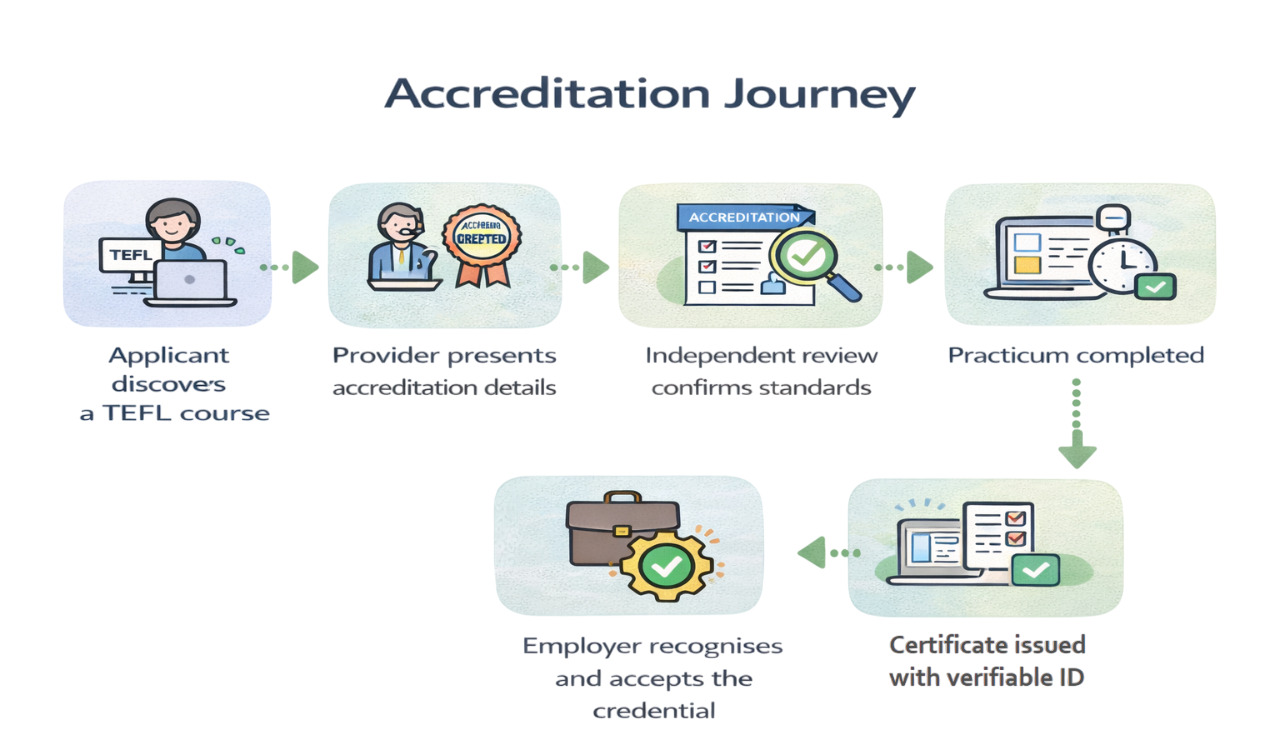
Employers often expect candidates to present certificates that are easy to confirm quickly. Clear verification systems (verifiable certificate numbers, online portals) make recruitment smoother. When a candidate can show that a certificate is verifiable and linked to clear competencies, it supports trust and can strengthen an application.
Choosing Accredited TEFL Courses That Meet Standards
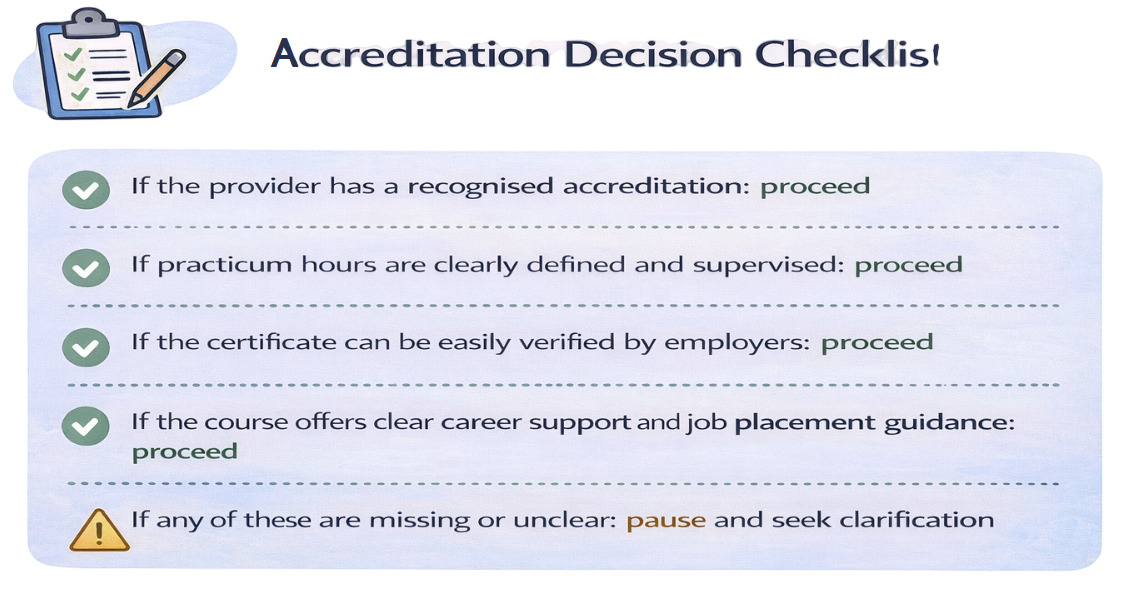
This is definitely worth considering: one thing to remember is that the best starting point is to choose programmes that are clear about their accreditation, combining functionality with aesthetic appeal. This is essential: look for certificates that clearly name the accrediting body or the institutional framework behind the course. A credible TEFL provider will publish information about accreditation status on their website, in enrolment materials and in the student handbook, giving you peace of mind. If you cannot find it, treat that as a warning sign.
It’s worth noting that accreditation claims should be verifiable through the accrediting body’s official directory or website. A reputable provider will encourage you to check their status and will give you direct contact routes to confirm accreditation details. Verification is not a hassle – it is a basic safety check, just like any other in higher and professional education.
Unlike other alternatives, one thing to remember is that beyond accreditation, the content and structure of the course matter deeply, combining functionality with aesthetic appeal. The key point is that a TEFL programme typically includes a practicum component, ideally with supervised teaching practice in real classrooms. You’ll find that the practicum is where you apply lesson planning, manage student interaction, teach across different proficiency levels and receive feedback from experienced mentors, helping you prepare for any situation. Make sure the practicum details are clear.
This is a game-changer: the great thing is that, in addition, the theoretical modules should reflect current thinking in language acquisition, assessment for learning and inclusive teaching strategies that support learners with different needs. What makes this different is that a strong course offers professional guidance on job placement, polishing your CV and interview preparation. It is wise to review the delivery format – whether the course blends online and in-person components, includes asynchronous content, live seminars and collaborative assignments – so it fits your schedule and learning style, making life easier. The truth is, a well-designed programme recognises.
Finally, consider the provider’s credibility beyond accreditation. Research the institution’s track record, the qualifications and experience of the teaching staff, student reviews and any independent evaluations that exist. A credible provider will also explain any practicum placements they can support, including how they choose partner schools and what safeguarding standards are in place. Cost matters but it should not be the only factor. The safest investment is a course that combines recognised accreditation with a strong practicum, contemporary pedagogy, clear assessment and practical career support. If you can, seek testimonials from former trainees or professional mentors who have benefited directly from accredited programmes and can share concrete outcomes.
Steps to Evaluate an Accredited TEFL Course
| Step | What to check | Why it matters |
| Step 1: Identify accreditation | Name of accrediting body, status, and expiry date | Verifies external review and ongoing quality assurance |
| Step 2: Review practicum | Hours, settings, supervisor credentials, and feedback process | Ensures practical readiness and supportive supervision |
| Step 3: Assess learning outcomes | Specific competencies, assessment methods, and portfolio requirements | Aligns with job market needs and personal learning goals |
| Step 4: Verify certificate | Certificate number, verification portal, and official contact | Allows employers to validate your credential quickly |
| Step 5: Consider delivery model | Online, in-person, blended, and access to teaching practice | Matches your schedule, location, and career plans |
What To Check: Certification Validity and Recognition
Credential validity depends on the formal status of the programme and the ongoing usability of the certificate. A valid TEFL credential should include a certificate number, an online verification method and documented learning outcomes.
Regional Recognition
Recognition varies by destination. Always confirm expectations with employers, recruiters and local education authorities in your target destination. Ask:
- Does the certificate support visa or work-permit applications?
- Is the programme recognised by schools and online platforms in specific regions?
Finally, check a provider’s policies on recertification. A certificate is not only about completion; it’s about ongoing value. Providers with clear recertification options and updated syllabuses are more likely to remain useful as pedagogy and tools develop.
Authoritative Sources and Fact Checks (References)
- GOV.UK – Ofqual (The Office of Qualifications and Examinations Regulation): Information on how qualifications are regulated in England.
- Westbridge CPD Institute: CPD Accreditation: CPD accreditation for organisations and professionals. Recognising quality learning, training and development across all industries.
- EN TTC: English Teaching & Training Council: Global ELT recognition for teachers and centres. Join EN TTC for certification, support and recognition.
- The Distance Education Accrediting Commission (DEAC): A recognized accrediting body for online and distance learning programs globally.
Is TEFL accreditation mandatory to teach English abroad?
Not universally mandatory, but accreditation strongly influences employability and credibility. Some destinations and schools prefer or require accredited credentials, while others may accept non-accredited courses if they include a reputable practicum and solid content. Always check the specific requirements of your target country or employer, and verify with the accrediting bodies and potential employers.
What is the difference between TEFL and TESOL?
TEFL (Teaching English as a Foreign Language) and TESOL (Teaching English to Speakers of Other Languages) are often used interchangeably in course titles, but the distinction can be contextual. TEFL generally refers to teaching English to non-native speakers in foreign-language contexts, while TESOL is a broader umbrella term that encompasses teaching English in both foreign and immersion (e.g., English-speaking) contexts. Many courses use TEFL/TESOL in titles to reflect both possibilities; focus on the course outcomes and practicum rather than the acronym alone.
Do employers in Europe require Ofqual-regulated qualifications?
Ofqual-regulated qualifications are specific to England and the UK’s regulatory framework. Employers in Europe may recognise TEFL certificates from reputable international providers, particularly those with validated practicum and transparent verification. Local requirements can vary, so research each destination’s expectations and verify with prospective employers and local education authorities.
How long should a TEFL course take?
Duration varies by programme and delivery mode. A typical course ranges from 120 to 250 hours, combining theoretical modules with supervised teaching practice. Some providers offer shorter intensive formats or extended online study with flexible practicum. Choose a duration that aligns with your learning pace, your travel plans, and your availability to complete practicum hours.
Can online TEFL certificates be recognised by employers?
Many online TEFL certificates are recognised, particularly when they include a substantial practicum, evidence-based teaching methods, and clear verification processes. The key is the presence of a credible practicum element and transparent accreditation. Always confirm with potential employers how they view the specific online programme and whether practicum hours can be completed in your intended teaching context.
How can I verify a TEFL certificate’s accreditation?
Start by looking for the accrediting body’s name on the certificate and course materials. Then visit the accreditor’s official directory or website to confirm status, expiry dates, and any conditions. If online verification is offered, use the certificate number to confirm the credential. When in doubt, contact the provider’s admissions office or the accrediting body directly for written confirmation.
What should I do if the provider’s accreditation status changes after I enrol?
Accreditation can be updated or suspended, so keep records of your certificate, the course’s current status at the time of completion, and any correspondence from the provider. If your provider’s accreditation lapses, request a formal written explanation and guidance on how your credential will be treated by employers. Some employers may request updated verification or additional assessments; others may consider transferring to a different accredited programme.