Understanding TEFL Certification Timeframes

If you’re planning to teach English abroad or online, your first major milestone is earning a TEFL/TESOL certification. But how long does it actually take to become certified? The answer isn’t one-size-fits-all. Timeframes depend on the route you choose, whether you study full-time or part-time, and how much practical teaching you complete as part of your programme.
The good news is that there are reliable paths that fit different schedules, from intensive, four-week courses to flexible, self-paced online routes. This article breaks down the key time drivers, compares major TEFL routes, and provides practical guidance to help you plan a timeline that aligns with your work, studies, and travel plans. We’ll also highlight what to expect in terms of application, coursework, and certification, with trustworthy information drawn from established sources in higher education and regulated qualifications.
Choosing a clear timeline at the outset can reduce stress and help you make informed choices about where to invest your time and money. Whether you want to secure a widely recognised credential for teaching in private language schools, apply for positions abroad, or build a flexible online teaching business, understanding the durations of different routes helps you set achievable goals. In the sections that follow, you’ll find a structured look at the factors that influence TEFL timeframes, the typical durations for popular routes, practical considerations for fitting training around your life, and a practical guide to beginning your certification journey with confidence.
What Determines TEFL Certification Timeframes
Whatever route you pick largely determines the clock.
Intensive vs. Online Delivery
- Traditional In-person Routes: The Cambridge CELTA and the Trinity CertTESOL, for example, are heavily focused on intensive delivery and validated teaching practicum. Most of the core study modules are held in a stable calendar period, typically four full-time weeks, and, in any case, a set amount of teaching practice that has to take place with actual learners. This model focuses on full attention, immersion, peer feedback, and practical teaching practice, offering an effective and rapidly approaching entry-level teaching experience. The time is predictable, which is a big plus for individuals accustomed to a fairly compact block of study. The old full-time intensive formats will make an ideal starting point for those who want to start teaching quickly.
- Flexibility and Discipline: The availability of online and distance classes provides an option to manage flexibility, but also imposes discipline to schedule courses carefully. Many TEFL accreditations have online delivery, with course descriptions usually listing that students complete 100–120 hours of input, but may also offer a practicum. The speed can vary from fully independent to highly controlled part-time hours, and can last from eight to twelve weeks or more. People may also need online formats for work as part of their training or to be able to travel or attend with family members.
The Importance of Practicum and Regulation
- Practicum Impact: Since the teaching practicum is important to help develop classroom content, many online programmes also offer a supervised practicum that you are required to complete in your local area, impacting the timeline overall.
- Regulatory Framework: Length is influenced by prerequisite and regulatory requirements. Certain routes require a university degree or a minimum level of language proficiency, and the rest are suitable for the general public. From a UK perspective, Ofqual, the body associated with the UK’s professional and regulatory framework for qualifications for education and training for teaching English, supervises the regulations on qualifications for most English language teaching qualifications, except that those offered by private providers are not always regulated. This could be a range of course levels and assessment formats, based on whom a course is awarded and how a course is designed. It’s sensible to verify the regulatory status and accreditation for the certificate you are considering, and to ensure that employers are aware of the route you have in mind. Ofqual provides guidance for regulated qualifications about what is a “regulated” qualification; however, with a lot of TEFL certificates being privately issued but widely respected in the sector, there are many that are not.
Assessment and Scheduling
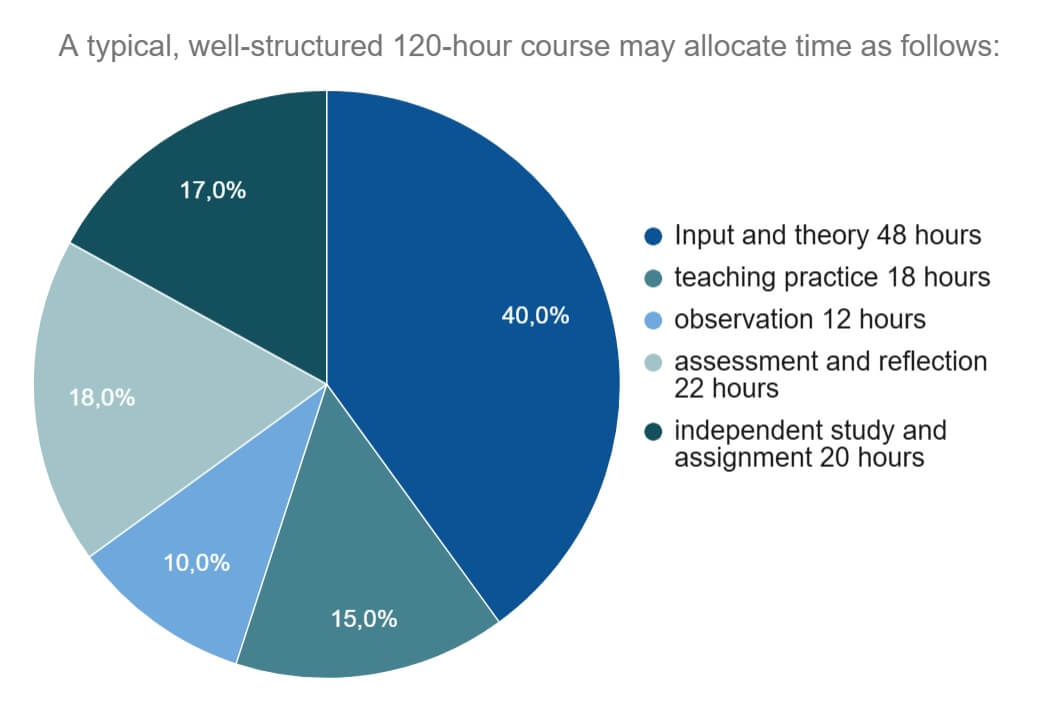
- Assessment Tasks: Timelines are heavily influenced by aspects like teaching practice, observation, and assessment. Within high-profile TEFL routes, practical hours, observed teaching practice, and assessment tasks take up considerable time. For instance, a CELTA-style programme usually carries within its framework a high teaching practice portion, designed for you to gain the real classroom experience necessary for your postgraduate work. Hours vary from provider to provider and format of course, but hands-on teaching is a common feature of high-quality TEFL programmes. It enables you to see how many times the educator has covered a course or what part of it they are involved with, so you are job-ready, that doesn’t mean planning additional space past the lesson day to reflect, revise, demonstrate, and so on.
- Logistics: Availability and scheduling constraints are key. Your location in the world, whether you have the cohorts or are wanting an instructor at a partner school or training centre, may all play a role in what path you choose. Full-time, in-person classes come in rigid schedules, weekdays with occasional weekend sessions, and that can get you closer to cramming on top of your studying for a month or a few weeks. One half-day, in-person format that covers many weeks or months and enables you to work or study at the same time. While online routes allow you to pace yourself to work, you may still have to schedule practicum placements in line with local teaching opportunities, and this will inevitably impact upon when you finish up with your certificate.
Market Objectives
Decision-making depends on market expectations and career objectives. Well, if you choose to teach abroad or if you want to teach in countries or institutions that are specifically recognised for Cambridge CELTA or CertTESOL, you can make your plan more aligned with a company’s standards by understanding the anticipated timeframes and practicum levels. Other TEFL certificates may be offered at a limited number of jurisdictions or schools, if they satisfy minimum hours and practicum requirements. Some may need more training courses or streams of formal qualification than others. This has also meant investigating your key target markets’ needs, considering visa and employer needs, to help plan a course that minimises time to teaching and further your career goals.
Courses, Tests and Timelines Across TEFL Routes
CELTA in person and its four-week equivalents
The Cambridge CELTA is one of the most common entry-level TEFL certificates, available as a full-time or part-time programme in various countries worldwide. The standard full-time CELTA course runs for about four weeks, typically with around 120 contact hours as well as six hours of teaching practice alongside real learners. The course aims to balance theory and practice, including observation and feedback from both tutors and peers. The exact timetable varies from centre to centre; however, most practitioners rely on the four-week model as a general approach to studying and an anchor for scheduling. Being classroom-based, taking the course for training, and the necessary travel time, study, and accommodation also form part of the practical timeline.
CertTESOL and associated training
The Trinity CertTESOL (or equivalent) is also another standard path for initial qualifications in English language teaching. Similar to CELTA, the curriculum is generally taught full-time for about four weeks with hands-on components and assessment, which culminate in a certificate that works across a range of teaching contexts. Wherever there’s regional variation, part-time or blended formats could lengthen the duration to weeks or months, but the main objective is consistent: providing new teachers with basic skills underpinned by supervised teaching practice and rigorous assessment.
Online TEFL certifications
Online TEFL certificates tend to vary more widely in duration as they are offered online and learners may have flexibility. A large number of providers promote 100–120 hours of online learning, including asynchronous modules, quizzes, and reading tasks. Students who take online courses on an irregular basis or have to juggle more intense work may take eight weeks, part-time, up to several months online. Online certificates often require a practicum component if the learner wants hands-on classroom exposure; it can be locally, adding to the overall timeline. When it comes to interpreting online offerings, you need both the total hours and the scheduling expectations, especially if you’re about to begin teaching soon after completing.
Hybrid pathways and hands-on elements
Some programmes have integrated online theory with a practical teaching component in the locality. Hybrid routes have become increasingly popular as they are flexible and allow for practical, in-the-field experience. Based on the local arrangement, the number of lessons that need to be observed, and training setting availability, the practicum is required for a limited time. The practicum hours can be anywhere from six to twelve hours or more, depending on the awarding body and the particular course design, as well as the required amount of extra practical training hours throughout the duration of the course. Hybrid models require properly thought-out arrangements to combine practicum time with work and travel.
Theory and practice for practicum
In many jurisdictions, it’s a key component of TEFL certification, and gaining access to supervised hours depends on local schools, language centres, or partners that train instructors. Some programmes offer practicum placements as part of their package or have you arrange your own placement. However, wherever you are, making sure your practicum is in line with visa, work permits, and local health and safety requirements is important. It’s also useful to check if the course provides a certificate that indicates practicum completion for prospective employers, since this can be an important piece of information.
Timelines by TEFL Route (typical ranges)
| Route | Typical duration | Key practicum/teaching component | Notes |
| In-person CELTA (full-time) | ~4 weeks | ~6 hours supervised teaching practice; observed lessons | Internationally recognised; strong emphasis on practical skills; variable start dates by centre |
| In-person CertTESOL (full-time) | ~4 weeks | Similar teaching practice requirement; observed lessons | Widely recognised; often offered in multiple languages depending on centre |
| Online TEFL certificate (100–120 hours) | 8–12 weeks part-time (self-paced options 6–16 weeks) | Optional practicum; may require local placement | Very flexible; ideal for working students; practicum may extend total time |
| Hybrid (online theory + local practicum) | 6–12 weeks (theory) + practicum weeks | Variable practicum hours; supervised teaching | Balances flexibility with hands-on practice; requires local placement |
| Combined or cross-border routes | 4–8 weeks (online + intensive in-person) | Dedicated teaching practice blocks | Designed for rapid deployment to teaching posts; prerequisites may apply |
Choosing the Right TEFL Route to Match Your Schedule
So then map to a route. Whether you should opt for a TEFL path at the very outset should be based directly on your long-term goals. And, if your goal is quickly moving into teaching positions at prestigious private language schools, a four-week in-person certificate, such as CELTA or CertTESOL, could be your fastest route along the way. However, if you want as much flexibility as you can to combine training while also working, travelling, or family commitments, an online certificate with a structured practicum might work better. There’s a general focus on hands-on teaching experience through routes, and you’ll want a programme that allows you to practise lesson planning, classroom control, and feedback.
Market and Personal Alignment
- Job Market: Think of the host country’s market here and the visa specifics. The TEFL graduate job market varies by country and region. Some employers appreciate the prestige and consistency of Cambridge CELTA or CertTESOL, and others won’t pay much attention to the number of online certificates, which may appear less appealing if you lack work experience or a solid track record of teaching. Research your target programmes and programmes, visa rules, what employers expect from candidates, and general entry requirements before deciding on a course. In regulated workplaces, employers must have certain qualifications that reflect professional standards; in private organisations, it’s practical teaching ability that often counts.
- Learning Style: Determine if you have a strong learning style and what’s important to you in your life. For those who find themselves most effective in a highly structured environment, a full-time, face-to-face course allows clear markers, feedback, and built-in discipline in study. If you want some autonomy, and can discipline yourself so you consistently find that rhythm online, a self-paced online programme can fit into a job or family life that is busy. Hybrid methods can provide the intermediate flexibility necessary for online theory and face-to-face practice.
- Financial and Time Planning: Whatever the model, schedule the total amount of learning time, practicum hours, and lesson preparation and assessment time you need. When choosing a route that will work best for you, a good route will be coordinated with your work calendar, your travel activities, and your financial situation. Tactical issues with timing and logistics matter. Timeline concerns, travel, accommodation, and delays in securing a practicum placement can all be considered, especially if it’s an online route with local placement. A lot of centres have intensive cohorts with fixed start dates, whilst others offer rolling intakes. If you are teaching and studying in the interim, you need to calculate how many study hours per week you can reasonably schedule, what hours will be required, and whether time adjustments are needed to accommodate in-person sessions or examinations. Allocating time for administrative and regulatory work, including planning applications, fees, and references, is equally important to avoid delays and disruptions.
Pathway selection should be proportionate to employability and learning experience. For many would-be teachers, the best option is a balance of strong pedagogy and practice. A practicum that demonstrates your skills in lesson planning and delivery, along with the ability to evaluate students’ development and reflect on your teaching, can offer valuable tools and is often an essential component of accredited qualifications. Enrolment advisers at reputable TEFL/TESOL training providers can guide you in choosing the right path and help align your schedule and career goals. The key step is to choose a path that strikes a balance between credibility and practical feasibility so you can begin teaching sooner while continuing your professional development.
What to Expect: Application, Coursework and Certification
The application process: training, eligibility, and preparation
Regardless of route, the majority of TEFL programmes require that you be 18 years or older and have at least a secondary school education. Most in-country and online providers expect a strong command of English, as well as the ability to engage in a theoretically rigorous programme of study. Some programmes require a brief written task or an audio or video interview in order to assess both your language proficiency and the potential that your future teaching might demonstrate. Clearly developed funding, travel, or local practicum arrangements should be made from the initial planning phase. Depending on your provider’s requirements and your particular needs for references or language tests, the application period might range from a few days to a few weeks.
The journey of curriculum: structure, assessment, and feedback
Following enrolment, you will face a combination of theory-based tasks, observation tasks, and practice-related challenges. In in-person formats, a daily routine of input, peer observation, micro-teaching, and feedback drives the schedule. In the case of online routes, modules are delivered through a virtual learning environment, with quizzes, reading activities, and reflective journals. You’ll be expected to complete lesson planning, deliver micro-lessons, and produce a professional portfolio that highlights your teaching methodology, classroom management, and assessment of learners across all routes. The quality and depth of feedback you receive during the practicum are essential for your growth as a confident teacher.
The certification moment: what you receive and when
Following successful completion of the programme’s requirements, input hours, training time, assignments, and assessment tasks, you are awarded the certificate or diploma. For CELTA and CertTESOL, the certificate issued by the awarding body is well known in the private language education sector across many countries. Where a practicum component is included, the certificate usually notes the practicum and the recorded teaching hours observed. It’s recommended that you retain both a digital and physical copy of your certificate, as potential employers in other countries may request validation during recruitment.
Going through regulatory and recognition aspects
As previously noted, Ofqual is responsible for regulating qualifications in England and provides a framework for what constitutes a regulated credential. Most TEFL certifications are not Ofqual-regulated, but employers and international schools may stipulate specific qualifications or minimum hours. To avoid issues, verify the recognition of your qualification with potential employers in the countries where you plan to work, and confirm whether practicum components must be completed locally or as part of the programme. This helps you anticipate timelines and reduces uncertainty when applying for teaching positions.
What’s next: readiness and further steps
Once certified, you will likely focus on building a teaching portfolio, preparing sample lesson plans, and obtaining references from practicum supervisors. You may also consider further professional development, such as microteaching, classroom management, or language assessment training. Continued professional development is important for career progression and can include short courses, workshops, or advanced TESOL qualifications. Preparing for job applications involves both documentation and practical readiness for teaching in different contexts.
Conclusion
Timeframes for TEFL certification allow you to decide how your future and lifestyle will align with your training. While in-person opportunities provide immersive, hands-on training and more recognisable credentials, online and hybrid routes offer flexible access to the profession, although practicum opportunities and employer expectations may differ. No matter the path, an intentional and systematic approach to teaching, underpinned by practice, strong feedback, and ongoing evaluation, will give you the confidence to teach English effectively, whether face-to-face or online. By assessing regulation, market demands, and your schedule, you can plan a certification route that meets your goals and supports your development as a TEFL professional.
Authoritative Sources and Fact Checks (References)
- Cambridge English (CELTA): The official provider of the CELTA qualification, offering comprehensive details on course structure, assessment, and finding accredited centers.
- Ofqual – The Register of Regulated Qualifications: The official database for searching and verifying regulated qualifications in England, ensuring transparency and standards compliance.
- British Council – Teaching English: A primary resource for professional development, teaching resources, and information on English language teaching careers worldwide.
How long does TEFL certification take overall?
Timelines vary by route. Full-time, in-person programmes like CELTA or CertTESOL typically run about four weeks. Online certificates commonly take eight to twelve weeks of part-time study, with practicum components potentially extending timelines. Hybrid routes can fall in between. The best answer is: choose the route that fits your schedule while ensuring you gain essential teaching practice and recognised credentials.
Do online TEFL certificates count for teaching abroad?
Many online certificates are accepted by employers in a wide range of contexts, especially when combined with a meaningful practicum. However, some destinations and institutions prefer or require specific credentials (for example, CELTA or CertTESOL). Research your target markets and verify employer expectations before enrolling in a course.
Are TEFL certificates regulated by Ofqual in the UK?
Ofqual regulates many formal qualifications in England, but many TEFL certificates are privately issued and not Ofqual-regulated. It’s important to verify recognition with employers and to consider whether a provider’s accreditation is valued in your target teaching markets.
Can I study while working full-time?
Yes, many people pursue online or hybrid TEFL routes while continuing to work. Online courses offer the most flexibility, while hybrid routes may require more structured housing for practicum placements. It’s important to plan your weekly hours carefully and discuss your study plan with your employer if needed.
How should I pick between CELTA, CertTESOL, and online TEFL?
If you want broad international recognition and a consistent, practical teaching framework, CELTA or CertTESOL are strong choices for full-time learners. If flexibility is a priority, an online certificate with a local practicum can provide a practical route that fits around your life. Consider your target markets, preferred study style, and availability for practicum before deciding.