What TEFL Really Is: A Practical Starter for Aspiring Teachers

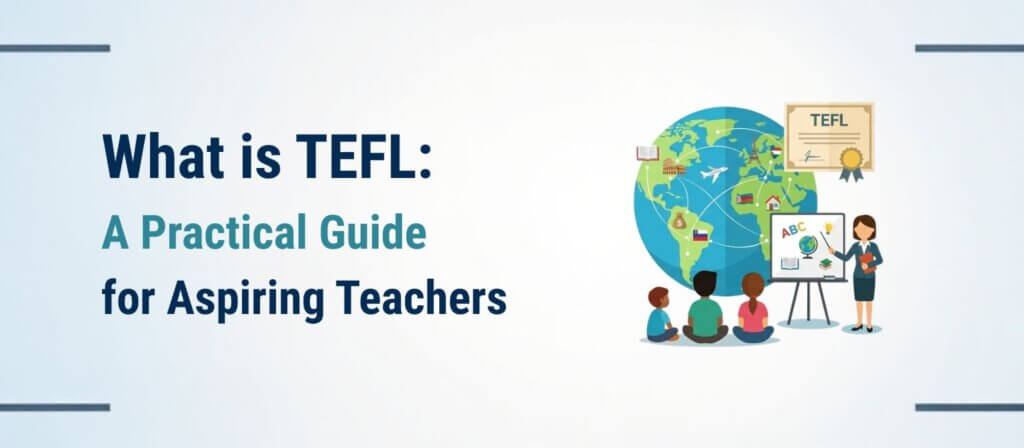
A deeper understanding of TEFL is often the first step toward turning the goal of teaching English into a practical and rewarding international career. TEFL, which stands for Teaching English as a Foreign Language, refers to the training, theory and classroom practice required to teach English to non-native speakers in countries where English is not the primary language.
Today TEFL includes a wide range of certification pathways, from flexible online courses to intensive in-person programmes with supervised teaching practice. For many aspiring teachers, TEFL serves as the bridge between strong language proficiency and a professional teaching career that can be pursued abroad or online.
This guide explains the core concepts behind TEFL and outlines credible training routes that align with widely recognised professional standards. It also helps you understand how different certification paths fit different goals, timelines and teaching environments.
As you explore your options, you will see that TEFL is not a single qualification but a broad field that values practical teaching ability, reflective practice and continuous professional development. The most respected programmes emphasise lesson planning, engaging classroom activities, learner assessment and the ability to adapt teaching strategies to different cultural and educational contexts.
Understanding the TEFL landscape early in your journey helps you set realistic expectations about training, costs and career opportunities. With the right preparation, TEFL can open the door to your first teaching role and provide the foundation for long-term professional growth in the field of English language education.
Core Foundations
A solid TEFL foundation usually includes:
- Language awareness for word use (grammar, pronunciation, vocabulary).
- Classroom teaching methods (lesson-planning, activity design, feedback).
- Real-life practical teaching practice with real learners.
Whether you plan to teach in a language school, at universities in international programs or in online courses, a solid TEFL background will demonstrate that you have the skills and theoretical education and practical experience needed to teach well. This is exactly the mix of skills employers are looking for when they post on an English teacher to help them with their postings – a teacher who can meet the needs of all types of learners and make visible progress as well as to see it visible.
International Standards and Globalization
TEFL training also meets international standards for teacher professionalism. Using frameworks such the CEFR (Common European Framework of Reference for Languages) as templates to outline the outcomes for learners, and credible training providers mapping their courses to this framework so that graduates are equipped with transferable skills across nations, the field uses these frameworks.
There is globalization in English education, employment, and cultural exchange and UNESCO and other authoritative sources highlight the relevance of this; well-planned TEFL programmes are more beneficial than TEFL programmes alone. Although the specific job requirements can vary significantly by country, region, and employer, there is an unwavering throughline to the job application: practical teaching expertise, strong linguistic awareness, and a proven dedication to continuous professional development.
Read longer and you’ll find out how to establish a path that reflects ambitions while keeping in line with established standards. Knowing about your TEFL landscape early on allows you to set realistic expectations around timelines, costs and outcomes. Some readers will take a short online certificate as an entry point but then go through a longer programme in supervised teaching practice. Still others may undertake an in‑person, practicum‑rich programme which approximates actual classrooms. Of the few choices there are, the currency shared by all is teachability, or the ability to plan well, adapt to suit what a learner needs, obtain feedback and update your practice over time. A clear understanding of these elements allows you to choose a programme that will enhance your first teaching assignment — and help support your long‑term goal to progress in the field.
Certifications and courses: choosing the right TEFL path
Selecting the appropriate TEFL pathway starts with an awareness of your objectives, time available, and where you are seeking to teach. TEFL certifications come in a variety of flavours, including short, self‑paced online modules, to intensive, practicum‑based programmes that encompass observed teaching practice.
Some readers just want a 120‑hour online certification that’ll get them a basic job in teaching online or language schools; others want a full-on immersion, with hours of live hands‑on teaching and a practicum, which can be great, especially if you want some career advancement and/or the possibility of working as a visa holder. Weigh the trade-offs between flexibility, cost, and the depth of training you receive. At least in some of these cases search your program for learning outcomes that are well-known to those involved in these teaching functions and a chance to learn from professional teachers; if specialise you will eventually need to study or accredit.
Assessment Approach
The way to assess the suitability of certification options involves a three-part approach:
- Length and intensity.
- The prospect of practicum or feedback to gain proficiency.
- Alignment with accepted standards.
Short online certificates can provide important methodology and activity design, but practicum‑based courses offer the teachable, real-world practice employers seek. Accreditation matters, too. TEFL certifications are from private providers and not from the awarding bodies, most often those affiliated with well established educational facilities. Many employers, both in the UK and internationally, will see CELTA, CertTESOL and other qualifications requiring a robust teaching practicum. Even electronic certificates are legitimate if they offer a supervised teaching experience and a reflective portfolio. The realisation is verifying if your curriculum does involve classroom observations, a practicum or micro-teaching and a worthwhile assessment process.
Comparison of Certification Options
| Certification type | Focus | Typical hours | Notable features | Common pathways |
| TEFL (general online) | Grammar, lesson planning, classroom activities | 120–180 hours (online) | Flexible, self-paced; some include practicum | Entry-level online roles; supplement with practicum later |
| TEFL (advanced/combined) | In-depth pedagogy, materials design, assessment | 150–250 hours | Mix of online modules and face-to-face (or remote) practicum | Foundations for broader teaching contexts; potential for higher rates |
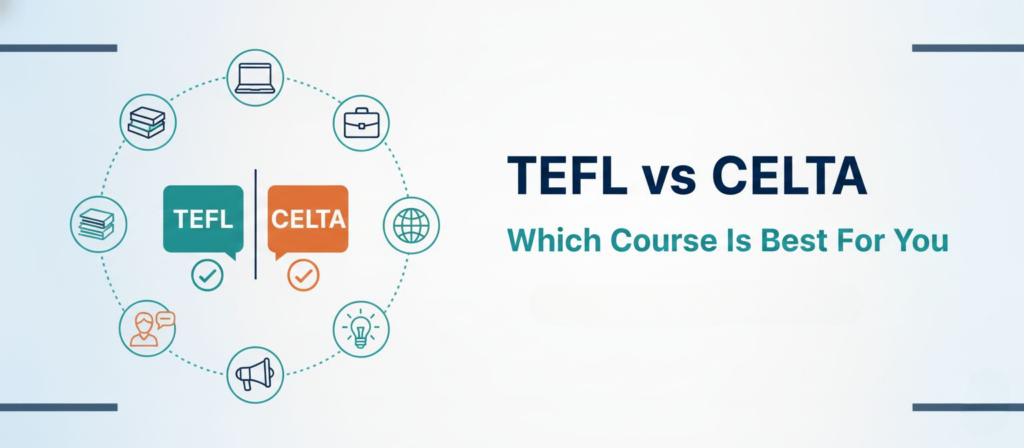
| CELTA | Practical teaching, observed lessons, feedback | ~120 hours total; includes 6+ hours of observed teaching | Globally recognised; intensive, hands-on | Entry to mainstream international schools; strong CV impact |
| CertTESOL | Structured pedagogy, classroom management, lesson planning | ~130–200 hours; includes teaching practice | UK/International recognition; feeder to higher qualifications | Aimed at schools and language programmes; good progression route |
| MA in TEFL/TESOL | Advanced methodology, research, leadership in pedagogy | 300–600 hours plus research components | Higher-level credentials; potential for leadership roles | Senior teacher, programme director, teacher trainer roles |
Depending on your context, the right choice depends on your context. If you plan to teach online with flexibility, a solid online certificate with a practicum component can be sufficient. If you want to teach in traditional schools or pursue leadership roles, a practicum‑rich certification such as CELTA or CertTESOL, possibly followed by a higher qualification, is often a sound investment. Be mindful of the reputation of the provider, the presence of a teaching practicum, and the support offered for job placement. In this arena, employer expectations increasingly prioritise demonstrable classroom competence alongside theoretical knowledge.
Training formats and outcomes for TEFL careers abroad
Training styles are widely diverse, and the job-related consequences are also very well adapted to each person’s life circumstance. Online certificates provide you the opportunity to receive the certificate with accessibility and flexibility while you prepare to start teaching your first role. In-person or blended formats — studying asynchronously with scheduled teaching practice — are also frequently the richest preparation for actual classrooms. And for most readers, the style selected will be similar to visa requirements, budget and desired style of living.
Successful applicants usually also show a strong teaching portfolio, a brief video demo work, and a reflective statement about their teaching philosophy. They assist in building your credibility with future employers as you go to compete in schools abroad when applying to your future employer. Internationally, TEFL is available at public and private language schools, international schools with English-language curricula, universities offering English language support, and many other forms of online teaching and learning.
Global Market Dynamics
Many regions still have a need for teaching English as an English language, as businesses in which teachers are in need of good teachers are looking for teachers in teaching to teach engaging and communicative courses, classroom dynamics, effective communication between teachers and students through classrooms, who will make sure to meet the student, in their learning, and monitor growth and progress. UNESCO and its related research highlights the international significance of English in schools at home and abroad and the potential of developing the economy with English for economic opportunity; thus there is already widespread concern about the importance of teachers who can provide English as an exportable language education across the globe.
Though regional job markets differ in specific terms, the core competencies—lesson preparations, the control of a classroom, and the evaluation of results—are still cherished. The results of such credible TEFL programs, and not certification certificates, are professional skills that carry over their knowledge into classrooms overseas, online modules and education partnerships.
Cost, Duration And Possible Positiveness
One consideration when you plan your TEFL journey is the cost-benefits ratio. The more you engage with it, the better you’re able to make progress. It may be enticing to have short, low-cost options, but with not much exposure to classroom practice or few opportunities for feedback are limited. The longer practicum-inclusive programmes are the more likely to be more employable, with higher confidence in teaching and wider career prospects. Readers in target areas where there are heavy hiring requirements will find that the investment in a comprehensive programme consisting of hours of observed teaching and a portfolio reflecting their work has definite benefits. Furthermore, look at how prospective placements may organize: certain providers will provide job placement assistance, visa support, and pre-departure orientation, which decreases the uncertainty of teaching abroad.
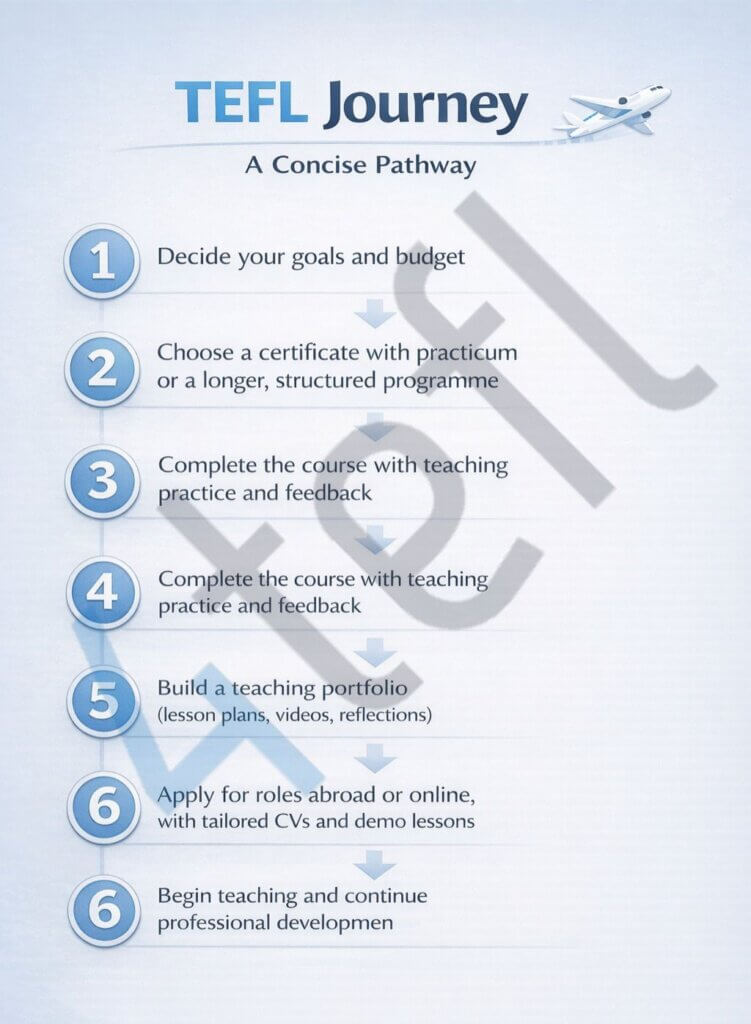
Building credible TEFL profile: standards and employability
It is the training and the teaching itself together with your professional presentation on a TEFL profile. Employers seek evidence that one can plan lessons, respond to learners, and reflect on practice in ways that are supported by credible evidence.
Creating a Robust Portfolio
Start with a robust teaching portfolio that includes:
- Sample lesson plans.
- A brief teaching demonstration video.
- One reflective narrative on classroom activity.
- Examples on how you monitor and track progress of students.
- Demonstrations of adapting content to mixed ability levels for different skillset levels.
- Strategies for managing classroom dynamics.
A portfolio shows that you can transfer theory to practice and you’re able to bring it together in your classroom. A great CV for a TEFL position isn’t merely a list of certificates. Highlight your practicum hours, specific teaching contexts (e.g. groups, one-to-one, exam preparation, young learners) and notable performance results (such as learner growth you had an impact or successful classroom management strategies you deployed). Wherever possible, your teaching demo video should be shared along with any link or short statement to your teaching philosophy –which calls for student-centered learning, communicative practice and inclusiveness. In an oversaturated market, tangible proof of your engagement and promotion of learners’ progress in learning has almost always been as important, if not more highly so, than the certification.
Professional Development and Quality Assurance
Standards and progressive development matter. Good TEFL training is in line with the international standard that is language learning and promotes professional development after certification. This includes searching new opportunities to observe other teachers and to critique teacher teaching practices, participating in teacher development workshops, and finding current publications in the field of applied linguistics and pedagogy. The expression of a commitment to lifelong learning will tell employers if you are flexible and willing to accommodate the evolving classroom.
If you choose to go abroad, ask yourself how you’ll be appreciated for your language, cultural awareness, and adaptability to working conditions in the country you are going to be employed in. Being prepared to function in intercultural classrooms is an attribute of a reputable TEFL professional.
Quality assurance is becoming layered even further in TEFL. In the UK and overseas, reputable schools delineate clear learning objectives, assessment frameworks, and concrete elements. Wherever it’s used, Ofqual is responsible for managing and assessing the quality standard, awarding bodies and accreditation standards, international bodies and leading universities have provided widely accepted recognition. Use course databases to find out how courses are going to function and whether your work fits CEFR standards, and your teacher’s teaching practice requirements etc. Not only does this provide you confidence with your own career planning, but it also gives potential employers peace of mind that your training is conducted to the highest standard possible given the general acceptance.
Job markets and career pathways for TEFL teachers
The need for English teachers continues to be strong worldwide and may take the form of job openings on many websites and online and in classes across Asia, the Middle East, Europe and beyond. Since education in English has become global — with the growing role in higher education, career advancement, and access to information — we also have continued demand for more competent teachers.
Work-related prospects differ by region, but the key conditions are largely in line with sound teaching quality, effective classroom management and demonstrable student growth. For many, this means your TEFL credentials provide access to multiple contexts: language schools, international programmes, universities with English-language support, and online teaching platforms. Teaching in multiple environments allows students the opportunity to employ as well as to diversify their opportunities.
Navigating Geographical Conditions
The most effective TEFL pathway can vary according to geographical conditions. In some regions, formal teaching practice and locally acknowledged certificates are more important to schools; online qualifications with good practicum experience, in others, do a great job. The country of travel can also have implications that affect visa issues, salary levels and living conditions. An educated teaching journey plan should include looking into visa requirements, what might be the usual contract terms of work (working hours, holidays and term of the contract) and paying attention to the cost of living in the country of interest.
Although there is no guarantee that a single programme will see you through to an initial placement, a carefully chosen certification combined with a strong portfolio and professional network can greatly benefit your career. There is also the possibility of progression through the education pipeline in TEFL which is becoming more structured. Early roles as classroom teacher or online tutor can result in senior positions in education, curriculum or teacher training roles. Professional development can include micro-credentials, teaching practicums, and postgraduate study in TESOL or applied linguistics. A portfolio that can provide evidence of the impact you made on learners — things like improved pronunciation or speaking fluency, or exam performance — will help you articulate your value to potential employers. With persistence and continual learning, TEFL can go from an initial job to a long-lasting career track.
Quality standards and employability in TEFL
Educators look for a good TEFL programme that has clear assessment criteria, results, and an impactful teaching practicum. Employers value a demonstrated history of teaching, feedback, and student growth. Make sure it includes a practical component with real learners and offers a way to showcase your teaching in a portfolio or demonstration video when selecting a programme. Theory, practice and reflection form the foundation of an authentic TEFL profile with a distinctive presence in dynamic job market.
In the TEFL professional environment, professionalism includes ethical classroom practice and cultural sensitivity. Teachers must establish inclusive learning environments and embrace diverse learners’ backgrounds and the particular learning needs they address. Teaching in the TEFL context the most productive teachers are those who draw on a skills approach of knowledge while also providing practice and feedback and also being patient, reflective and willing to improve. This comprehensive concept of professionalism improves job offers and positively influences student work, which in turn leads to a productive and rewarding job in TEFL.
Authoritative Sources and Fact Checks (References)
- UNESCO – Global Education Monitoring Report: Provides context on the importance of English as a global tool for development.
- Council of Europe – CEFR Framework: Official documentation for the Common European Framework of Reference.
- Cambridge English – CELTA Information: Detailed standards for the world’s most recognized TEFL qualification.
- British Council – TeachingEnglish: Global insights into English teaching career pathways and professional development.
- Ofqual (The Office of Qualifications and Examinations Regulation): Information on regulated qualifications and awarding bodies in the UK.
What does TEFL stand for, and how is it different from TESOL?
TEFL stands for Teaching English as a Foreign Language. TESOL stands for Teaching English to Speakers of Other Languages. In practice, these terms are often used interchangeably, but some programmes use the distinctions in scope or emphasis. Both aim to prepare teachers to work with English learners in non‑English-speaking contexts.
Do I need an online certificate to teach English abroad?
An online certificate can be a valid entry point, especially for online or language school roles. However, many employers prefer or require a practicum or in‑person component, particularly for on‑site teaching abroad. A programme with a teaching practicum and a portfolio often provides better employability.
Are CELTA or CertTESOL worth pursuing?
CELTA and CertTESOL are widely recognised and valued by employers because they include substantial teaching practice and observation. They’re particularly advantageous if you plan to work in international schools or traditional language centres.
How important is alignment with CEFR or other standards?
Alignment with CEFR helps demonstrate learner outcomes and transferability of skills across contexts. It is a common framework used by many employers and training providers to articulate what learners can achieve and how teachers assess progress.
Can I teach English online with a TEFL certificate?
Yes. Many online platforms accept TEFL certificates, especially those that include a practicum or substantial teaching practice. A strong portfolio and an ability to demonstrate effective online teaching strategies can be decisive for online roles.
How long does it take to complete a TEFL certification?
Time varies by programme. Short online certificates may take a few weeks, while practicum‑heavy courses can span several months. Consider your schedule, budget, and readiness to gain teaching practice when planning.
What should I look for in a reputable TEFL provider?
Look for clear learning outcomes, evidence of teaching practice with real learners, qualified tutors, student support services, and transparent information about costs and refunds. If possible, check whether the provider aligns with recognised standards or awarding bodies.
What level of salary should I expect, and how does it vary?
Salaries for TEFL teachers vary widely by region, experience, and contract terms. Some regions offer higher pay or more comprehensive benefits, while others provide lower base salaries but lower living costs. Always review visa requirements, contract terms, and annual compensation in context of your cost of living.
Is Ofqual involvement relevant to TEFL certificates?
Ofqual is the UK regulator of qualifications. Some UK‑based programmes are linked to Ofqual‑regulated awarding bodies, while others are international; verify the issuing organisation and any local recognition in your destination country. It helps to confirm with potential employers how they view the specific qualification.
How can I keep improving after I qualify?
Seek ongoing professional development through micro-credentials, specialised courses (e.g., pronunciation, CLIL, exam preparation), peer observation, and attendance at teaching workshops. Regular reflection on your practice and inclusive teaching approaches will sustain your growth as a TEFL professional.