Your Path to Independent TEFL Tutoring: A Practical Blueprint


Becoming a private TEFL tutor offers the excitement of independence and the possibility to create your own teaching path. You will find that realising a passion for languages into a dependable and professional income needs more than enthusiasm; you require formal training, clear guidelines and a credible programme to attract learners and manage your business.
This guide provides you with a comprehensive framework, giving you the freedom to make your teaching life more manageable. From choosing the correct path to moving from a dream practice to a professional exercise with confidence, this guide meets international standards and endeavours to meet the expectations of learners from around the world seeking dependable and well-structured English instruction.
The Modern Tutoring Market
For many aspiring teachers, a private tutoring programme complements or supersedes traditional employment in schools, language centres or online platforms. The market is varied. Success as a private teacher depends on:
- Informing learners about what you offer.
- Your competency.
- How you exert professional integrity in each lesson.
In the following sections, you will see practical steps, checklists and decision points that will aid you to design, certify, launch and grow your tutoring practice while observing recognised standards (including CEFR adaptation and, where applicable, regulatory considerations).
At the end of this template, you will have a practical schedule: from choosing a qualification that fits your goals to creating your business, providing effective examples and building trust with customers. The content is supported by proven educational materials and safeguarding exercises. Readers should be allowed to take appropriate TEFL/TESOL training and, where appropriate, align their access to UK and external standards to follow regulations abroad or online with confidence.
Understanding the Private TEFL Tutor Path
The real advantage of the private track for TEFL tutors is the self-direction and direct relationship with the clientele, offering both convenience and quality. You can choose your clients, set schedules, configure subjects and determine delivery methods (online, in-person or hybrid). This flexibility is particularly attractive for those with study, travel or family obligations.
The growth of English as a lingua franca worldwide explains why individuals seek private courses as a supplement to formal education. UNESCO‘s research on English-language learning highlights the global need for quality language education and the demand for quality teacher training in the public and private sectors. The private tutor model, anchored in recognised standards, can be a sustainable and adaptable path rather than a makeshift solution.
The private TEFL marketplace is diverse. Online coaching expands your potential beyond your local area, allowing students from different time zones to access your services. Success depends on:
- Professional credibility and pedagogical skills.
- Reliability (punctuality, clear communication, transparent policies).
- Certification (certificate or diploma from a recognised programme).
- Ongoing professional development.
Unlike other alternatives, discussions on English learning underline the importance of prepared teachers, particularly in the setting of private supply across borders. As a prospective tutor, you must show which learning groups you can teach, how you demonstrate your qualifications and how you honour ethical standards, especially when acting with vulnerable minors.
Certification and Training: Steps to Start
Certification is the cornerstone of credibility for a private TEFL tutor. Many providers propose TEFL/TESOL certificates, but the quality and recognition of a certificate depend on accreditation, substance, practical experience and alignment with established conditions.
Key Components of a Strong Program
Programs containing a substantial foundation in grammar, lesson preparation, classroom direction, evaluation and didactic practice will make your professional life easier. Teacher qualifications are not uniform in England, but many TEFL certificates depend on the choice of a course confirmed to external standards and the CEFR for portability and employability.
For advice on regulated or recognised qualifications, see the information for learners and suppliers on GOV.UK.
Preparation formats vary:
- A 4-week intensive block.
- An online track.
- Mixed delivery.
A course typically includes lesson planning, classroom management, error correction strategies, assessment and an observed teaching internship. The most robust TEFL/TESOL programs are not just about subject provision but about feedback: practical instruction, video analysis, peer review and chances to focus on a specific philosophy and approach to teaching. CEFR-oriented training helps align your programmes to accepted language levels, which is particularly beneficial if you teach students who plan to study or work in other countries.
Choosing a Provider
The choice of provider should be based on price, results and credibility. Potential tutors should:
- Have access to evidence of teaching outcomes from previous cohorts.
- Check if the provider offers professional support, post-course learning and safeguarding advice.
- Be cautious of courses that guarantee employment or high pay without open assessment standards.
- Triangulate information from multiple sources, including internationally recognised TEFL/TESOL academic programmes or institutions.
English instruction evolves with technology, modern teaching methods and varying learning needs. The Council of Europe‘s CEFR will continue to be updated with appropriate descriptors and indicators, which reinforces the importance of aligning your practices with these standards. Cooperation with professional communities, participation in seminars and peer review are prudent steps after initial certification.
Setting Up Your Private Tutoring Business
Legal and administrative foundations are the spine of a vocational training enterprise.
Administrative Steps
- Business Structure: Choose a structure (sole trader, partnership or limited company) according to your local regulations. In Britain, self-employment is common, and you will have to take into account tax indebtedness, National Insurance and record keeping via HMRC.
- Financial Planning: It is wise to set aside funds for taxation and keep accounts and spending clear.
- Marketing: Create a simple brand identity and professional online presence. A clean site and visibility on platforms and social media will showcase your approach, skills and success stories.
- Data Protection: Be mindful of data protection and security in marketing. Privacy rules (GDPR) apply to how you store and manage learner data, so a privacy policy and consent exercises are required (ICO, UK).
Management Systems
Management of learning requires clear guidance and dependable systems:
- Use calendar instruments or booking software to manage sessions and record attendance.
- A cancellation policy protects your time.
- Maintain progress records and regularly review objectives with clients.
- Ensure data protection practices are implemented: minimum information collection, secure storage and transparent retention times.
When you deliver lessons online, evaluate features such as screen sharing, interactive whiteboards and document sharing for effective teaching. The choice of platforms with strong support and transparent privacy policies helps to uphold trust with your students.
Delivering Quality Lessons and Client Trust
The design and learning objectives should be anchored in each session.
- Needs Analysis: Commence with a needs analysis or diagnostic assessment to identify the strengths and gaps of learners.
- Syllabus Design: Design a series of lessons combining speaking, listening, reading and writing with targeted grammar and lexicon.
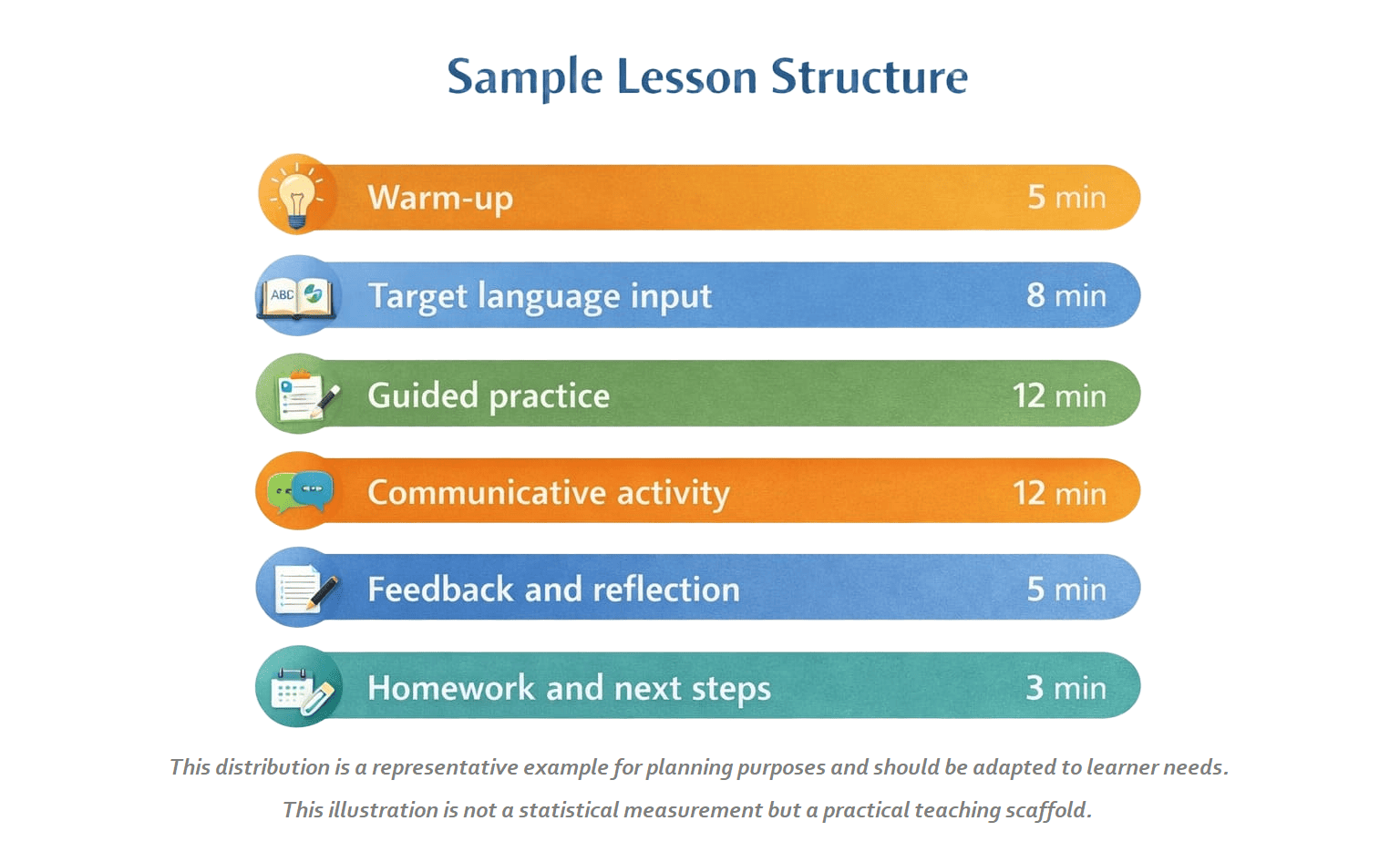
- Methodology: A mentoring approach combines explicit instruction with communication practice, followed by reflective feedback to help learners progress.
- Adaptability: Ensuring the syllabus can be adapted to private profiles – age, objectives and prior exposure – builds the confidence and satisfaction of learners.
Online and offline learning require different strategies but benefit from a firm structure. In online environments, attention management is key. In-person meetings can expand into movement-based activities while keeping clear behaviour expectations. Providing quick and constructive feedback is vital. Assessing the time spent on different aspects of a lesson (teacher talk time, guided practice and corrections) can help you construct effective sessions.
Security and Ethics
Trust, security and information protection are permanent obligations. Build trust by being transparent about your qualifications, your approach to teaching and guidelines on confidentiality. In the UK, safeguarding measures are informed by government directives; you should examine materials such as KCSIE to understand expectations when working with minors.
Specialising in areas such as Business English or exam training can distinguish your services. A well-defined portfolio of lesson designs, feedback from apprentices and evidence of progress will support your growth. The CEFR-based approach provides a mutual reference point that helps you promote your services to learners and institutions.
A practical resources table for quick reference
| Certification/Option | Focus | Typical Duration | Global Recognition |
| CELTA | General English teaching; supervised practicum | ~4 weeks full-time or part-time | Widely recognised; strong practicum component |
| Trinity TESOL | General English teaching; practical component | Often 10-12 weeks part-time | International recognition; practical pedagogy |
| Accredited online TEFL | General TEFL/TESOL concepts; flexible | 60-120 hours plus practicum | Varies by provider; look for CEFR-aligned |
| University-affiliated | Academic foundation; TEFL pedagogy | 1-2 academic terms | Strong academic branding; CEFR-aligned |
| Micro-credentials | Focused skills (assessment, online grammar) | 10-40 hours | Useful for CPD; professional communities |
Authoritative Sources and Fact Checks (References)
- British Council – Teach English: Detailed information on TEFL qualifications and professional development standards.
- Westbridge CPD Institute: CPD Accreditation: CPD accreditation for organisations and professionals. Recognising quality learning, training and development across all industries.
- Council of Europe – CEFR: The official framework for language levels (A1-C2) used worldwide.
- GOV.UK – Regulated Qualifications Framework (RQF): Information on how teaching qualifications are regulated in the UK.
- UNESCO – Education for All: Global reports on the necessity of quality language education and teacher training.
- Information Commissioner’s Office (ICO) – GDPR for Small Businesses: Guidance on data protection and privacy for private tutors in the UK.
Do I need a specific qualification to start teaching privately online?
No single qualification is universally required for all private tutoring contexts, but a credible TEFL/TESOL certificate with a practicum, CEFR awareness, and strong teaching fundamentals adds to your employability and client confidence. Always verify what your target learners expect and align with recognised standards where possible.
How should I structure my first private tutoring lesson?
Start with a needs assessment to identify learner goals and current level, then set clear outcomes for the session. Use a short diagnostic activity to gauge language gaps, followed by targeted practice, feedback, and a plan for next steps. Document progress and adjust future lessons based on learner input and observable outcomes.
What safeguarding considerations apply to private tutoring?
If you work with minors or vulnerable learners, implement safeguarding policies in line with local regulations and professional guidelines. In the UK, reference government safeguarding guidance and ensure you have appropriate consent and data protection practices. For online sessions, provide secure platforms and monitor safeguarding of participants during lessons.
How do I market myself legally and ethically?
Focus on transparent pricing, clear terms and conditions, privacy policies, and safeguarding commitments. Ensure you comply with data protection rules (GDPR) and consumer protection standards. Be honest about your qualifications, experience, and the scope of your services; avoid guaranteeing outcomes or implying licensure or official accreditation where not applicable.
Which CEFR levels should I cover initially?
Many tutors begin with a broad range (A1-B2) to accommodate beginners and improvers. As you gain experience, specialise in particular CEFR bands or learner profiles (e.g., A2-B1 business English or B2+ exam readiness). CEFR alignment helps you communicate progress to learners and clients clearly.
What if a learner misses a session?
Have a cancellation policy that is clear and fair, with reasonable notice and agreed consequences. Communicate promptly, reschedule as needed, and consider offering a make-up session or a lightweight mini-lesson to keep momentum. Consistent policies help preserve your professional relationship with clients.
Is online tutoring as effective as in-person teaching?
Both formats can be highly effective when well designed. Online teaching requires strong technical setup, engaging digital activities, and clear communication, while in-person sessions can leverage physical materials and immediacy. A CEFR-aligned, learner-centred approach translates across modalities, with suitable adjustments for each environment.
How can I grow beyond one-to-one lessons?
Expand by offering small-group sessions, specialised courses (e.g., business English, exam preparation, pronunciation clinics), or modular courses (short term intensives). Build a portfolio showing sample lesson plans, learner outcomes, and client testimonials to attract corporate clients or language schools. Ongoing professional development and a clear value proposition are key to growth.