UK TEFL Careers Demystified: A Practical Path to Teaching English

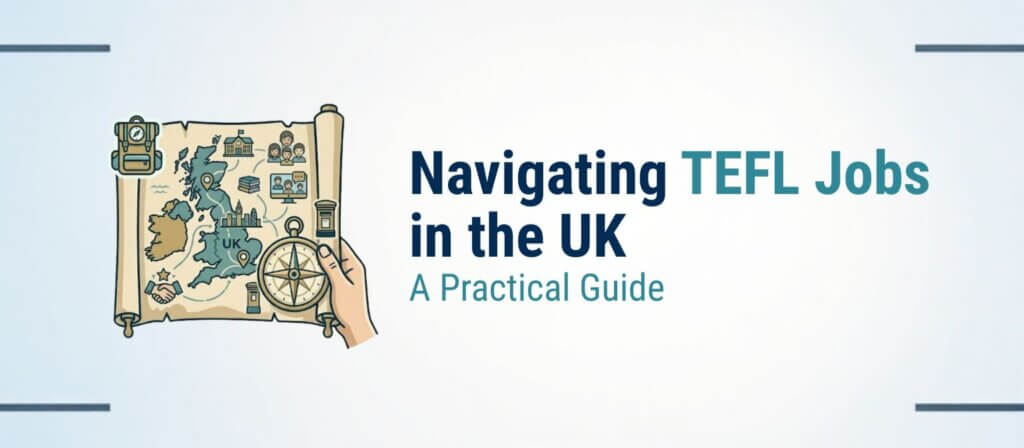
Find TEFL work in the UK and it’s kind of like a two-step dance: get the qualification, then prove you’re eligible to work. The market also provides opportunities in schools, language centres and online, yet the requirements – visa status, safeguarding checks, sector-specific expectations – differ drastically.
This guide will assist you in plotting out a workable path, with practical steps to align qualifications and the world of practice in the UK. The journey begins early with clarity about career paths and which qualifications most employers will want. It gets even better with an understanding of where to look – schools, agencies, or online providers – so you can focus on the right area. You’ll also be taught how to navigate work permits and right-to-work checks, as well as present yourself with an appealing CV and excel in interviews and practical assessments.
Throughout, you can find practical suggestions with references to trustworthy guidance and the experience of working teachers in the UK. Whether you’re entering the world with a TESOL certificate, CELTA or any other accredited training, this guide means you can succeed in developing a sustainable, legally compliant and rewarding career as a TEFL in Britain.
Understanding UK TEFL Career Paths and Requirements
TEFL positions in the UK are found across multiple industries:
- State and Independent Schools: Can potentially employ language specialists or teachers for English as an Additional Language (EAL) or EFL courses if they have available staffing.
- Private Language Schools and Adult Schools: Provide more direct language instruction, conversation lessons, and exam preparation.
- Further Education (FE) Colleges: Offer more formal, extended courses, occasionally in addition to work-based learning.
- Online Providers: Fill out the mix, offering live classes or blended learning for those who might be based domestically or abroad.
Qualifications and Compliance
For most of these positions, a recognised TEFL/TESOL certificate – such as CELTA or Trinity Cert TESOL – and a degree are often highly valued. DBS checks are standard for positions involving safeguarding in contexts with learners under 18. As visa and right-to-work standards vary based on a person’s nationality and residence situation, employers increasingly prioritise candidates who can demonstrate both qualification and compliance with UK employment rules.
Entry routes between industries and regions differ, too. Language schools tend to employ new teachers for entry-level positions, highlighting classroom management skills and lesson-planning competence. At schools and FE, employers may expect a stronger emphasis on safeguarding and curriculum alignment, with formal teacher-training credentials sometimes preferred or required.
Regional Demand
The demand can vary regionally – London and other large cities often have more job postings (whether at private language schools or international programmes), while other areas have more vacancies for FE colleges or university extension programmes. Networking with recruiters as well as local teaching associations can help you to uncover the best entry points for your profile and career goals.
Career Progression
There is an increasingly fluid career progression in the UK TEFL scene. Teachers are able to progress between:
- Teaching (classroom delivery)
- Programme management
- Teacher training
- Curriculum development
- Programme development
Pursuing professional development (CPD) – from short courses to advanced certificates – can support progression towards head of department roles, training coordination, and consultancy work. Grasping the sector you wish to enter, and how your existing qualifications translate to UK standards will also help focus on roles that support your long-term goals.
Where to Find TEFL Jobs: Schools, Agencies, Online
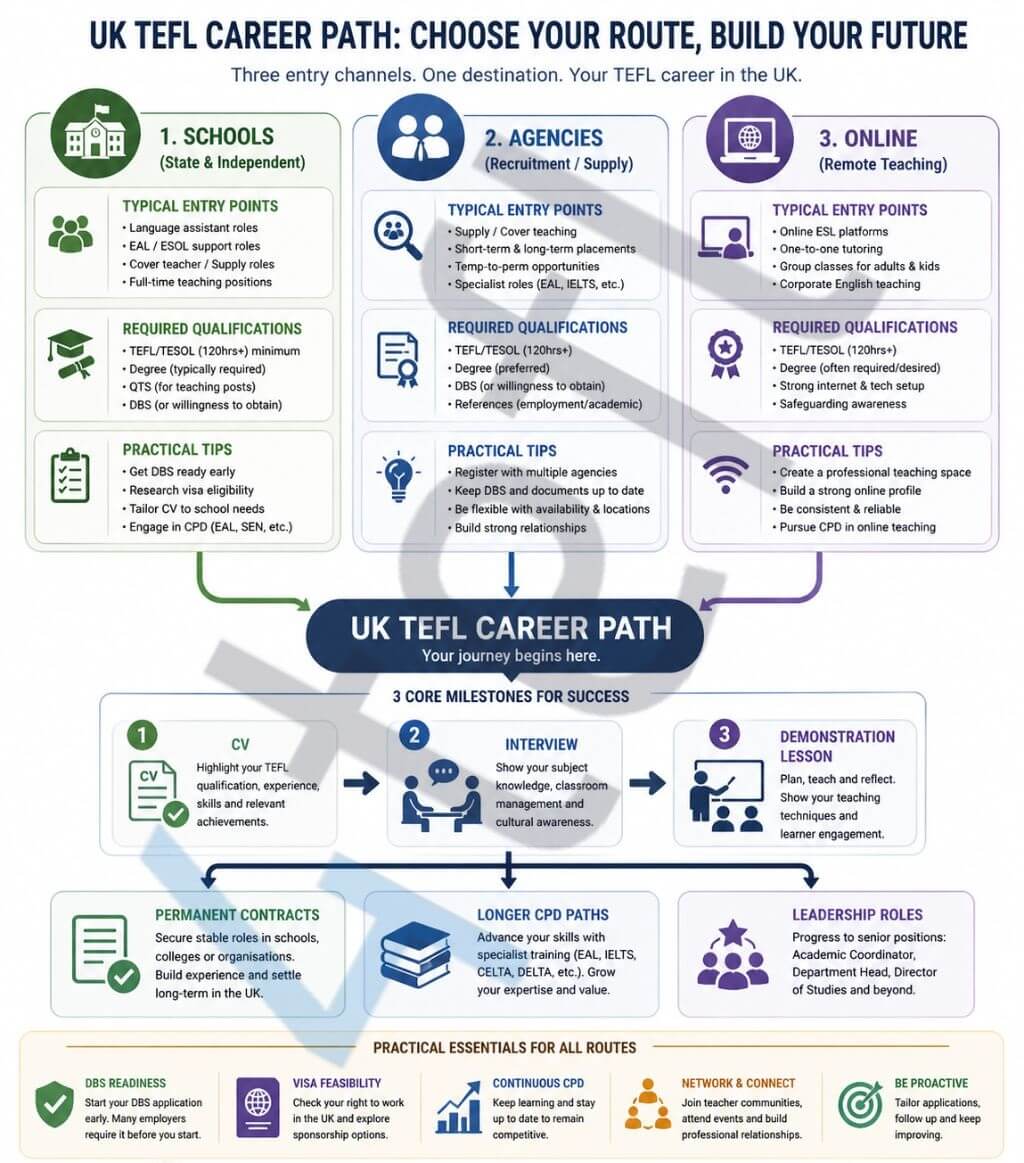
UK TEFL opportunities can be found in one of three broad channels: schools, recruitment agencies, and online platforms. Differently, the rhythm, expectations, and entrance points for each channel are distinct and often result from different channels, so a search on multiple fronts is usually one where a search can see the optimising of the results.
- In schools: A hybrid of EAL specialists, language assistants, and often general English teachers in private or international programmes.
- Agencies: Play a role connecting international candidates and language providers which require staff quickly, in addition to frequently offering feedback on CVs, interview technique, and visa documentation.
- Online platforms: Broaden the scope of freelance or part-time work, such as remote classrooms and hybrid arrangements that may suit candidates already balancing school with home responsibilities.
Sector Comparison Table
The table below summarises typical roles by sector, with some considerations to help you prioritise your applications.
| Sector | Typical Roles | Pros | Cons |
| State/Private Schools (UK) | EAL teacher, language assistant, ongoing English support | Structured environment, steady timetable, clear safeguarding processes | Varying visa or right-to-work requirements; competition for general English posts |
| Private Language Schools | Classroom teacher, conversation classes, exam prep | Often flexible hours, opportunities for part-time or relief work | May require weekend or evening shifts; can be highly commercial |
| FE Colleges and University Extensions | Certs, access programmes, language modules | Professional CPD path, longer-term contracts | More formal recruitment cycles; may require institution-specific qualifications |
| Online and Hybrid Platforms | Live online classes, blended courses | Global student base, flexible hours | Isolation from on-site safeguarding practices; tech requirements |
| Recruitment Agencies | All the above via agency placements | Quick placements, CV and interview coaching | Agency fees or gatekeeping; variable job quality |
Navigating UK Work Permits, Visas, and Right to Work
In the UK, work authorisation is one of the most critical gatekeepers for TEFL roles.
Visa Pathways
The Skilled Worker visa remains the primary route to lawful employment for non-UK and non-EU applicants – and for the majority, it requires sponsorship from a licensed employer and a qualifying job offer. Employers need more than just qualifications and classroom experience to judge suitability for employment in the UK. It is essential that your visa status be clarified early and that you be ready to provide proof from the commencement of your application or attendance at a company interview showing you are entitled to work. The Graduate Route or other visa pathways may be relevant for graduates from UK institutions in some cases, but applicants should check current policy details according to official government guidance, as well as their prospective employer.
Right to Work and DBS Checks
Right to work checks are a standard aspect of the recruitment process. In the UK, employers perform these checks to confirm that prospective staff members can work legally in the UK. You can ease this process with your paperwork – passport information, visa status, and, if necessary, biometric residence permits or other official papers. If you expect your status to change (post-study visa transitions, for example), be sure to share timelines and documentation with your employer to avoid delays in onboarding.
Another very important aspect is DBS and safeguarding checks, particularly for learners under 18 or other vulnerable populations. The Disclosure and Barring Service (DBS) process checks that the candidate does not present any safeguarding risk. Employers will generally start the DBS process following an offer and are likely to require an enhanced check for roles with safeguarding responsibilities – schools or organisations to be involved. For any initial DBS inquiries, it is wise to start them early and to get any required disclosures promptly if you anticipate a UK move.
Crafting a UK TEFL CV and Acing Interviews
Your CV is what connects you to the skills that a UK employer is searching for in a classroom environment.
The Perfect TEFL CV
- Header: Start with a short header which says your name, contact details, an online profile, or you may have a portfolio if you have one.
- Professional Summary: Should be applicable to TEFL positions (teaching philosophy, experience with a mix of learners, lesson planning capacity, safeguarding preparation).
- Qualifications: Immediately after that, you are to share your qualifications and certificates – TESOL qualifications, course length and provider, your degree and any relevant professional development.
- Compliance Status: If you already have DBS clearance or a statement that you are entitled to work in the UK, do write this explicitly.
Portfolio and References
In addition to the CV, a compact portfolio with detailed and formatted copy and illustration should accompany you in your upcoming interviews in the UK. Include a bit of a plan in the form of lessons, an example assessment or worksheet, and a clear video or on-paper summary of a demonstration lesson. References from previous employers and your supervisor who have a history of working at your company who share your teaching expertise are very appreciated and might well be worth acquiring two or three solid references in advance.
Interview Tips and Demo Lessons
When interviewing, be prepared to address your teaching methodology, best practice for children with mixed abilities, differentiation of your mixed-ability groups and safeguarding. Certain employers will want to have a micro-teach or demonstration in place, so practise presenting a 20–30 minute sample class which is fun, accessible and meets learning objectives. After the interviews, a quick follow-up email, repeating how you felt about the situation and looking at why you’ve done well during the call will really hit that spot.
And finally, listen for presentation and local expectations. Timely arrivals to a UK classroom, formal dress, a calm and respectful classroom climate. If you do need a demonstration lesson, try a clearly planned start, clear objectives and a short debrief with feedback. Well-organised portfolios, a well-written CV, and well-planned interviews can all vastly increase the likelihood that you will actually turn an interview into a hiring offer.
Practical Insights: Salary, Contracts, and Career Progression
And for Britain’s TEFL sector, the same standards for salaries vary according to region, sector and type of contract.
Salary and Cost of Living
In London and other major cities, for example, jobs pay higher in order to manage costs of living on a day-to-day basis, while in other places, there may be more room for trade-off in living costs. Part-time (and freelance) work, especially online, will help in supplementing salary and for a more flexible time slot is more convenient, however it may have administrative costs, tax compliance and irregular workloads.
Contract Considerations
But, when you’re considering contracts you review things like:
- Teacher-student load
- Time and number of hours
- Holiday entitlement
- Visa and professional development support
- Probation periods and job reviews
Contracts in the UK TEFL sector are quite different. Some positions incorporate skills – planning and managing lessons at a time, preparing for exams and other governance duties – in a single package. Other options have a modular nature with clearly defined hours of prescribed instruction and separate pay for training/curriculum development or personnel. Written information on probation periods and due dates, as well as any notice and non-compete or exclusivity clauses should be taken into consideration.
Long-term Growth
If you’re moving from another country, explain how your visa status and contract conditions are related – about your use of the work-as-a-medical-assessment system for absence, sick leave or visa renewal. Investing in professional development support, whether in terms of paid attendance at CPD courses or being connected with in-house training, can be a beneficial element of the package, providing long-term career progression.
The journey to higher education in UK TEFL tends to be based on the concept of lifelong learning followed by strategic mobility in the course of growth. Teachers can, with the right mixture of classroom experience and CELTA or equivalent certification, and the right CPD, take on more specific roles in the curriculum (senior teacher, curriculum designer, teacher trainer, programme coordinator) or as they wish. Developing a reliable reputation for hard work, protecting kids and student progress helps children become leaders in schools or language centres. You will face opportunities that aren’t advertised to the public by networking with peers, going to industry congresses and local professional bodies. By maintaining a neat record of all the stuff you have achieved, CPD credits and visible contributions to the learners’ outcomes you can bolster your applications for senior positions.
Networking and Ongoing Professional Development
Networking is a practical driver of opportunity in the UK TEFL world. Connect with colleagues in your local teaching community, join professional associations or teacher networks, and participate in workshops and CPD sessions. These activities can help you learn about upcoming vacancies, understand regional demand, and receive feedback on your CV and interview approach. Networking isn’t just about finding a job; it’s about building a professional support system that can sustain your career over time. Keep an eye on sector-related events, university language departments’ public talks, and safeguarding-related training that strengthens your practice and your CV.
Ongoing professional development is a cornerstone of UK TEFL success. After your initial certification, consider CPD options such as:
- Advanced classroom management
- Targeted exam preparation courses
- Modules in language assessment and curriculum design
Many providers offer short, modular courses that fit around teaching schedules, making it feasible to accumulate credentials while continuing to work. A proactive approach to CPD signals commitment to quality teaching and helps you qualify for higher-tier roles, such as mentor, trainer, or programme coordinator. Maintaining a portfolio of evidence – unit plans, student progress, feedback, and reflective practice – will support applications for promotions or salary advancement over time.
Outro: Practical Takeaways and Next Steps
Enforcing a plan for an application to a UK TEFL job in the local community, start by aligning your skills with what the UK TEFL sector is looking for and then map out a real-world plan between schools, agencies and online to get from aspiration to appointment.
Action Plan
- Send it in: have a strong CV and strong portfolio focused on classroom skills, a compact portfolio of resources, safeguarding readiness, and measurable results for learners.
- Clarify Status: Ask about visa and right-to-work requirements early, and prepare to candidly discuss your current position with potential employers.
- Invest in Growth: Investing in CPD and professional networks will allow you to continue to grow and to unlock long-term possibilities as UK TEFL continues to evolve and change over time.
What steps should you take about your path today next? Once you gain your visa status with official approval – verify eligibility, get CELTA (or CELTA equivalent, if you do not have one) if you need one, adjust your CV into a two-page document with clear, outcome-oriented statements, prepare a demonstration-based lesson plan and contact a couple of UK-based recruiters to gauge what’s currently desired.
Once well-constructed and with the right attention and a consistent progression as you get promoted you continue to enjoy your TEFL career in the UK as both student needs and the education evolves.
Authoritative Sources and Fact Checks (References)
- British Council – English Language Assistant (ELA) Programme: Information on official placements for language assistants in UK and international schools, providing classroom experience and structured support.
- GOV.UK – Skilled Worker Visa Overview: The primary government portal outlining eligibility, salary thresholds, and sponsorship requirements for foreign workers entering the UK.
- GOV.UK – Disclosure and Barring Service (DBS) Checks: Official guidance on the mandatory criminal record background checks required for all educational roles involving children.
- Westbridge CPD Institute: CPD Accreditation: CPD accreditation for organisations and professionals. Recognising quality learning, training and development across all industries.
Do I need a UK bachelor’s degree to teach TEFL in the UK?
A UK bachelor’s degree is not always mandatory for TEFL roles, especially in private language schools or online teaching. However, many employers prefer or require a degree, and some programmes or institutions may have stricter requirements. If your degree is from outside the UK, it may be evaluated for relevance. Always verify the specific requirements for the position and region you’re applying to.
Is a CELTA or equivalent certificate required to teach in the UK?
While not universally mandatory, CELTA or an equivalent qualification is highly valued in most reputable UK programmes, particularly in schools and FE settings. It demonstrates practical teaching competence and a solid understanding of lesson planning, feedback, and safeguarding. If you hold other recognised certifications, be prepared to demonstrate parity with CELTA through an observed teaching session or a portfolio review.
What is DBS and why is it required?
DBS stands for Disclosure and Barring Service. It is a safeguarding check required for roles involving children or other vulnerable individuals. In the UK, employers typically initiate the DBS process after a conditional offer is made. The Enhanced DBS check verifies criminal record information to help ensure safe recruitment. If you already hold a valid DBS from another country, you may need to obtain a UK-equivalent or have it validated by the relevant authority, depending on the employer’s policy.