Navigating English Language Teaching in Cuba: Certification, Training and Careers


Teaching English in Cuba offers rich cultural immersion and meaningful classroom impact, but navigating certification, visa realities, and career options requires careful planning. Prospective teachers often wonder which certificates are recognised, how to align with Cuban educational standards, and what pathways lead to sustainable work – especially for those aiming to teach online from or to Cuba.
This guide provides a clear, fact-checked roadmap tailored to TEFL/TESOL aspirants, emphasising credible credentials, practical training, and realistic career prospects in the Cuban context.
Certification Pathways for Teaching English in Cuba
Starting with a recognised TEFL/TESOL certificate plus a relevant degree is a typical journey. In Cuba, a teacher’s qualification is part of the national education framework, so employers generally favour accredited certificates that include a teaching practicum.
Key Requirements & Steps:
- Accreditation: Seek out courses that provide tangible teaching practice and useful feedback, not just theory.
- 120-hour TEFL/TESOL certificate: This is a conventional baseline to the extent it is compatible with international practice and can be used to assist discussions for employment with Cuban institutions.
- University degree: For a significant number of positions, a degree in English, Education, or Linguistics is still a requirement.
- Contractual partnerships: Many foreign teachers find jobs at Cuban universities or state-run language institutes with the help of these schemes.
Practicum: Having a good degree combined with a good TEFL/TESOL certificate – preferably one with a teaching practice component – helps considerably your opportunity to gain jobs and visa talks.
Implementation Strategy:
- Researching Cuban partner institutions and well-known TEFL/TESOL providers.
- Preparing translations of documents and the regulatory framework.
- Looking for accredited programmes that focus on teaching practicum and reflective practice.
- Linking up with Cuban recruitment partners that specialise in language education.
TEFL/TESOL Standards for Cuba Certification & Careers
The international TEFL/TESOL standards include a combination of theory with actual teaching and assessment of language development.
Core Components of Certification:
- 120 hours: The standard amount of academic input required.
- Observed teaching practice: Usually consisting of 6 to 20 hours of practical work.
- Lesson planning: Focused modules on this, classroom management, and feedback techniques.
In Cuba, the national education system sets the standard for teacher training. Education institutions and supporting agencies in Cuba emphasise well-qualified teachers offering content in English and sometimes Spanish depending on the audience and the situation.
Consequently, many employers demand TEFL/TESOL certificates from institutions whose certifications are based on credible practicum work and clear standards of assessment, in addition to a degree from a university. This synchronisation helps guarantee that teaching ideas are consistent with the instructional situation in Cuban schools and language centres.
Recommended Qualifications: Certifications like CELTA or other TEFL/TESOL programmes that have been proven to have good practices are very well accepted by international employers and are in particular favourable for the negotiating of jobs with Cuban institutions or partner organisations.
Practical Training Routes for Cuban English Teachers
In-Country Training
In-country training paths are frequent for Cuban nationals and long-term educators. Cuban universities and recognised teacher-training institutions offer programmes to help students develop English language teaching skills alongside practicum experiences in real classrooms. This allows for:
- Professional development: Constant growth within the local system.
- Cuban education system: Familiarization with local structures and norms.
- Assessment norms: Understanding how students are evaluated locally.
International Partnerships
Non-governmental organisations overseas often work with Cuban institutions to offer short courses, exchanges, and supervised internships. Such courses can integrate English-language pedagogy combined with classroom observation, co-teaching, and support from experienced mentors.
Online and Blended Options
For teachers who already teach outside Cuba or who are living outside, online and blended courses are an option:
- Online with Practicum: This can be pursued in concert with local teaching.
- Blended training: Allows skill-building in communicative language teaching while equipping learners to balance work and studies.
Career Prospects and Online Teaching in Cuba
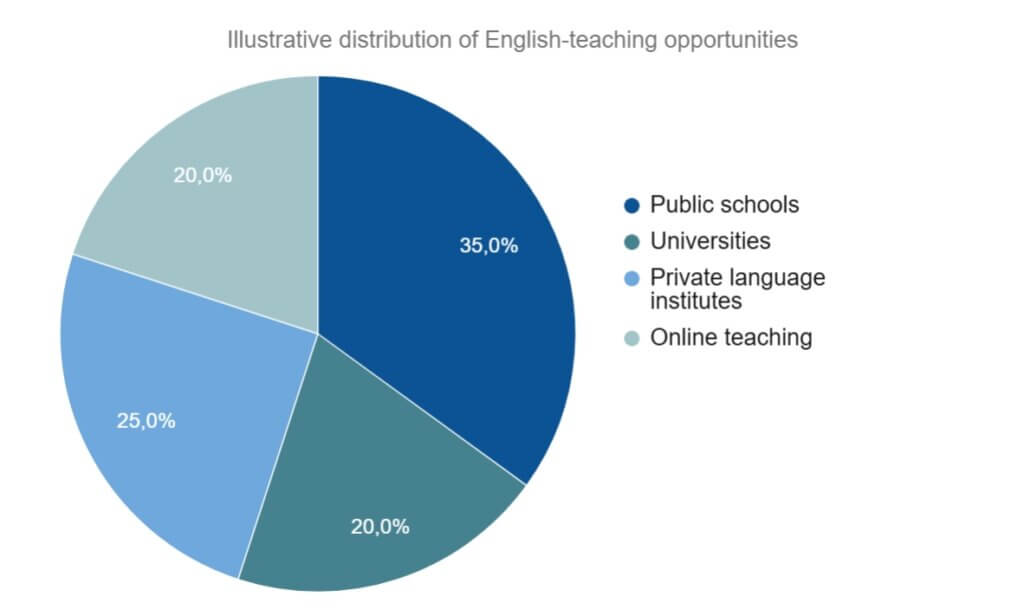
Cuba’s English teacher career prospects include teaching in both public schools as well as private institutions and freelance or contracted teaching. Demand remains strong in main cities where English is the tool of choice for young people seeking college education and international opportunities.
The Online Frontier
Online teaching provides other routes, but access and infrastructure can impact this prospect. Cuban instructors often try the road of an online job with international schools, tutoring platforms, or private tuition for overseas students.
- Flexibility: One of the main benefits that enhances service and reaches a wider variety of students.
- Connectivity: A requirement that demonstrates the value of the internet, knowledge of technology, and access to secure payment.
At a Glance: Career Pathways
| Route | Typical Certification & Training | Typical Employer | Notes |
| In-country programs | University degree + TEFL/TESOL (with practicum) | Cuban universities, state schools | Strong alignment with Cuban standards. |
| International exchanges | TEFL/TESOL + international practicum | Partner universities, exchange programmes | Valuable for cross-cultural skills. |
| Private institutes | TEFL/TESOL (120 hours) + practicum | Language schools, private academies | Flexible entry; requires visa/permits. |
| Online teaching | TEFL/TESOL + virtual practicum | Online schools, tutoring platforms | Connectivity and tech familiarity essential. |
| Specialised roles | Higher-level (CELTA/DELTA or advanced TEFL) | Universities, specialised colleges | Higher earning potential; competitive. |
Summary for Aspiring Teachers
The key takeaway is to pair a credible TEFL/TESOL certificate with a university degree, offer a robust practicum, and pursue opportunities through Cuban partner organisations or reputable international programmes. Local adaptation – such as bilingual communication, awareness of classroom realities, and professional conduct within Cuban institutions – will support long-term success and career resilience.
Authoritative Sources and Fact Checks (References)
- British Council – Teaching English: Standards for international ELT (English Language Teaching) and certification recognized globally.
- Cambridge English – CELTA: Details on the Gold Standard for TEFL/TESOL qualifications.
- UNESCO – Education in Cuba: Statistical and qualitative data on the Cuban national education framework.
- Ministerio de Educación (MINED) – Cuba: The official source for educational standards and teacher training regulations in the Republic of Cuba.
Do I need to speak Spanish to teach English in Cuba?
Basic Spanish can be helpful for day-to-day communication with colleagues and students, but many English classes are conducted in English. A working knowledge of Spanish enhances collaboration and classroom management.
What certificate is best for Cuba?
A credible TEFL/TESOL certificate with a genuine practicum (ideally 120 hours and supervised teaching) complemented by a degree in English, Education, or a related field is a strong combination. CELTA is widely recognised, but the key factor is practical teaching experience and alignment with international standards.
Are online teaching jobs available to Cuban teachers?
Yes, online teaching to international students is possible and increasingly common. Connectivity and platform familiarity are important, as is ensuring reliable payment and legal work arrangements.
How long does it take to become certified to teach in Cuba?
Most comprehensive path takes 4–9 months, depending on course length, practicum scheduling, and any additional degree requirements. Shorter online certificates with practicum can be completed more quickly, but employers typically value substantial practicum and a degree.
How can I start the process?
Begin by researching Cuban partner institutions and credible TEFL/TESOL providers, select a course with a solid practicum, obtain translations of documents, and approach Cuban recruiters or universities that work with foreign teachers. Prepare for visa and work-permit processes early, as these can be lengthy.