Opening Doors to English Teaching in India with TEFL/TESOL

Now in India, English is not just a language; it is a link to a path to opportunities. However, aspiring teachers still frequently face a maze of credentials, school expectations, and market pressures that can seem intense. Selected TEFL (Teaching English as a Foreign Language) or TESOL (Teaching English to Speakers of Other Languages) certification is what can offer the most access, signal professional readiness, and enable you to move into both urban and rural classrooms, online platforms, and teacher-training roles.
For many readers, the question isn’t whether to teach abroad or online, but which path comes with reliable certification, recognised standards, and practical preparation that translates to genuine classroom benefits in India.
Article Purpose
The purpose of this article is to provide a comprehensive overview of:
- Certification and training alignment with international standards.
- Specific career possibilities for potential English teachers through practical experience in India.
- TEFL/TESOL training with Ofqual-regulated criteria.
- The importance of those qualifications in Indian schools and online settings.
- How you will proceed one step at a time to achieve this, from certification to a thriving career in teaching.
You will also find practical advice and tangible examples, alongside guidance on how to invest in training that addresses your present-day classrooms as well as your long-term professional development.
Why TEFL Certification Opens Teaching Careers in India
India’s education landscape is dynamic and diverse, with a massive, rising demand for high-quality English instruction in both public and private schools. Most private schools, including international curricula and higher-education environments, make extensive use of English as a medium of instruction, as government and local schools are increasingly searching for teachers proficient in delivering communicative, student-centred English curricula.
This desire creates concrete possibilities for TEFL-certified teachers who can deliver state-of-the-art pedagogy, evidence-based evaluation practices, and meaningful language experiences to students at all socio-structural stages.
A TEFL certificate also means more than just fluency in one language but the ability to teach plans as well as manage classes and monitor progress – skills which Indian schools and international programmes are looking for in hiring personnel. A TEFL qualification is more than introductory in classrooms, it gives you some edge in a crowded marketplace.
From language academies in the metros, to international schools in the tier 1 and tier 2 towns, local employers in India prefer their graduates to have formal, recognised pedagogy training in modern English. Certification reflects commitment to professional practice, continuing education and the willingness to apply empirical-based teaching practices. For readers who wish to use TEFL/TESOL knowledge on the job online or outside of borders, it can cut down on the time workers have to search for work and help expand opportunities.
There is also the option of practicum experiences in authentic classrooms – if the programme is the right one you can have practicum experiences in real classrooms to take home with you, and create a portfolio of observed teaching, feedback loops and reflective practice that Indian recruiters and global employers will be able to see.
Finally, the quality and recognition of a TEFL/TESOL qualification are as important as the certificate itself. In India, as in many other places, institutions and education entities are increasingly interested in credentials that are on a par with internationally recognised standards. Ofqual-aligned programmes also establish a dependable context regarding how your training is assessed across content, evaluation, and practicum elements. This alignment paves the way for you to move beyond novice foundations to more advanced positions, such as curriculum development, teacher training mentorship, or leading language departments. Selecting a curriculum course with Ofqual alignment enables you to navigate a range of postgraduate pathways with the backing of an internationally coveted certification highly regarded by Indian employers.
TEFL/TESOL Training Aligned with Ofqual in India
Ofqual (The Office of Qualifications and Examinations Regulation) is the UK regulator that ensures qualifications are consistent, of high quality, and maintain high standards, ensuring that such qualifications represent the best standard in the UK.
For teachers, Ofqual-aligned TEFL/TESOL programmes constitute a reputable structure that matches UK, European, and many international schooling standards. For readers planning on working with international schools or transferring qualifications across national borders, training aligned with Ofqual offers assurance on the content, evaluation, and quality of the certification. In India, some providers are increasingly offering Ofqual-aligned TEFL/TESOL courses, as learners seeking a mobile credential find these standards in high demand.
Key Advantages:
- Better portability for careers beyond India.
- A closer match with the international job market.
- Greater credibility with provincial education authorities and private employers.
Furthermore, Ofqual-regulated qualifications are actively endorsed by international schools and education networks in the UK and numerous other countries. They can be a real asset for those seeking certified teachers or who have a background in working within a standards-based training system. To verify the status and scope of Ofqual-regulated programmes, you should consult Ofqual’s official registers. Ofqual plays a vital role in the control and assessment of qualifications. While not all TEFL/TESOL courses are Ofqual-regulated, choosing a programme that demonstrates Ofqual alignment communicates a high level of professionalism and is acknowledged internationally.
Prospective learners should seek explicit guidance from the course provider regarding Ofqual alignment, ensuring the awarding organisation is traceable and possesses a verifiable registration. Checking these details ensures the certificate you acquire is transferable and recognised by Indian schools that value standards-compliant teacher preparation. To view general information on Ofqual and regulated qualifications, consult the official government page at gov.uk and the Ofqual register of regulated qualifications.
For teachers considering a career in India, Ofqual-aligned TEFL/TESOL training provides useful practical benefits:
- Increased confidence when applying to international and global schools or international curriculum institutions in India.
- Clear direction regarding assessment and practicum requirements.
- An architecture that encourages continuous professional development through credits for further education or future studies.
In conclusion, Ofqual-aligned training lays the groundwork for a strong career in the lifelong study of English teaching in India and beyond, supporting your long-term professional journey.
Career Pathways: Schools, Online, and Training Growth
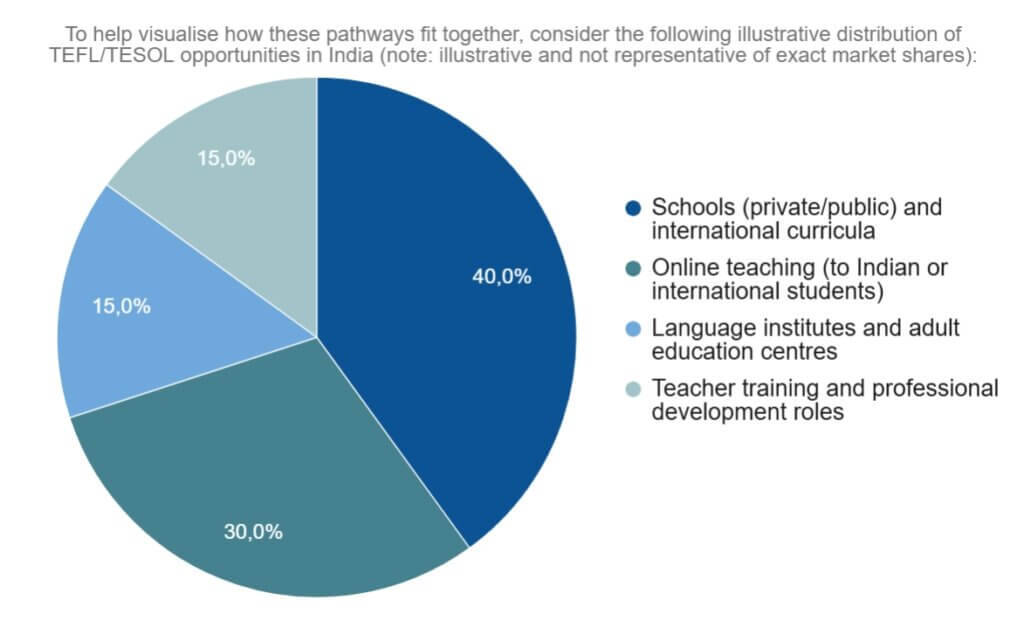
There are an array of teaching options in India – from urban private schools where classroom teaching occurs, to small language institutes in regional towns, and booming online platforms servicing students both inside and outside India.
Professional Growth Stages
For most junior teachers entering the profession, the first step is obtaining a TEFL or TESOL certification, which may include a practicum and a portfolio of lesson plans and micro-teaching experiences. You will enter the field as an English language teacher, conversation tutor, or teaching assistant. Eventually, these roles can evolve into curriculum support, co-teaching, assessment, or management roles within a department as you pursue further qualifications.
Language schools, educational colleges, and private academies consistently require TEFL-certified teachers who can deliver communicative speaking activities, pronunciation work, and exam preparation for both adult and adolescent students.
Online teaching offers a complementary system, where certified educators can communicate with students beyond national boundaries, develop asynchronous training, and deliver live teaching sessions. This is ideal for those seeking flexible working schedules, such as evenings and weekends.
Training and Mentorship
In the Indian market, there is also significant growth in teacher development. Schools and education associations are investing more in their teachers’ in-house training, including methodology, digital classroom tactics, and quality assurance procedures. This demand increases the need for trainers or mentors to lead professional development workshops, carry out lesson observations, and offer coaching to other teachers. There is a growing opportunity for TEFL or TESOL-trained professionals to find positions that integrate classroom teaching with training responsibilities, allowing for a shift from front-line teaching to mentor-level work and programme management.
Hence, a carefully considered career path can offer a mix of mainstream school teaching, online delivery, curriculum planning, and teacher training, creating a diverse and sustainable career track in India’s emerging education landscape. A realistic strategy for many readers is securing a diversified portfolio from the start. In addition to basic English teaching responsibilities, it is beneficial to develop skills in:
- Exam preparation (IELTS, TOEFL, Cambridge).
- Online pedagogy (synchronous and asynchronous teaching techniques).
- Digital literacy for learners with varying access to technology.
These features make you a much stronger candidate for private schools, international-curriculum settings, and emerging teacher training positions. This balanced strategy aligns with India’s push to improve English proficiency for employment, higher education, and international relations. It also prepares you to respond to shifts in demand – whether moving to in-person education in dense urban settings or expanding online and hybrid courses.
Practical Courses: Preparing for TEFL Careers in India
A formal TEFL or TESOL programme should include both in-depth theoretical knowledge and practical experience. Theoretical courses on language acquisition cannot be effectively applied without practical education covering classroom practices, lesson design, managing varied environments, and reflecting on practice to promote development.
A robust course also includes a supervised teaching component in a real classroom setting where you can observe experts, receive feedback, and implement your own teaching strategies under supervision. For those who end up teaching online or working across borders, programmes that include digital pedagogical modules – such as managing learning management systems or conducting synchronous online classes – are highly beneficial.
Practical courses in India based on Ofqual requirements often focus on the transparent evaluation of performance, well-defined criteria for practicum completion, and opportunities to build a professional portfolio showing measurable academic results.
Practical Considerations in Selecting a Programme:
- Practicum: Ensure there is a substantial practicum component with real learners and a qualified supervisor who provides documented feedback.
- Context: Search for content that offers micro-teaching and classroom management strategies specific to the various Indian contexts.
- Certification: Ensure the credential is internationally recognised and consistent with international standards – Ofqual courses provide a level of security and legitimacy.
- Support: Consider available support services, including job placement assistance, visa guidance for teaching abroad, and mentor support networks.
Ultimately, evaluate the full cost, hours, and delivery method (online, in-person, or hybrid). A well-balanced programme provides hands-on practice without losing the theoretical underpinning.
Portfolio Development
Beyond core course materials, you will need to develop your portfolio and other professional assets. This is a curated collection of lesson plans, a reflective teaching journal, student work samples, and recorded teaching demonstrations. A well-constructed portfolio sends a clear message to future employers about your skills. It also allows you to explain your instructional philosophy, classroom management style, and how you adapt to learners of different ages and proficiency levels.
In planning your TEFL or TESOL journey, set clear learning goals:
- Master three classroom management techniques.
- Prepare a comprehensive 10-hour unit plan.
- Deliver five micro-lessons with reflective commentary.
These goals help structure your studies, track your progress, and build your confidence.
Career Pathways and Typical Entry Points
| Sector | Typical Roles | Typical Entry Requirements |
| Schools (private/public) | English language teacher, subject teacher, teaching assistant | TEFL/TESOL certificate; relevant bachelor’s degree; (B.Ed may be preferred for government schools) |
| Language Institutes | Conversation teacher, pronunciation coach, exam-prep tutor | 120–180-hour TEFL/TESOL certificate; 6–12 hours of practicum; evidence of classroom readiness |
| Online Teaching | Online tutor, course instructor, asynchronous content creator | TEFL/TESOL certificate; reliable internet; schedule management; demonstration video |
| Teacher Development | In-house trainer, mentor, curriculum consultant | TEFL/TESOL certificate plus demonstrated teaching experience; pedagogy qualifications preferred |
Note: This table is illustrative and reflects common industry expectations across many Indian teaching settings. Actual requirements vary by employer and region.
Final Considerations
When growing a teaching career online within India, be mindful of digital infrastructure and access variation across different regions. While urban settings usually have robust broadband, some rural areas may struggle with connectivity. Courses that prepare you to design on-demand asynchronous content and organise effective online lessons will be of great benefit.
UNESCO has emphasised that digital and technology-mediated learning is spreading worldwide, impacting English language teaching in various settings. Therefore, training that provides both strong classroom pedagogy and online delivery capabilities is vital to navigating the modern educational landscape.
Practical courses also focus on employability skills, enabling students to demonstrate:
- How to build a professional English-language teaching portfolio.
- How to adapt a CV for TEFL or TESOL roles.
- How to develop an engaging teaching demonstration video.
Your interview preparation might involve mock interviews and techniques for sharing your student-centred teaching approach. Your course will also help you differentiate your lesson planning for students with various abilities and socio-economic backgrounds in the Indian classroom. A focus on assessment literacy – including formative and summative assessment and evidence-based practices – will aid in assessing learner progress and teaching ethically.
The job market reveals that employers value practical readiness. A TEFL or TESOL course with an organised practicum and a portfolio of demonstrations is a strong starting point. You will be prepared for a successful working life in various situations, from busy school schedules to flexible online teaching. This approach fits India’s broader ambitions to increase English language proficiency and develop employability within a global economy. By investing in hands-on training that combines teaching and practical application, you will be in a very strong position to develop a sustainable, flexible career.
Authoritative Sources and Fact Checks (References)
- Ofqual (The Office of Qualifications and Examinations Regulation): The official UK government register for regulated qualifications.
- UNESCO – ICT in Education: Insights into digital and technology-mediated learning developments.
- National Education Policy (NEP), India: Official framework regarding the role of English and pedagogy in the Indian education system.
Is TEFL/TESOL recognised in India?
Certification is widely recognised by private language schools, international schools, and online teaching platforms. The level of recognition can vary by employer, but many organisations prioritise accredited or well-regarded TEFL/TESOL certifications with practicum experience. For greater assurance, seek programmes with clear alignment to international standards (such as Ofqual-aligned qualifications) and verifiable practicum components.
Do I need Ofqual-aligned qualification to teach in India?
Not universally. Indian employers in private schools and international curricula often accept a range of TEFL/TESOL credentials. However, Ofqual-aligned courses offer portability and credibility with international organisations and can strengthen your CV when applying to cross-border opportunities or teacher-development projects in India.
What are typical salaries for TEFL-certified teachers in India?
Salaries vary widely by city, institution, and role. Entry-level English teachers in private language institutes may expect modest earnings, while positions in international schools or private academies with senior duties can offer more competitive remuneration. Online teaching can provide supplementary income or full-time opportunities depending on student demand, time zones, and platform policies. Factors such as experience, qualifications, and demonstrable teaching ability often influence pay scale more than the certificate alone.
What visa considerations apply to teaching English in India?
Visa requirements depend on your employment type and the institution. For many private sector teaching roles, a work visa or employment visa is necessary, often tied to a sponsoring employer. If you plan to teach online from India to international students, visa needs may be less strict, but you should verify current regulations with the Indian government and seek advice from your employer or programme provider.
Can online TEFL/TESOL work for me in India?
Yes, online TEFL/TESOL work can be a significant part of your teaching activities, either as a primary role or as a supplementary source of income. It offers flexibility and global reach, but it also requires reliable internet, effective time management, and a strong teaching portfolio to attract students. Ensure your training includes online delivery skills, to optimise your effectiveness in virtual classrooms.
How long does it take to complete a typical TEFL/TESOL course?
Course durations vary from a few weeks to several months, depending on the format (intensive in-person, part-time online, or hybrid) and the number of study hours, practicum requirements, and assessment periods. Accredited, Ofqual-aligned courses typically balance theoretical study with hands-on practice and a practicum, which may require a minimum number of teaching hours to complete.
What should I look for when choosing a TEFL/TESOL course for India?
Look for a course with practicum in real classrooms, clear assessment criteria, and a visible emphasis on practical teaching skills. Prioritise programmes with international alignment (such as Ofqual-regulated qualifications), a robust practicum component, and career-support services (portfolio development, CV optimisation, and job-search assistance). Verify the course’s recognitions and read reviews from past learners to gauge the programme’s impact.