Slovenia TEFL: A Practical Guide for English Teachers

You will find that if you’ve ever heard of teaching English abroad, Slovenia is your welcoming port of call: a small, beautiful nation with high demand for English, great quality of life and a simple route for qualified teachers.
The hurdle that this makes many of the aspirant TEFL teachers meet is turning enthusiasm into a functioning, legally valid teaching position, ideally suited to your visa status, salary expectations, and professional goals. This guide seeks to simplify the experience along the way, covering:
- Certification and legal requirements.
- Landing your first job.
- Understanding living costs.
- Choosing credible training options across Europe.
The Slovenian Teaching Scene
The Slovenian teaching scene mixes private language schools, international schools and public-sector language programmes. With job opportunities being fairly abundant in Ljubljana and more than half a dozen local towns, work permit, residence registration, and contract terms can be complex.
Leverage an impressive TEFL base, familiarity with local legislation and reputable training options in Slovenia to build a good teaching career over time, be it for a year abroad, a gateway to Europe, or a longer tenure in residence.
Perspective & Evidence
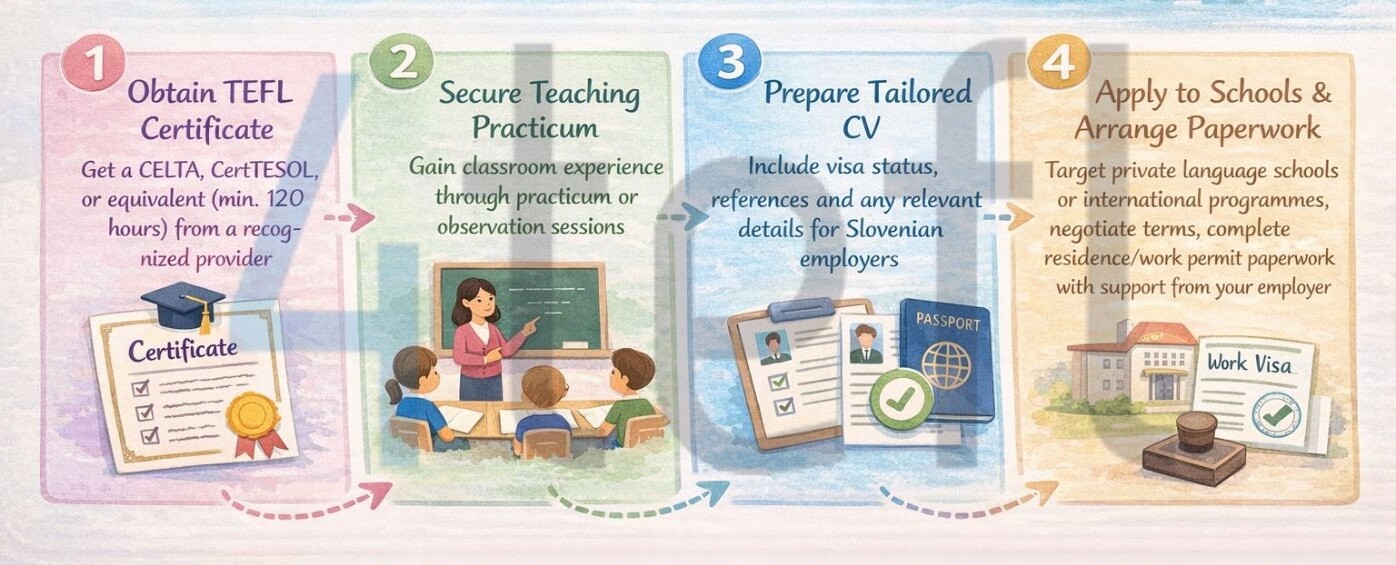
Over the course of this article, you will hear practical steps, real-world considerations and evidence – and context – from reputable authorities, including the OECD, Eurostat and Slovenian educational authorities. You will also find practical applications like job-market tables and an infographic-ready description to put things into perspective and visualize how certificate to classroom journey becomes real. Follow to cover the essentials with simplicity and certainty.
Finding Your First TEFL Job in Slovenia
Slovenia English language teaching has multiple channels of demand:
- Private language schools
- Exam-preparation centres
- Public school programs
Communication in English is highly valued in the nation: conversation language classes and exam preparation are typical practices in private schools with the typical use of English being seen in secondary school settings or found in a range of settings in public schools.
Key Locations:
- Ljubljana (The Capital): Historically the largest variety of jobs.
- Regional Centres: Maribor, Kranj, Koper and Celje.
Legal and Administrative Essentials
EU citizens can typically work in Slovenia with relatively straightforward residence registration processes, whereas non-EU citizens usually need a work visa or a permit from an employer. This pragmatic mix means you can explore for hours and hours, ages of students, and teaching approach you enjoy the most.
To begin your search for a job:
- Create an easy-to-read CV that showcases your TEFL certificate, degree (if any), and classroom practicum.
- Concentrate on evidence of your classroom ability – planning lessons, evaluating students, and guiding differentiating for mixed ability groups.
- Networking is important: seek feedback from language schools, universities or reputable teacher training centres; ask for your supervisor or employer letter references.
Contractual Standards:
Explain your visa status, when you will be in the country, and prepare to cover contractual standards (work hours, holidays and probation). Part-time and full-time opportunities abound, and most contracts are between September and June, roughly the academic year. There are two types of contract, but you will usually notice two types:
- Fixed-term contracts tied to the academic year.
- Ongoing appointments and renewing options.
Note: When considering payment schedules, tax obligations and moral rights relating to the hours of work and holidays, stay alert. Although a few schools will sponsor visa programs for non-EU teachers, the process is very long; therefore, a detailed plan for paperwork, background checks and apostilles is everything.
Quick Overview: Routes & Tips
- Typical locations: Private language schools, exam-prep centres, and some international-focused programmes.
- Tip to application: Your CV should have practical examples of how you teach, your lessons and their impact.
- Hire timeline: Can take a few weeks during peak hiring seasons.
- Work-life balance: Student progress and lesson quality are valued; proper planning and resources are usually provided.
Common TEFL Career Tracks in Slovenia
| Track | Typical Setting | Certification Preferred | Notes |
| Private language school teacher | Urban or regional schools | 120-hour TEFL | Focus on conversational fluency |
| ESP and exam prep | Language schools and dedicated centres | Specialised certificates | IELTS, Cambridge prep |
| International or bilingual schools | Ljubljana and larger towns | Teaching qualification | Longer contracts and benefits |
| University or adult education | Universities or continuing education | State-level accreditation | Varies by institution |
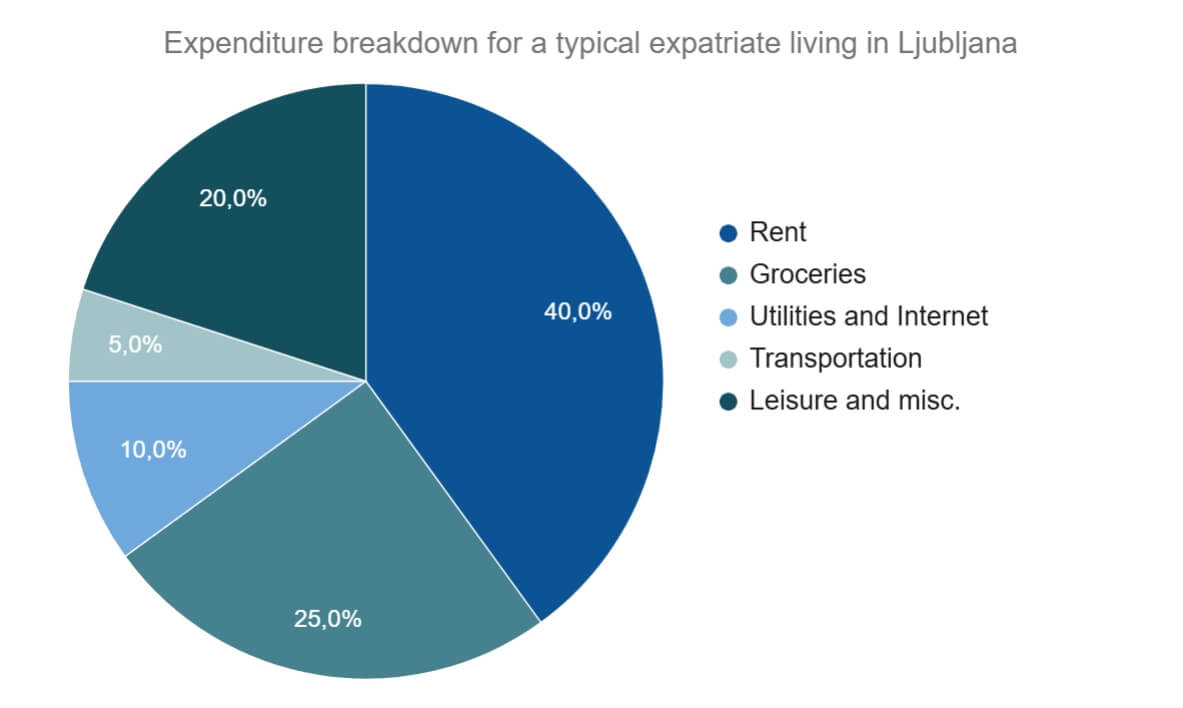
This reflects many expats’ cost patterns, with rent representing the major ongoing cost, especially in central areas.
Hiring: Practical Considerations
- Work permissions by status: EU/EEA citizens enjoy freedom of movement (registration required within 3 months); non-EU citizens often require a permit where employers frequently assist.
- Documentation: Have documents apostilled or legalised. Obtain required translations. Background checks may be necessary.
- Language expectations: Slovenian language skills are not always required for teaching, but learning basics helps with integration.
- Career growth: Slovenia rewards professionalism with longer-term contracts and salary growth.
Statistical note: Reputable international bodies note that English remains a key global lingua franca, with European education systems placing emphasis on English as a mandatory foreign language at many levels. Slovenia participates in this broader European trend, supported by organisations such as UNESCO and the OECD, which emphasise access to high-quality language education and mobility for skilled teachers.
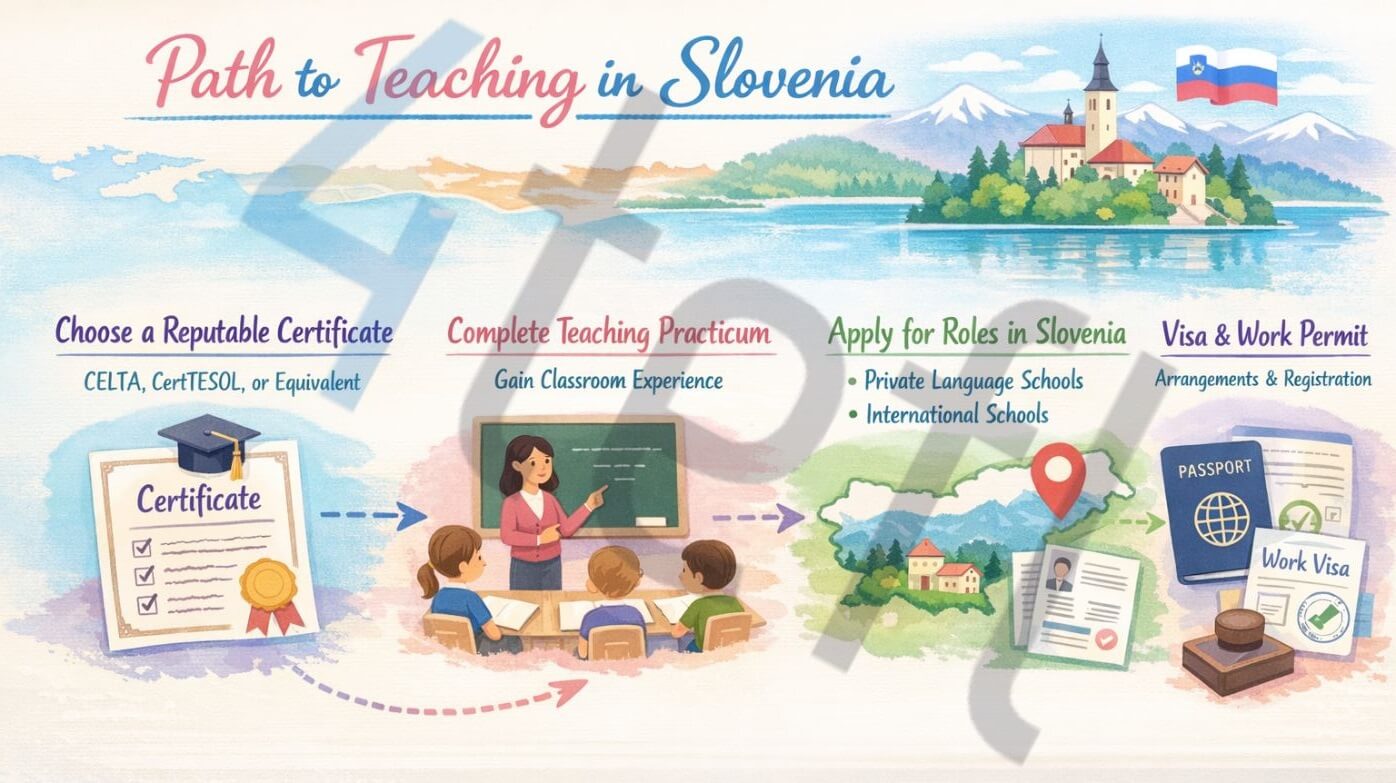
TEFL Certification and Legal Requirements
EU/EEA and Swiss citizens can work in Slovenia as part of normal residence registration. Most non-EU candidates need a work permit or visa with the employer arranged for them.
Certification Standards:
- CELTA (or Trinity certTESOL): From a reputable provider with credible accreditation.
- Practicum: Always check whether your selected course has a practicum component which Slovenian employers still highly consider.
- BA degree: Many positions expect a degree in a related field and to be accompanied by background checks.
Accredited TEFL Options in Europe
| Certification Type | Typical Duration | Recognised by | Practical Component | Notes |
| CELTA | 4 weeks | Cambridge Assessment | 120-hour practicum | Gold standard |
| certTESOL | 3-6 months | Trinity College London | Practicum included | Flexible format |
| Online TEFL | 4-6 weeks | Various bodies | Optional practicum | Supervised practice is best |
| Diploma in TESOL | 6-12 months | University-affiliated | Extensive practicum | For leadership roles |
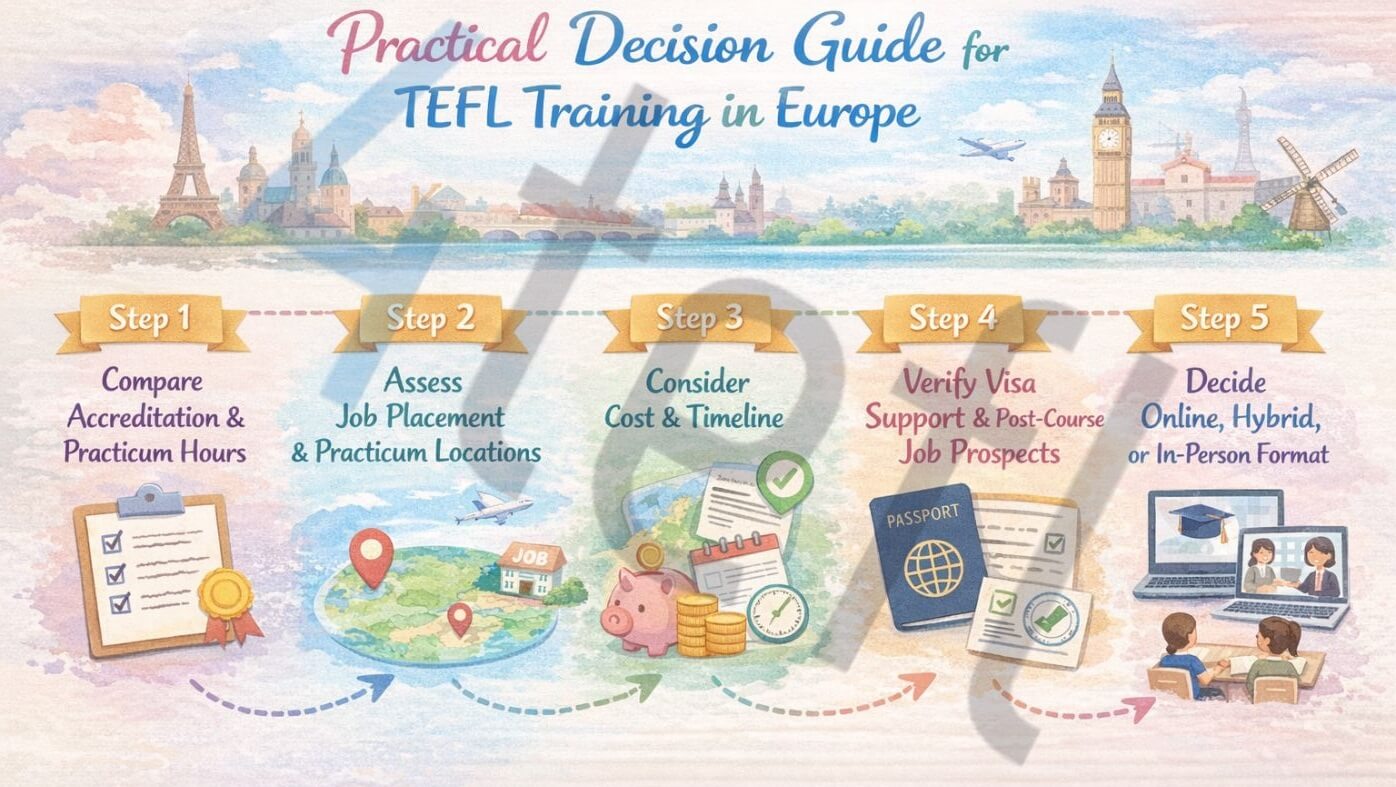
Certification Quality Checklist:
- Look for verifiable accreditation (CELTA, certTESOL, or HEI-affiliated).
- Prioritise programmes with a substantial teaching practice (minimum 6–20 hours).
- Ensure the certificate includes a thorough syllabus and assessment framework.
Cost of Living, Salaries, and Classroom Realities
Slovenia’s cost of living is around the Western European average. Ljubljana is the most expensive city, while smaller towns offer cheaper alternatives.
Estimated Monthly Costs in Ljubljana (Single Teacher)
| Cost Component | Typical Monthly Range (EUR) | Notes |
| Rent | 700-1,100 | One-bedroom, city centre |
| Utilities | 100-180 | Electricity, heating, water |
| Internet & Mobile | 25-50 | Competitive packages |
| Groceries | 250-320 | Varied by lifestyle |
| Transport | 30-60 | Monthly pass |
| Leisure | 150-250 | Depends on habits |
| Insurance | 30-60 | Healthcare access |
Salary and Benefits Snapshot
- Entry-level: Net monthly salaries commonly in the lower to mid range for full-time work.
- High-end: International schools or specialized programmes offer substantial packages (sometimes including housing).
- Supplementary Income: Private tutoring or online teaching is common for expatriate teachers.
- Benefits: Healthcare access, paid holidays, and potential housing allowances in larger institutions.
Classroom Realities
- Demographics: Private schools cater to children and adults; international schools focus on older students and professionals.
- Classroom Norms: Emphasis on interactive, communicative activities and real-life communication.
- Collaboration: Teachers commonly work with Slovenian colleagues to align with national curricula and exam standards.
Finding Training and Professional Growth
Prioritise accredited curriculum-based programmes with good teaching practicum. Think about if the provider discusses visa concerns and work placement. An esteemed TEFL diploma is an important competitive edge in Slovenia’s very competitive market.
Strategy for Success:
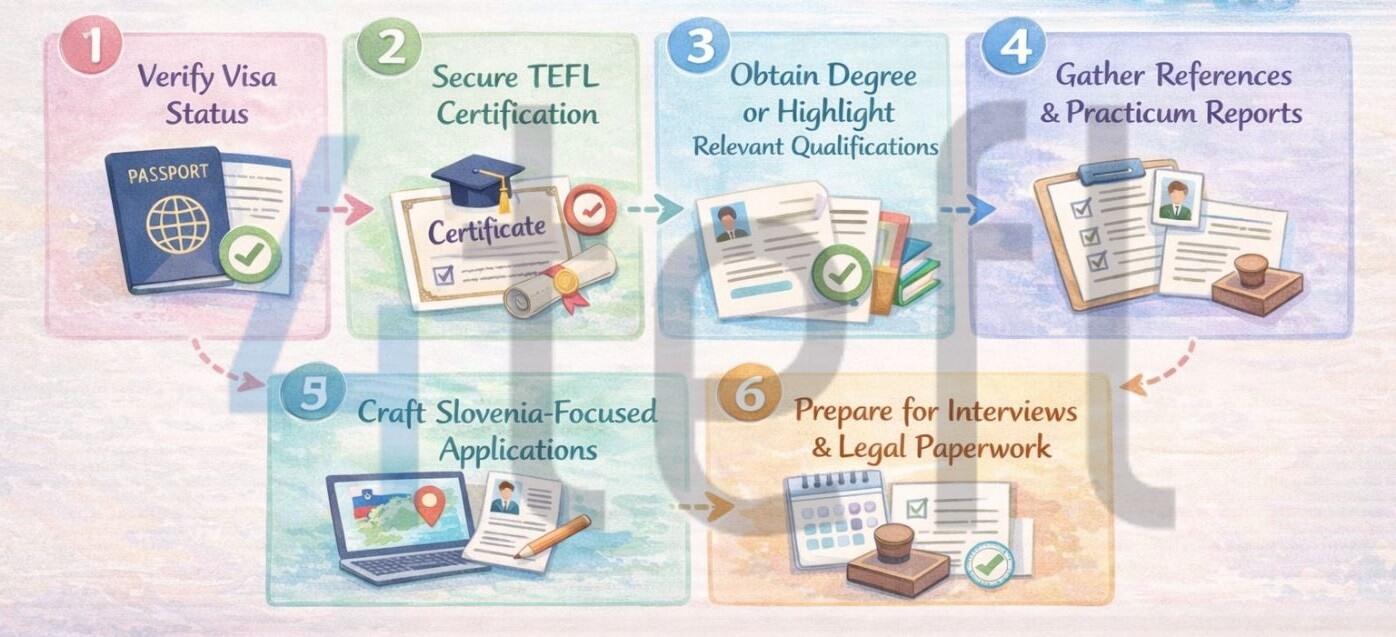
- Confirm visa status and obtain documents first.
- Pursue a reputable TEFL certificate with a meaningful practicum.
- Target private language schools in Ljubljana and regional centres.
- Emphasize communicative competence in your toolkit.
Outro: Practical Takeaways
Slovenia is one of the most realistic and satisfying destinations in the world today for TEFL instructors keen on balancing class time and achieving a good quality of life. Important things are to get a solid TEFL certificate (preferably with a robust practicum), to clarify visa/work permit conditions ahead of time, to pursue private language schools and international institutions which match what you teach.
A deliberate attitude now can lead to a rewarding TEFL trip – through Slovenia and beyond.
Authoritative Sources and Fact Checks (References)
- Slovenian Ministry of Education: Official portal for education standards and teacher qualification requirements in Slovenia.
- Statistical Office of the Republic of Slovenia (SURS / Eurostat): Data regarding cost of living, average salaries, and housing indices in Slovenia.
- OECD iLibrary: Slovenia Education Policy Outlook: Comprehensive analysis of the Slovenian educational system and language proficiency trends.
Do I need a CELTA to teach English in Slovenia?
A CELTA or another recognised qualification is highly regarded and can improve job prospects, especially for international schools or roles requiring strong teaching practicum. While not always mandatory, many employers prefer a certificate with substantial practical components and a proven track record.
Is Slovenia a good place for TEFL teachers?
Slovenia offers a friendly expat community, a high quality of life, and a relatively straightforward route for teaching English, with opportunities across private language schools and international programmes. Economic indicators from European and international organisations support a stable teaching market.
What are typical visa requirements for non-EU citizens?
Non-EU citizens typically need a work permit or visa arranged by an employer, with sponsorship possible depending on the institution. Employers often guide applicants through the process, including background checks and document validation.
What level of salary can I expect?
Salaries vary by sector and city. Private language schools tend to offer solid net pay for full-time work, with potential for additional income through tutoring or online teaching. Consider cost of living in your chosen city when evaluating offers.
Do I need Slovenian language skills?
Slovenian language ability is not always required for private language schools, but learning basic Slovenian can improve classroom dynamics, integration, and daily life.
Are there opportunities for online TEFL work from Slovenia?
Yes. Many teachers supplement local salaries with online teaching or hybrid roles. Ensure your visa and tax status allow working remotely and verify with your employer how online commitments fit with your Slovenian contract.