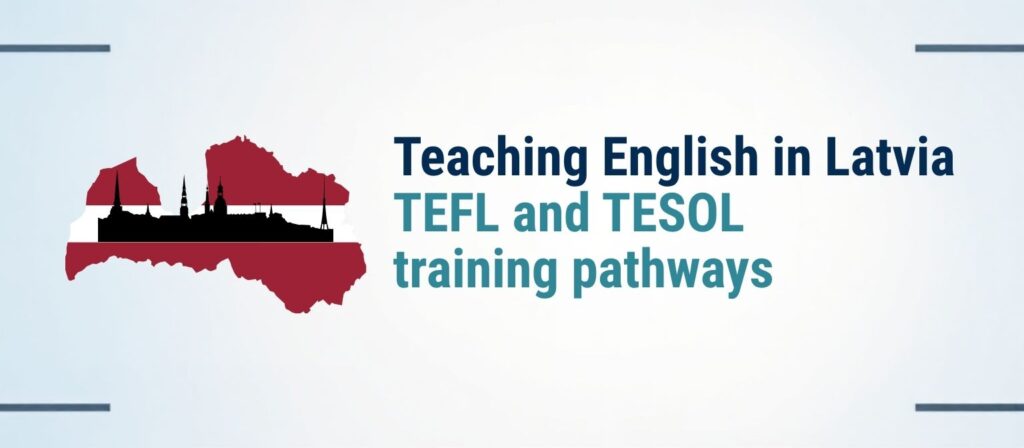
Teaching English in Latvia TEFL and TESOL training pathways

Latvia is located at a crossroads of education in Europe, where skills in English are required in schools, universities, and the growing private language sector. For students wanting to become teachers, Latvia’s TEFL and TESOL training programmes stretch from flexible internet-based qualifications to intensive face-to-face courses to more advanced degrees.
The right direction will be determined by your career trajectory, whether you plan to teach at:
- Language schools in Riga
- International companies
- Online with learners who may live outside the city
This article outlines the key pathways, the interplay between accreditation and standards throughout Latvia, and how to select a course that meets European and global standards. Knowing these pathways also enables you to make an informed decision that promotes reliable qualifications, employability and continuous professional development.

Overview of TEFL and TESOL Training Pathways in Latvia
Latvia’s TEFL and TESOL training landscape is a patchwork quilt of entry-level certificates, practical teaching-practicum courses, and graduate-level qualifications.
Entry-Level Options
For many readers, the first order of business is a 120- to 150-hour TEFL certificate, which is available online or in a blended format, with a practicum phase. These certificates train you in the important techniques, strategies and tools to implement the most basic skills in your classes such as:
- Teaching fundamentals
- Classroom management strategies
- Lesson organisation methods
- Lesson planning techniques
- Language systems knowledge
This is highly applicable to teachers who are planning to teach in private language schools in Latvia but may wish to pursue online courses as well. As with all new market structures, levels of recognition and quality are different for online choices, thus it is necessary to check the body that certifies the learning services offered and to make sure that the course contains a real teaching practicum or supervised practice.
Immersive & Advanced Pathways
Latvia has more than entry-level qualifications; instead, there are immersive opportunities for candidates seeking a more sustainable career in EFL.
- In-person CELTA (or Trinity TESOL)-style courses – usually involving observed teaching practice and a rigorous assessment process – are still popular in terms of earning credibility from employers.
- Diploma-level TEFL/TESOL courses and Master’s programmes in TESOL or Applied Linguistics offer teachers advanced pedagogy, curriculum design and opportunities to transition into teacher training, programme leadership or academic post-training.
Latvian academies and international institutes tend to provide blended methods whereby one can undertake online course study along with an organised practicum in Latvian language schools. This mix caters for learners who could currently be employed or relocating, but still want a solid amount of in-the-field experience before heading into full-time positions.
Pathways at a Glance
| Pathway | Typical Hours | Format | Pros | Ideal For |
| TEFL Certificate | 120–150 hours | Online or blended | Flexible, cost-effective, quick entry to the market | Beginners planning to teach part-time or online |
| In-person CELTA/CertTESOL | 4 weeks in-person (plus prep) | In-person with teaching practicum | Strong employer recognition, solid classroom skills | Those aiming for comprehensive practical experience and credibility with employers |
| Diploma in TEFL / TESOL | 180–250 hours | Blended or in-person | Depth of theory, leadership potential, better progression | Teachers seeking advancement into leadership or trainer roles |
| MA TESOL / MSc TESOL | 1–2 years part-time or full-time | University-based | Highest level of qualification, research skills, academic career opportunities | Long-term career in higher education, curriculum design, or teacher-trainer roles |
Key Market Dynamics:
The Latvian market values certificated teaching competence, practical experience, and the ability to deliver engaging, student-centred lessons. For many new teachers, having a credible certificate to begin with, as well as supervised teaching practice in Latvia’s schools, provides a clear, attainable path to more secure positions.
If your plan is to work in Latvia long term as well as pursue permanent residence, pairing a TEFL/TESOL certificate with a university-level qualification or a recognised teaching practicum will help to strengthen your CV and open up a wide range of job opportunities in Latvia’s language schools and higher-education settings.
Accreditation and Standards: Ofqual, Latvia, and Global
Ofqual, Latvia, and global standards intersect in the area of TEFL/TESOL training across regulatory control, European structures, and business standards.
The Role of UK & European Frameworks
- Ofqual, the UK national regulator of qualifications, sets the standard for a credible, quality-assured course in England. In some cases, TEFL qualifications are issued by awarding bodies which support Ofqual, or they supply documentation supporting UK employers with similar qualifications that are acknowledged as equivalent qualifications and/or have been reviewed by Ofqual.
- For readers planning to work in Latvia or elsewhere in Europe, the more general touchstone is the European Qualifications Framework (EQF), which supplies an overarching reference point between member states and facilitates knowledge transfer and qualification recognition across countries. Latvia takes part in the EQF and quite a few TEFL courses are intended to map to EQF levels (e.g. Certificate qualifications, Diploma, Master’s-level qualifications at Levels 4–7). This means that their training is easily portable within the EU and ensures continual professional development.
Latvian National Regulations
Latvia’s own regulatory framework for teachers is more about national standards and EU compatibility. Teacher qualifications, professional development and state quality assurance for education are monitored by the Ministry of Education and Science of the Republic of Latvia.
For foreign-trained teachers looking to teach in Latvia, the standard of certification often comes down to EU standards and the specific criteria of an employer or institute. Many TEFL/TESOL alumni in Latvia are employed by private language schools and they usually accept internationally recognised diplomas with solid practicum teaching.
Portability and Global Alignment
In order to guarantee portability:
- See if the course has a qualification programme whereby course recognition or credit transfer is promised within Latvia’s education system.
- Check if the course provider states EQF alignment and Ofqual equivalence directly where relevant.
It is evident that globally, teaching practicum-based TEFL/TESOL credentials with the ability to teach based on evidence generally have relatively high portability. Although UK-centred certifications may be valued for such rigorous practicum and reflective practice, employers in Latvia will primarily seek work experience in the classroom, a solid understanding of lesson design and the management of a wide range of different learner types.
UNESCO and global education discussions highlight professional development and better-quality teaching among global priorities, in the same way that courses with structured practice hours and observation time can provide more room for teacher reflection. As an alternative, look for courses with observable practicum modules, strong assessment and documents that clearly point to EQF levels and local recognition.
Professional Outcomes: Placements, Salaries, and Progression
Latvia placements depend on city, institution and market demand.
Job Placements & Opportunities
- Language schools in the Latvian capital, Riga, university language centres and international schools provide English teachers with standard TEFL/TESOL certification.
- It also has market demand for online English schooling with students who are citizens and of foreign national birth, and which can have flexible hours and supplement teaching in person.
- In Latvia, teaching abroad can be a gateway to longer-term residency in Latvia and positions in neighbouring countries with a linguistic and cultural relationship with Latvia.
A reliable certificate paired with work in a Latvian classroom allows new teachers to build a career that requires them to demonstrate good pedagogy, classroom management, and flexible teaching for different student populations.
Salaries & Conditions
Salaries and working conditions mirror the overall wage environment in Latvia and the private-sector character of most English language schools.
- In general, TEFL/TESOL-certified teachers in private language schools earn relatively little when compared to Western teachers, especially in part-time or hourly positions.
- Educators benefit from online teaching, private tutoring or working extra hours with partner schools.
This combination of classroom experience, a good certificate with decent practicum as well as a chance to specialise (business English, exam preparation, or Young Learners, for instance) will lead to more favourable offers for readers who plan to work in Latvia in the long term, and higher-quality appointments, potentially more stable jobs over the long term. Some options for advancement include advancement from classroom teaching to senior teacher positions, programme coordination, teacher trainer posts or curriculum development within language institutions or university language centres.
Long-Term Career Progression
Career trajectory in Latvia often parallels global patterns of TEFL development. With further credentials – a Diploma in TEFL/TESOL, Master’s in TESOL or Applied Linguistics, or a teacher training certificate among others – teachers have the ability to advance to positions such as:
- Curriculum developer
- Teacher trainer
- Academic coordinator
In Latvia’s education ecosystem, those who have done so with robust classroom achievements and who can also engage with professional development work – whether supporting junior teachers, facilitating staff development sessions or contributing to the development of institution-level strategy – tend to take more immediate leadership roles.
International trends in teacher education focus on reflective practice, continuous professional development and evidence-based teaching, which align strongly with courses offering high levels of practitioner feedback, peer observation and curriculum development and assessment.
Choosing the Right Latvia TEFL Course for Your Career
Choosing the right Latvia TEFL course requires knowing your goals, time, budget and the type of accreditation you need.
- To Enter the Job Market Quickly: If your aim is to enter the Latvian job market quickly and start earning soon, a well-regarded 120- to 150-hour TEFL certificate with a strong practicum can be a practical entry point.
- For High-End Placements: If you want the strongest possible job prospects in reputable schools or universities, consider an in-person CELTA-style option or a Diploma that includes substantial teaching practice and a robust assessment framework.
- For Academic/Leadership Paths: Career development beyond classroom teaching through a Master’s-level course in TESOL or Applied Linguistics opens up opportunities for broader teacher training, policymaking, and programme leadership.
Regardless of the route you take, find out if you can trust that the programme has a credible provider, transparent assessment criteria, and a documented practicum component that aligns with EQF levels and Latvian expectations.
Verification of Credentials
Central to this decision is accreditation and transferability as well. Consider courses that state in a clear manner the extent to which they align with the EQF, and consider if the awarding body is Ofqual-regulated or another formal authority that can be discussed with Latvian employers. If you’re going to teach in Latvia, check with the Ministry of Education and Science or what local employers will approve for the kind of credential.
A quality course includes:
- A comprehensive syllabus
- Hands-on practicum supervision
- A defined trajectory to continuing professional development
- Future readiness (job applications in Latvia or links to local language schools for internships)
Price and format matter, but the ultimate value of a course will depend on its ability to build practical teaching practice, confidence in the classroom, and a track record that employers will value.
Final Practical Considerations
The practical matters also include format, practicum, language of instruction, and post-course support. Many people in Latvia go through courses which combine online study with a practicum year in a partner school, giving you the chance to gain hands-on time in the classroom while also managing your daily commitments.
Think about the trade-off between cost and quality: cheaper online certificates could be OK for some, but classes that have high-quality practicum, feedback and mentorship can lead to better jobs and faster advancement.
Finally, read alumni stories, inquire about placements and ask for a sample practicum schedule. A fair, direct asking about spending, time frames and results in any class will save some time for you, and will help you choose an investment that will actually help you become more aligned with your prospective future job aspirations in Latvia.
Authoritative Sources and Fact Checks (References)
- Ministry of Education and Science of the Republic of Latvia: Official state body responsible for monitoring teacher standards, quality assurance, and qualifications recognition within Latvia.
- European Qualifications Framework (EQF) – Europass: The reference system used across Europe to understand, compare, and transfer academic and vocational certifications across EU member states.
- Office of Qualifications and Examinations Regulation (Ofqual) – GOV.UK: The UK governmental regulator responsible for maintaining standards and confidence in national vocational qualifications, often referenced by top-tier TEFL courses.
Do I need a degree to teach English in Latvia?
In Latvia, private language schools often hire teachers with TEFL/TESOL certificates and classroom experience. A university degree can improve job prospects, especially in higher‑level or university‑affiliated programmes. Public schools typically require teaching qualifications recognised by the Latvian education system, so verify requirements with potential employers.
Is an online TEFL certificate enough to teach in Latvia?
An online certificate can be a good starting point, especially for part‑time or online teaching. For in‑person positions in language schools, many employers prefer or require a certificate with a substantial practicum or an in‑person qualification such as CELTA or a recognised Diploma.
Are Ofqual‑regulated TEFL courses recognised in Latvia?
Ofqual‑regulated courses are primarily recognised for UK purposes, but EVU frameworks like EQF help translate qualifications across Europe. Always check with Latvian employers and the MOE whether an Ofqual‑regulated certificate maps to the local market and whether EQF alignment is provided.
How long does it take to complete a TEFL/TESOL course?
This varies by pathway. A typical 120–150 hour certificate can take a few weeks to a few months part‑time if you study online, while CELTA‑style courses are usually four weeks of intensive study with practicum. Diploma or Master’s routes extend over several months to a couple of years, depending on study mode.
Can I teach in Latvia with a TEFL certificate but no Latvian language skills?
Yes, especially in private language schools and online teaching contexts. Some roles or schools may prefer English‑only instruction, while others serving local Latvians may appreciate basic knowledge of Latvian or the ability to communicate with parents or students in Latvian.
What are typical job opportunities for TEFL teachers in Latvia?
Opportunities exist in private language schools, university language centres, corporate language training, and online teaching platforms. There are also roles in summer language camps and exam preparation classes. Building a professional portfolio with a strong practicum and continuous professional development improves prospects.
Do I need a work visa to teach in Latvia if I’m not an EU citizen?
Non‑EU citizens typically require a work permit or visa arranged through the employer or the Latvian immigration authorities. EU citizens have easier access to work in Latvia, but still should verify visa and work permit requirements before relocating.