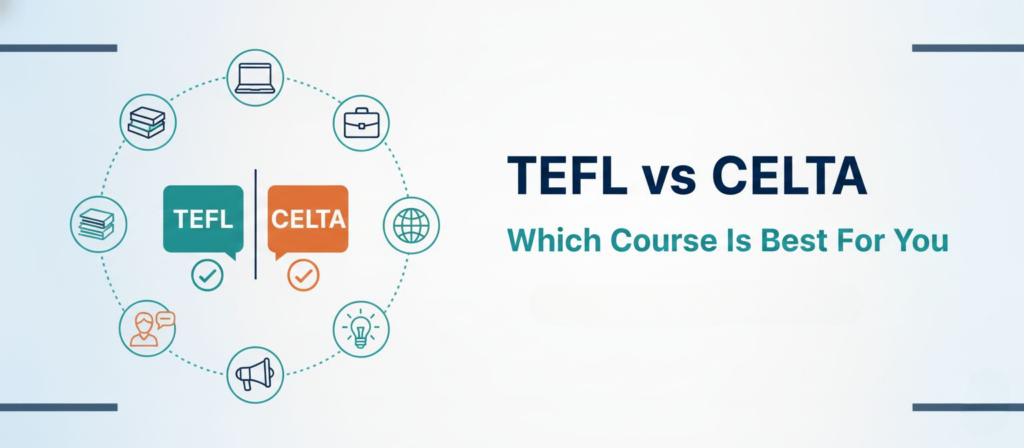
Teaching English in South Africa: A Practical TEFL Guide


In a country with linguistic diversity and vibrant cultures, teaching English can be a fantastic career option. South Africa is a great place to work for TEFL professionals, with vast private language schools, an internationally minded curriculum, and a lot to work with students in large urban hubs as well as rural areas.
But it isn’t enough to get into South Africa’s English teaching scene if you don’t have a nice smile and a certificate. It would take some understanding of local education patterns, accreditation, visa requirements, and culturally appropriate classroom practices.
This guide is designed to help you deal with those factors and to help you build your TEFL credentials in line with South African needs and create a career that is sustainable and impactful. If you are going to teach on arrival or do an online course abroad, the steps presented here will help you come up with a plan that makes it clear, professional, and culturally sensitive to South Africa. You will be able to relate your training and qualifications to local needs and learning contexts and to get into the good jobs you would want to get that really help you in your TEFL career.

Overview of TEFL Opportunities Across South Africa
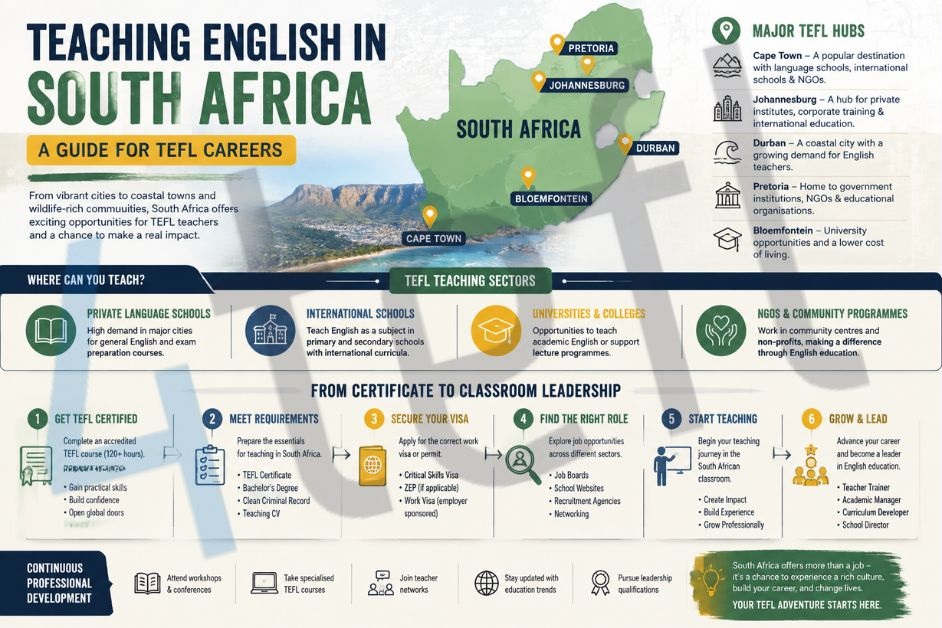
South Africa has a wide range of TEFL options and is a country with a diverse population and growing demand for English in higher education, commerce, and tourism. In major cities like Johannesburg, Cape Town, and Durban, private language schools and international programmes regularly recruit qualified teachers for adult education, corporate training, and exam preparation. Universities and teacher-training institutes also offer English language modules, bridging courses, and support for multilingual learners. In rural areas and smaller towns, non-profit initiatives and volunteer organisations sometimes partner with local schools to support English-speaking education and literacy. Informed applicants are generally able to combine TEFL with language development experience, curriculum design experience, or teacher mentoring to help them broaden their influence.
Regional Distribution of TEFL Roles
The TEFL roles in South Africa in terms of regional distribution are geographically distributed and based on population density and educational investment:
- Gauteng, the Western Cape, and KwaZulu-Natal: Have a lot of private language schools, international schools, and universities, with regular teaching openings, evening and weekend classes.
- The Western Cape: With its tourism-based economy and international students, has a lot of English instructors for exam preparation, tourism English, and campus courses.
- Rural Provinces: Often have more dispersed roles in public schools, NGOs, and community education programmes.
While urban work can offer higher salaries, rural work can be meaningful for the community and also contribute to local language programme development and policy. In all contexts, employers in all areas value the ability to adapt materials for multilingual classrooms, a learner-centred approach, and collaboration with South African colleagues on contextually relevant resources.
Getting Started: Practical Steps
For those looking to start a TEFL career in South Africa, practical steps ahead are to build a professional profile that emphasises classroom management, assessment literacy, and cross-cultural communication.
- Network: Connect with local TEFL associations, attend regional conferences, visit schools, or engage in volunteer work to understand demand and meet common contract terms.
- Verify Opportunities: Before you decide to take on a job, verify that it is legitimate, check your salary with experienced colleagues, and discuss visa and employment documentation with potential employers.
- Understand Local Priorities: Knowledge of local education priorities like literacy, inclusive education, and multilingual support will help you to contribute effectively and plan for your future.
Accreditation and Certification Paths for TEFL Pros
TEFL certification in South Africa has a wide range of different certification pathways for language teaching, teaching practice, practicum hours, and a wide range of language pedagogy and practice.
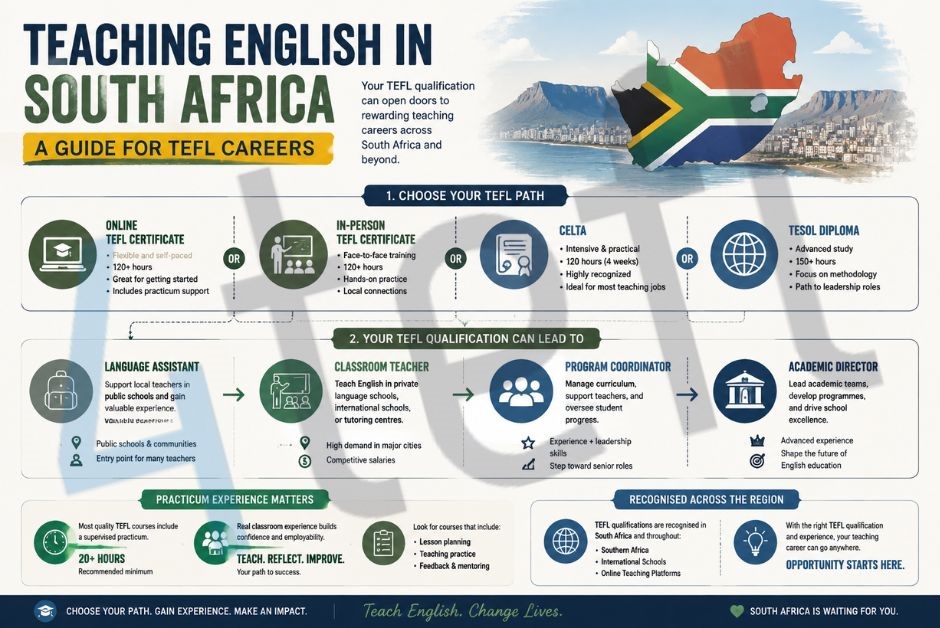
A standard TEFL certification (typically 120 hours) is the foundation for basic lesson planning, grammar analysis, classroom management, and TESOL and CELTA are more structured and have international recognition. In practice, many South African employers want a good teaching certificate with a bachelor’s degree and some classroom experience.
- CELTA (Certificate in English Language Teaching to Adults): Still widely accepted globally by universities and large private schools because it is hands-on and part of the teaching and teaches on-the-job in practice, and it has a very strict pedagogical emphasis.
- TESOL Certificates: More general and more widely accepted, particularly for online teaching positions or positions with providers based outside South Africa.
Selecting the Right Programme
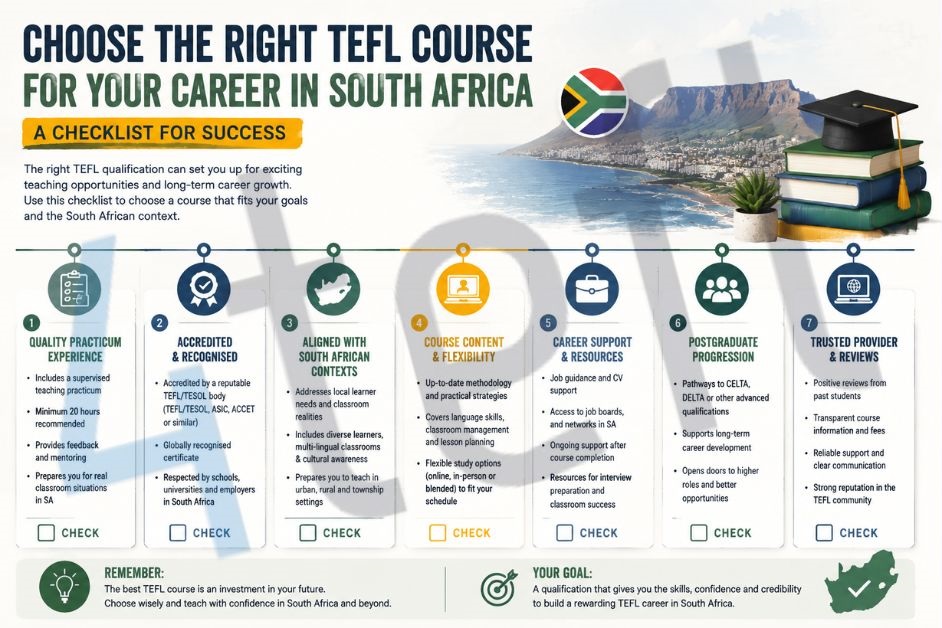
Accreditation is the core of a TEFL programme selection process. Look for an experienced teaching practice programme, feedback from experienced teachers, and assessment of a programme that is aligned with current standards. In South Africa, employers are more likely to be looking for certificates from well-known providers with results so that they can prepare teachers for public schools or private language schools or higher education programmes.
If possible, look at programmes that are either certified by international institutions or universities. Have good practices with professional development as an ongoing part of the course and reflective practice and the pathway to higher positions. More than certificate quality, you will want to look at how a course meshes with local classroom reality (multilingual learners, resource pressure, and cultural context) so that your training will translate into effective practice in the classroom. If you wish to teach in private schools or universities, you will have to choose a reputable certification and a degree that is also a good fit with your teaching experience.
Delivery Models and Additional Qualifications
The right certification is also a matter of understanding delivery models. Whether online certificates are for working adults or for those looking to move to South Africa, they must include a hands-on practicum component to be appreciated by employers. In-person or blended programmes can lead to immediate local practicum opportunities and peer feedback, which many recruiters regard as evidence of competency in practice.
For those working as teachers with a bachelor’s degree, courses in English for Academic Purposes (EAP), language testing, or developmental literacy, which are very important to teachers, can be added as an added value for the future to the curriculum. You should also look at Cambridge English, Trinity College London, and the University of Cambridge CELTA accreditation and ensure that the programme is appropriate for the learner context you are going to face when you come to South Africa. This alignment strengthens your CV and shows a consideration for teaching in diverse classrooms.
Working Visas, Legalities, and Employment Rules
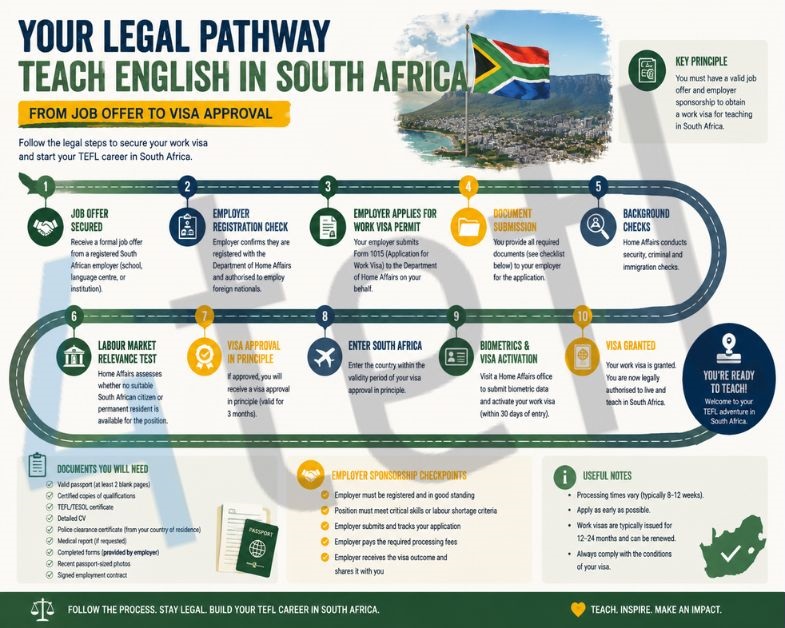
Legal work in South Africa is dependent on the right kind of visa to work in the country. For many TEFL professionals, the typical path is a job offer from a South African employer who can sponsor a work visa or help in the application for a Critical Skills visa when applicable.
The Critical Skills visa system is designed for professionals who may lack specific skills or qualifications and are well-trained. Experience in education and teaching may be part of a wider profession and must be explained to the employer as well and, if necessary, to South Africa’s Department of Home Affairs or an immigration adviser through any possible line of communication.
Essential Documentation and Preparation
With the complexity of immigration processes and policy updates, early preparation, timely filing of documents, and clear communication with prospective employers are essential for avoiding delays. You should also prepare for standard requirements such as:
- Police clearance certificates
- Qualifications verification (including accreditation and, where necessary, apostilles or authentication)
- Proof of financial means and accommodation
Employer Responsibilities and Contract Terms
As job-related in SA, employer responsibilities typically consist of confirming a genuine vacancy, the visa application process, and the employee fulfilling his/her duties according to the contract and South African labour laws. The Department of Labour and other bodies stress fair employment, contract clarity, and compliance with working hours, leave entitlements, and occupational health and safety standards.
Potential teachers should expect probation and contract terms for salary, housing allowance (where provided), visa support, and professional development opportunities. Realistic steps can be taken to obtain official documents (certified degrees and certificates, reference letters, and a current CV), if applicable apostilles, and an updated passport. Some candidates look at online teaching jobs with South African schools or universities that can take them on travel for work in South Africa for a short time.
Diligence and Ongoing Communication
As with any long-term teaching job, embassy and government resources stress diligence and compliance in the visa process, particularly for permanent teaching. It is necessary to follow immigration guidance and confirm timelines, renewal options, and regional variations in policy when you meet them.
In all cases, when you talk to your employer about visa status, anticipated start dates, and the level of support you will need, you should be transparent with your employer and have clear communication to avoid misunderstandings and delays regarding your visa status and process in South Africa. Knowledge of changes to visa types and processing times, and the requirements of your employers, as well as keeping all the papers well kept and the documents organised, will ease your coming to South Africa and support a smooth transition in the learning process.
Cultural Adaptation and Classroom Strategies in SA
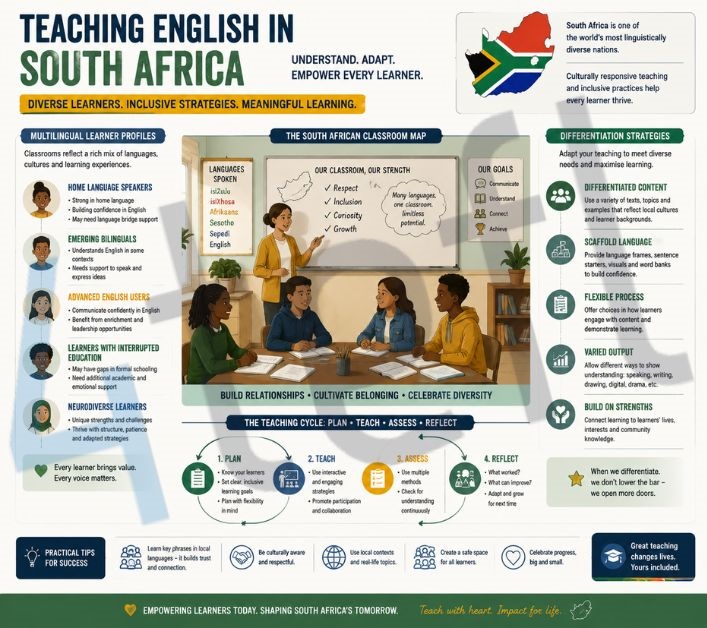
The rich cultural landscape in South Africa of eleven official languages and a wide range of ethnic and regional traditions that are rich in language makes it a learning environment where linguistic diversity is both a challenge and a strength. English is often the lingua franca of schools, universities and many businesses; so a TEFL professional might teach learners with a variety of first languages and linguistic repertoires to teach to their students.
Fostering an Inclusive Environment
A good approach is to have clarity, scaffolding and authentic language experiences in the classroom that relate to the learners’ lives. Teachers can draw inspiration from the local context, from local dialects and levels of previous experience of English to design courses that are accessible yet ambitious. Recognising and valuing multilingualism in the classroom fosters confidence in the classroom and causes learners to engage more actively with content. This contextual awareness is consistent with UNESCO’s emphasis on inclusive, learner-centred education and the British Council’s advice for high-quality language teaching in diverse contexts.
Practical Classroom Strategies
Classroom strategies for SA students are differentiated teaching, explicit grammar and task-based learning that is based on real-world resources.
- Resource Management: In high-density classes or with limited resources, teachers can mix printed handouts with digital tools when they are available, or substitute with community-based resources such as local news articles, public signage and culturally relevant reading materials.
- Classroom Order: A good classroom routine, clear assessment criteria and feedback mechanisms help the learner achieve, and it is safe to keep classroom life orderly.
- Culturally Responsive Teaching: Culturally responsive teaching is about the inclusion of learners’ experiences in topics, examples and activities and so is important to keep learners engaged in multilingual classrooms and to avoid being isolated.
- Community Collaboration: In rural or under-resourced schools, collaboration with colleagues, school leadership and local communities is essential for language development programmes to be successful.
For teachers who are new to the country, mentors with established local networks can help ease the transition and offer ongoing professional support as you hone your practice.
Authoritative Sources and Fact Checks (References)
- South Department of Home Affairs (DHA): Official guidelines on working visas, critical skills lists, and immigration legalities in South Africa.
- British Council – Teaching English: Global resources, methodological frameworks, and research papers on teaching English in diverse, multilingual contexts.
- UNESCO – Inclusive Education: International reports and frameworks highlighting the importance of multilingualism and learner-centred education in diverse societies.
- Department of Employment and Labour, South Africa: Regulatory information regarding labor laws, employee rights, contract standards, and workplace safety.
Do I need a degree to teach English in South Africa?
Most teaching roles, especially in schools and universities, expect applicants to have a bachelor’s degree. A TEFL/TESOL certificate is commonly required or highly preferred, particularly for private language schools and online positions. Some NGOs and community programmes may accept a strong certificate and relevant experience, but a degree significantly broadens your opportunities and salary potential.
Is TEFL certification required or recommended for South Africa?
A certificate is typically necessary or highly desirable. The majority of employers prefer internationally recognised TEFL or TESOL qualifications with a solid practicum component. Higher education settings and international schools often prioritise additional qualifications, such as CELTA or a master’s degree in education or applied linguistics, contingent on the role.
What visas are needed to teach English in South Africa?
Most teachers will require a visa that authorises work in South Africa, commonly a work visa sponsored by an employer or a Critical Skills visa when eligible. The visa process depends on your nationality, the job offer, and the nature of the position. It is important to confirm current requirements with your potential employer and consult official government guidance.
Where are the best places to teach TEFL in South Africa?
Key urban hubs – Gauteng, Western Cape, and KwaZulu-Natal – offer plentiful opportunities in private language schools, universities, and international schools. Rural postings exist through NGOs and community programmes. The best fit depends on your preferences for urban life, cultural immersion, salary expectations, and access to professional development.
How much can I earn teaching English in South Africa?
Salaries vary widely by sector, location, and experience. Private language schools and international programmes may offer higher rates, while public schools or NGOs can provide more stability and meaningful community impact. It is advisable to research typical ranges in your target city and negotiate terms that include housing assistance or allowances where possible.
How long does it take to obtain TEFL certification?
Certification timelines vary by provider. A standard 120-hour TEFL course can be completed in four weeks (intensive) or spread over several months in online/blended formats. CELTA and some TESOL programmes involve at least 4 weeks of on-site study plus practicum, though part-time options may extend over several months.
Are online TEFL certificates accepted by South African schools?
Many employers recognise online TEFL certificates, particularly if the programme includes a substantial practicum component and is from a reputable provider. Always verify with the specific school or institution, especially for higher education or government roles, where additional credentialing may apply.
How can I avoid TEFL job scams?
Be cautious of offers that require payment before interviews, promise unrealistically high salaries, or ask for personal information upfront. Verify the employer’s legitimacy, request a written contract, and seek references. If a deal sounds too good to be true, it probably is. Use established networks, reputable TEFL organisations, and official job boards.