Unlock TEFL Opportunities in El Salvador: Certification, Careers, and Training

El Salvador provides an expanding space for English language teaching through private language schools, international exchanges and online platforms, making it increasingly easier for qualified teachers to find work.
For aspiring TEFL/TESOL professionals, the question is not only how to become a teacher, but how to reconcile your certification and training with the education sector of El Salvador and global hiring norms. This post provides a pragmatic, standards-based guide to TEFL certification, career tracks, and training suitable for El Salvador’s sector, while adhering to international standards of qualifications.
If you’re going to be teaching English internationally, or even remotely, you want credible guidance about the relationship between certification and job opportunities, visa possibilities, classroom preparedness, etc. To Salvadoran private schools, non-governmental organisations, online employers, and your local community, the combination of Ofqual-backed certification coupled with relevant area training is the name of the game. With this knowledge, you can establish and guide yourself through certification pathways, market demands, and practical training to develop a solid approach to starting or advancing your career as a TEFL teacher in El Salvador with confidence and credibility.
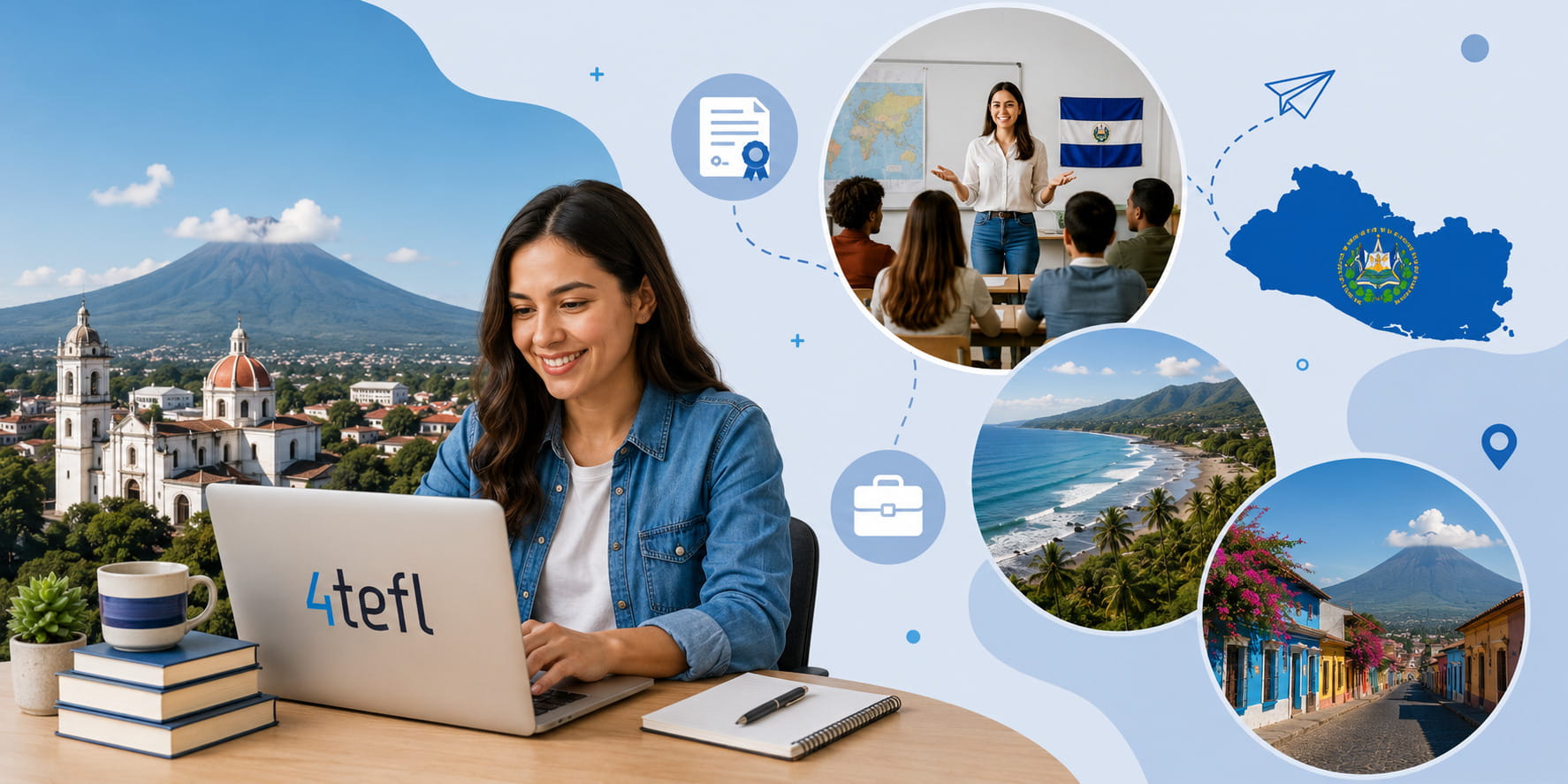
El Salvador’s English teaching market is a hybrid of private academies, international schools and rising opportunities through the internet. For a number of positions, a solid TEFL/TESOL certificate is the gateway to entry, although employers do not view all qualifications in the same way. Future teachers, too, will do well to know how Ofqual-recognised certificates are compatible with local conventions and develop hands-on skills to deliver engaging English lessons.
The Perfect Mixture: Regulatory-connected accreditation in tandem with a very hands-on practicum and culturally competent teaching practices means there is plenty of room to build success across San Salvador, Santa Ana, and remote opportunities online.
Beyond credentials, successful teachers in El Salvador bring adaptability, classroom management, and lesson design to bilingual classrooms. Public and private schools may have different degree requirements, language levels, and student age groups. As you build your career, think not just about your certification but also language skills (learning Spanish can be a plus) and your ability to manage classes and deliver lessons to students and staff.
This handbook describes routes to certification, career options, practical training relevant to Salvadoran needs, as well as the importance and value of Ofqual-backed credentials in finding teaching opportunities both locally and online.
The Pathways & Standards of TEFL Certification in El Salvador
In El Salvador, certification often begins with a reputable TEFL/TESOL certificate that demonstrates classroom-ready proficiency. A 120-hour foundation course is widely recognised as a baseline, with employers often seeking certification that includes a practical or practicum component.
In recent years, Ofqual-backed certificates – awarded by UK-based awarding bodies and aligned with UK quality standards – have gained appeal among international employers seeking a consistent standard for teacher quality. In the context of El Salvador and online marketplaces, strong theoretical teacher education, coupled with practical teaching experience and a well-established quality assurance framework, positions teachers as credible candidates.
TEFL Course of Study Pathways
There are multiple pathways to TEFL certification and these are often useful for those intending to teach in El Salvador:
- Pathway 1: The simplest option is a 120-hour online TEFL course with a supervised practicum (typically 6 to 20 hours of observed teaching), offering flexibility and practical learning.
- Pathway 2: Second, you can immerse yourself in classroom micro-teaching with immediate feedback as part of a face-to-face TEFL course to reduce the learning curve before entering a Salvadoran classroom.
- Pathway 3: Third, a certificate or diploma from an Ofqual-regulated UK awarding body is widely recognised by international schools and online learning providers.
- Pathway 4: Finally, for those who place value on a highly accredited qualification, CELTA or another TESOL qualification (which may include a face-to-face component) is likely to rank highly among preferred routes, although these options may be more costly and time-consuming.
Standards and Recognition
The standards for TEFL certification vary between providers, though some benchmarks are widely respected. A 120-hour baseline is typical, and employers now expect some form of practicum or real teaching activity. Ofqual-supported qualifications are acknowledged for being rigorous and reliable, especially within English-speaking countries and internationally established recruitment networks.
In reality, Salvadoran employers – especially privately run language schools and international schools – tend to want evidence of hands-on classroom experience, lesson planning ability and classroom management skills. To strengthen your CV, pair certification with sample lesson plans, micro-teaching videos and a reflective teaching journal.
Finding a Path with Local Appropriateness
When evaluating a certification pathway for work in El Salvador, consider:
- Whether the certificate offers a practicum including real teaching hours;
- Whether the issuing body has UK (Ofqual-backed) and Salvadoran employer recognition;
- The level of support in lesson planning and classroom management in Latin American contexts; and
- How the certificate aligns with online teaching platforms you may use.
Researching employer expectations in private schools and language institutes in San Salvador can help determine whether you prefer a fully online route with dedicated tutoring or a hybrid modality. For virtual or blended teaching, an Ofqual-accredited certification can be a powerful credential, demonstrating quality to international employers and local employers who value UK-aligned standards.
Insights: Context and Regulation Locally
Indeed, El Salvador’s education system has evolved towards increased use of English language instruction, often driven by private and international schools. Education sources state that much work remains to be done in areas including improving English learning outcomes, teacher training and access to quality language education throughout Central America.
The reality is that many Salvadoran employers value practical teaching credentials as much as academic degrees. The result is a market where good teachers are rewarded when they combine a strong TEFL certificate with classroom readiness, cultural understanding and the ability to work with diverse learners. Although government policy continues to evolve, there is significant growth in sectors that require English for tourism, international business and professional communication.
Common TEFL Certification Pathways (El Salvador context)
| Pathway | What it includes | Typical duration | Why it matters for El Salvador jobs |
| Pathway 1 | Self-paced theory + observed teaching hours | 4–12 weeks | Flexible entry route; practicum adds practical credibility for private schools |
| Pathway 2 | 120 hours theory + structured classroom practice | 2–4 weeks | Intensive practice, immediate feedback, strong local networking potential |
| Pathway 3 | 120–150 hours + practicum; Ofqual-regulated standard | 4–12 weeks | International recognition; preferred by many private schools and online platforms |
| Pathway 4 | 120 hours minimum plus hands-on practicum | 4–6 weeks | Highly respected globally; desirable for international schools and NGOs |
Careers for TEFL Teachers in El Salvador
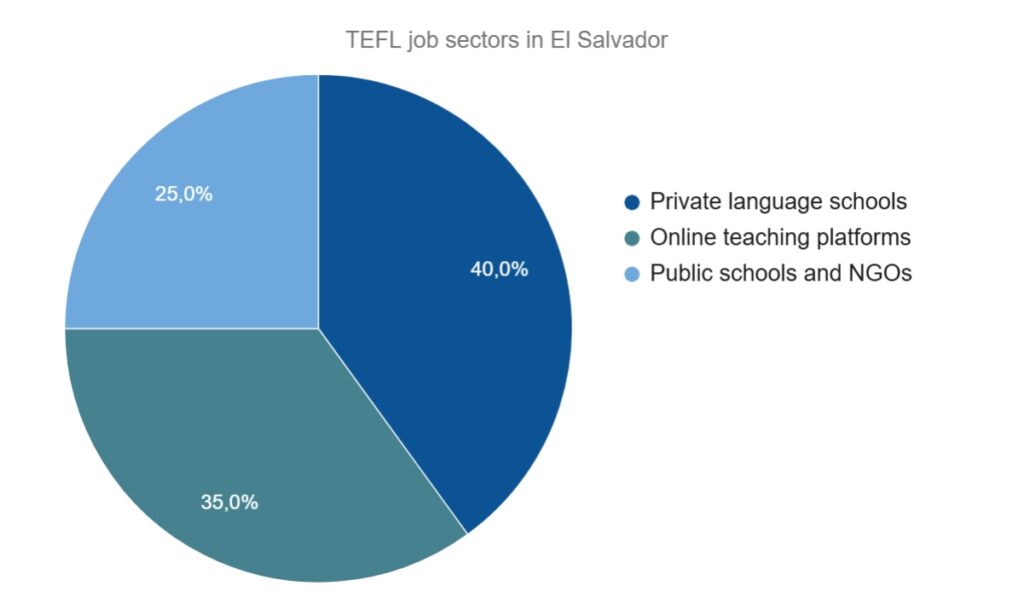
The path to a successful career for TEFL professionals in El Salvador often ranges from private language schools to public programmes and online teaching.
- Private Language Schools: In major cities, private language schools typically offer more job openings for new teachers, focusing on conversation practice, exam preparation and communication goals.
- Public and Government Programmes: Public schools and government-supported programmes provide opportunities to contribute to bilingual education and national English initiatives.
- International Schools: While international schools are fewer in number, they generally require strong credentials and extensive teaching experience, making them a desirable route for long-term career development.
- Remote/Online Work: Teachers can also work with students in North America, Europe and beyond while based in El Salvador.
In reality, the job market in El Salvador consists largely of roles that require common skills: clear lesson objectives, flexible activities for multilingual learners and assessments that support progress tracking. Some teachers support students’ development across speaking, listening, reading and writing through age-appropriate learning structures.
For teachers with specialised training, opportunities also exist in test preparation for exams such as TOEFL and Cambridge examinations, curriculum development and teacher training. Networking with local recruiters, attending educational fairs, participating in language education events and joining professional associations can help access opportunities in schools and NGOs.
The Salvadoran job market also emphasises professional development. New teachers often begin as classroom assistants before progressing to lead teacher positions, and those with expertise in curriculum development, programme design and teacher mentoring may later move into educational leadership, programme coordination or teacher education.
Spanish fluency can facilitate stronger relationships with students and parents, and even basic language skills can improve classroom communication and cultural understanding. Online platforms may value bilingual communication, reliability and consistent scheduling. Across all pathways, a portfolio demonstrating planning, assessment and reflective practice is highly valuable for employment.
In Practice: Training for Local Employment
For TEFL training to support success in Salvadoran career pathways, consider how your qualification and practicum align with local teaching environments.
- Private Language Schools: If you are targeting private language schools, focus on lesson planning that includes conversation practice, context-sensitive grammar instruction and dynamic activities for adults or teenagers.
- Public Schools & NGOs: If targeting public schools or NGO programmes, emphasise classroom management, inclusive practice and assessment methods suited to bilingual communities.
- Online Roles: For online roles, highlight digital literacy, lesson planning for asynchronous delivery and reliability across time zones.
Understanding El Salvador’s learner profiles – predominantly Spanish-speaking students with varying levels of English proficiency – can help you appeal to employers seeking patient, adaptable and effective instructors.
Teaching TEFL in Real Life in Accordance with El Salvador Careers
Effective TEFL training in El Salvador balances theory and practice, context and feedback:
- First, it should focus on lesson planning, classroom management and assessment methods for Spanish-speaking learners.
- Second, practical components such as observed teaching, micro-teaching and teaching demonstrations build confidence and a credible teaching portfolio.
- Third, training should be based on international best practices, especially Ofqual-backed certification, ensuring your credentials are recognised by private schools, online providers and organisations that value UK quality standards.
- Finally, training should include cultural and linguistic adaptation strategies for bilingual classes, parental expectations and common educational practices in El Salvador.
Salvadoran Setting Contextual Training
A practical training programme tailored to El Salvador should highlight teaching strategies for beginner and intermediate learners, focusing on communication and practical language use. It should include classroom management for mixed-ability groups, scaffolding techniques, grammar and vocabulary instruction, and the use of authentic materials relevant to Latin American learners.
Assessment methods such as formative assessment, portfolio-based evaluation and performance tasks can help educators monitor learner progress effectively. Teachers should also learn how to adapt materials for different age groups and create inclusive learning environments that recognise the value of learner diversity.
Career-Specific Training to Assist Salvadoran Education Workers
Effective practical training incorporates micro-teaching, peer feedback and mentor supervision within a continuous cycle of instruction and reflection. Trainees learn to create focused, engaging lessons with clear objectives, deliver them in simulated and real classrooms, and evaluate them for future improvement.
A well-planned practicum offers hands-on teaching hours, supervisor feedback and opportunities to observe experienced instructors in Salvadoran schools. Educational materials that emphasise bilingual communication, student-centred learning and authentic assessment also align well with private language schools, NGO initiatives and online teaching environments.
TEFL Qualification in El Salvador
Ofqual-supported certification refers to TEFL/TESOL qualifications issued by UK awarding bodies that meet Ofqual quality standards and assessment criteria. These credentials are designed to be internationally portable and recognised by employers seeking rigorous and consistent qualifications.
In El Salvador, Ofqual-backed certificates can provide a clear signal of quality for private language schools, international schools, NGOs and globally operating online platforms. When selecting a programme, consider whether the awarding body is Ofqual-recognised, whether the course includes a practicum component, and whether it aligns with international teaching standards through CEFR-linked outcomes, lesson planning and teacher observation guidelines. Certifications backed by Ofqual may also be attractive to Salvadoran employers who prioritise quality assurance and international credibility.
Evidence and Credibility
Ofqual-backed TEFL certificates help bridge the gap between theory and practice by demonstrating that qualifications meet recognised international standards. UK awarding bodies that offer TEFL/TESOL qualifications are regulated by Ofqual, helping to ensure quality, fairness and rigour.
Salvadoran employers, including private language schools and international organisations, often view these credentials positively because they align with recognised teacher training standards and structured practicum requirements. Online teaching platforms that recruit globally may also value Ofqual-recognised qualifications due to their reputation for quality and practical preparation. While employer requirements vary, Ofqual-recognised certification remains a credible way to demonstrate teaching competence in El Salvador and beyond.
Cultural and Institutional Considerations
Teachers entering El Salvador should develop an understanding of local cultural and educational expectations. Familiarity with classroom dynamics, student engagement and parent communication can improve effectiveness and support compliance with school policies. Learning basic Spanish is often beneficial for building rapport with learners, colleagues and families.
Salvadoran schools generally expect educators to be reliable, professional, punctual and well prepared. Combining Ofqual-supported certification with contextual, hands-on training can place teachers in a strong position for a long-term and successful teaching career in El Salvador and across the wider region.
Practical Training Checklist for El Salvador-Teaching Positions
| Area | What to practice | Why it matters for El Salvador |
| Lesson planning | Clear objectives, differentiated tasks, language focus | Meets diverse learner needs in bilingual classrooms |
| Classroom management | Transitions, group work, behaviour strategies | Maintains a positive learning environment for varied ages |
| Assessment | Formative checks, rubrics, feedback loops | Tracks progress and informs next steps for learners |
| Materials adaptation | Use of visuals, realia, culturally relevant content | Engages learners and supports comprehension |
| Cultural competence | Understanding local norms, respect for diversity | Builds trust with students and families |
| Tech integration | Online tools, digital worksheets, interactive activities | Supports online or blended learning contexts |
Authoritative Sources and Fact Checks (References)
- UK Government – Office of Qualifications and Examinations Regulation (Ofqual): Official portal for verifying regulated qualifications, standards, and the UK Regulated Qualifications Framework (RQF).
- Ministry of Education, Science and Technology of El Salvador (MINEDUCYT): Official updates on the national bilingual curriculum, teacher licensing, and educational development.
- U.S. Embassy in El Salvador – Advancing English Language Education: Support programs, grants, and “train the trainer” initiatives intended to strengthen human capital and English learning infrastructure.
- World Bank El Salvador Education Modernization Initiatives: Structural frameworks showing local investments in technology, learning assessment schemes, and teacher training.
- Millennium Challenge Corporation (MCC) El Salvador Evaluation Briefs: Public records evaluating English language instruction outcomes and school system quality upgrades under the Investment Compact.
Do I need a university degree to teach English in El Salvador?
Many private language schools and international programs value a TEFL/TESOL certificate along with teaching experience. Some roles or NGOs may prefer a bachelor’s degree, while others may prioritise demonstrable teaching ability and a strong teaching portfolio. Checking job postings for specific requirements is important, as expectations vary by employer and position.
Is CELTA or a TESOL certificate necessary for El Salvador?
CELTA is highly regarded and can be advantageous for international schools, but it is not always mandatory. A well-structured TEFL certificate with a solid practicum and a strong teaching portfolio can also open many doors, especially in private language schools and online platforms. Ofqual-backed certificates provide a credible alternative with broad international recognition.
What is an Ofqual-backed certification, and why does it matter?
Ofqual-backed certifications are issued by UK awarding bodies that meet Ofqual quality standards. They are commonly recognised by international employers for their consistency and rigor. In El Salvador, these credentials can improve job prospects with private schools, NGOs, and online platforms that prioritise internationally recognised qualifications.
Can I teach English in El Salvador online from home?
Yes. Online teaching provides flexible opportunities to teach students in North America, Europe, and other regions. Online roles often require solid digital literacy, reliable scheduling, and a portable teaching portfolio. An Ofqual-backed certificate can strengthen your profile with online platforms that value international standards.
What makes a good TEFL certification for El Salvador?
A strong TEFL certificate with a practicum (real teaching hours), a clear curriculum, and alignment with international standards (such as Ofqual-regulated qualifications) is highly valued. The ability to demonstrate lesson planning, classroom management, and assessment through a portfolio enhances employability in Salvadoran private schools, international programs, and online platforms.
How long does it take to complete TEFL certification?
Typical timelines range from 4 to 12 weeks for a certificate with practicum, depending on whether the course is online, in-person, or a blended format. More comprehensive diplomas or CELTA/TESOL programs may take longer. Your pace depends on the course structure, the practicum requirement, and your schedule.
What are the best ways to start a TEFL career in El Salvador?
Start with a recognised certificate (ideally Ofqual-backed or equivalent), gain practical teaching experience through a practicum or volunteer teaching, build a strong teaching portfolio, and network with private schools, NGOs, and online platforms. Learning some Spanish and familiarizing yourself with local classroom norms will also help you connect with learners and colleagues.